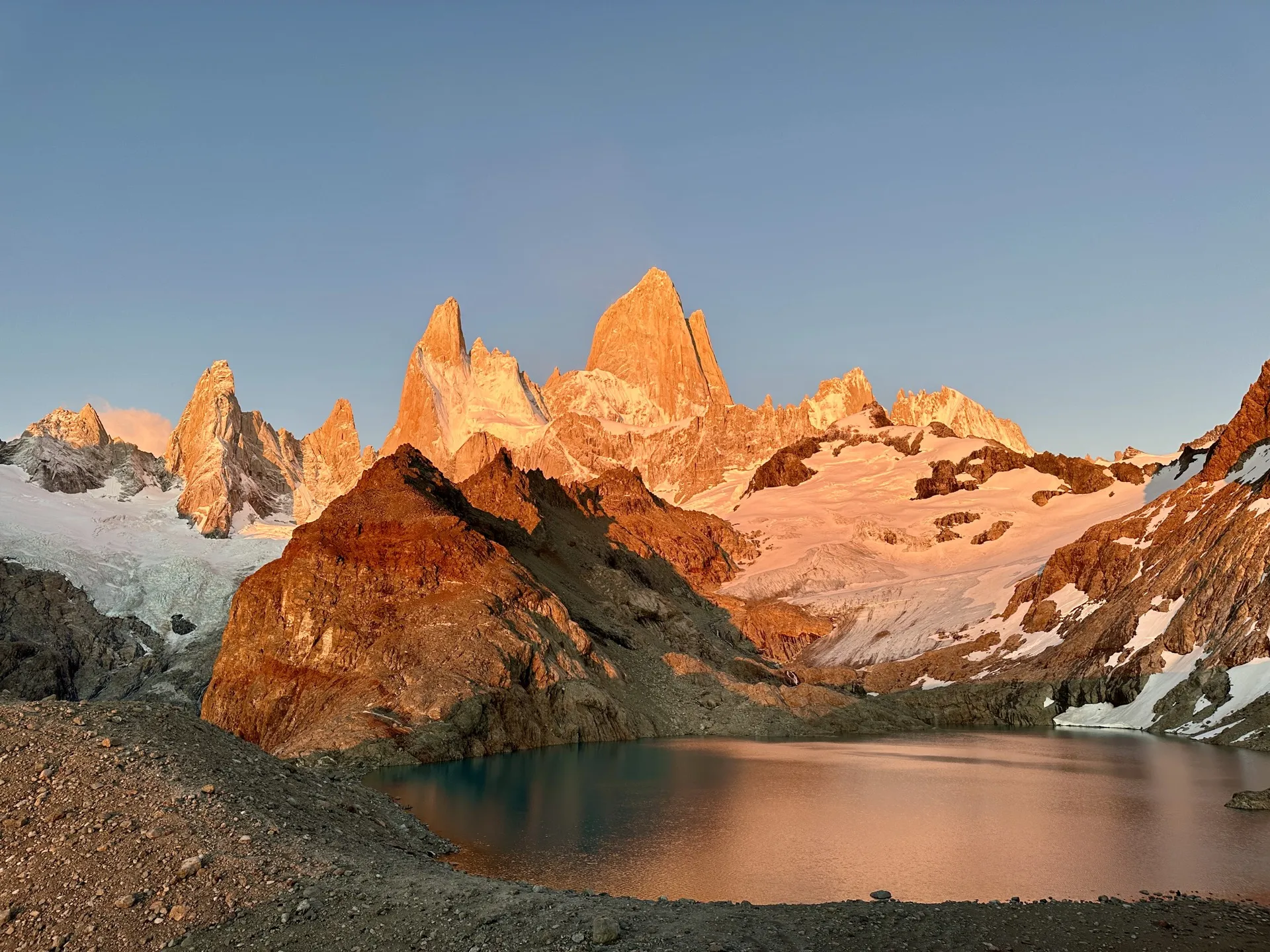
Fitz Roy is one of the most famous sights in all of Patagonia, not only for its natural beauty, but because it is the mountain used in Patagonia’s logo. Watching the massif turn orange at sunrise, with the colours reflecting across Laguna de los Tres, is definitely something to add to your Patagonia bucket list.
The guide below covers a more unique way of seeing Fitz Roy by completing a 3-day camping trip, rather than doing the standard day hike from El Chaltén. It covers everything you need to know to prepare for the trek and what to expect along the way.
Fitz Roy Trek Route Map
Some links in this guide are affiliate links. I may earn a small commission if you book through them, at no extra cost to you. I only link to places and services I would recommend. Affiliate Disclosure.
Plan Your Fitz Roy Trek
When I completed this trek in January 2024, the campsites were free and there was no park entry fee from El Chaltén. This has now changed, so there are two things you need to organise before starting the trek.
Campsite bookings
ARS 30,000
per person, per night
- Book Campamento De Agostini Day 1 and Campamento Poincenot Day 2
- Reserve and pay online before your trek
- Campsites have limited capacity, so book ahead rather than leaving it until the day before
- Reservations cannot currently be changed or refunded
Los Glaciares National Park entry
ARS 100,000
general admission, 3 days of park access
- Purchase online through the official National Parks website
- Three days in the park for the price of two daily entries
- Check the current ticket conditions before buying, as park entry rules and prices can change
If you are not travelling through Patagonia with camping equipment, or simply need some extra gear, check out the shops below.
-
BajoZero
Walk-in only -
Patagonia Hikes
Book online
Both shops rent
- Tents
- Sleeping bags
- Sleeping mats
- Stove and pot
- Backpacks
- Trekking poles
- Waterproof jackets
- Climbing gear
You will need to carry all of your food and water for the three-day trek, as there is nowhere to buy anything once you leave El Chaltén. Use the options below to stock up before you set off.
-
Freeze-dried meals
-
Groceries, snacks and water
El Chaltén → Campamento De Agostini & Mirador Maestri
The trail for this 3-day trek starts at the Laguna Torre trailhead which is on the outskirts of El Chaltén so there is no transport required to get there. You begin climbing almost immediately, with most of the elevation gain for the first day coming from this section. Once you reach the top of this initial climb, take a moment to look back over El Chaltén.
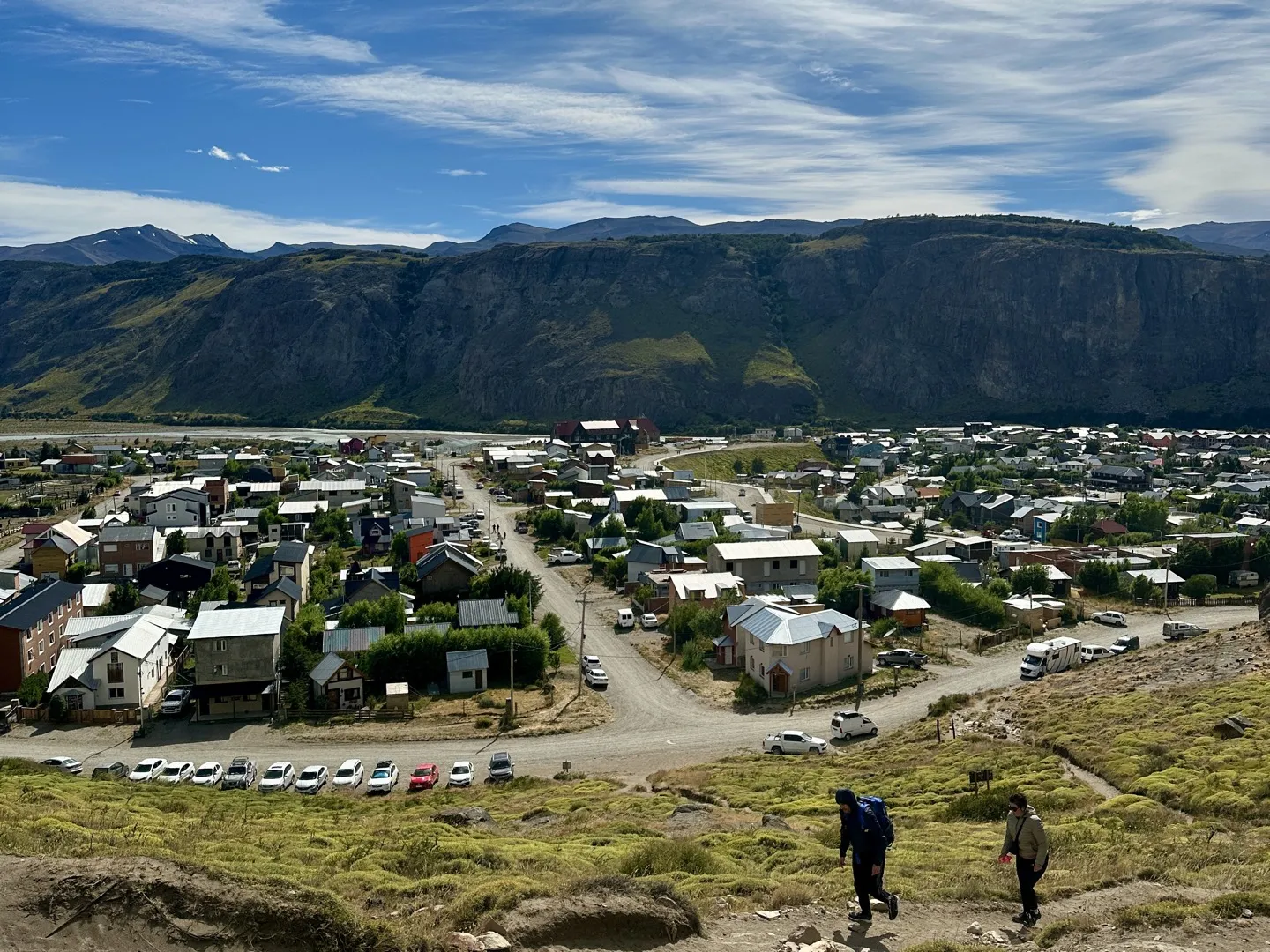
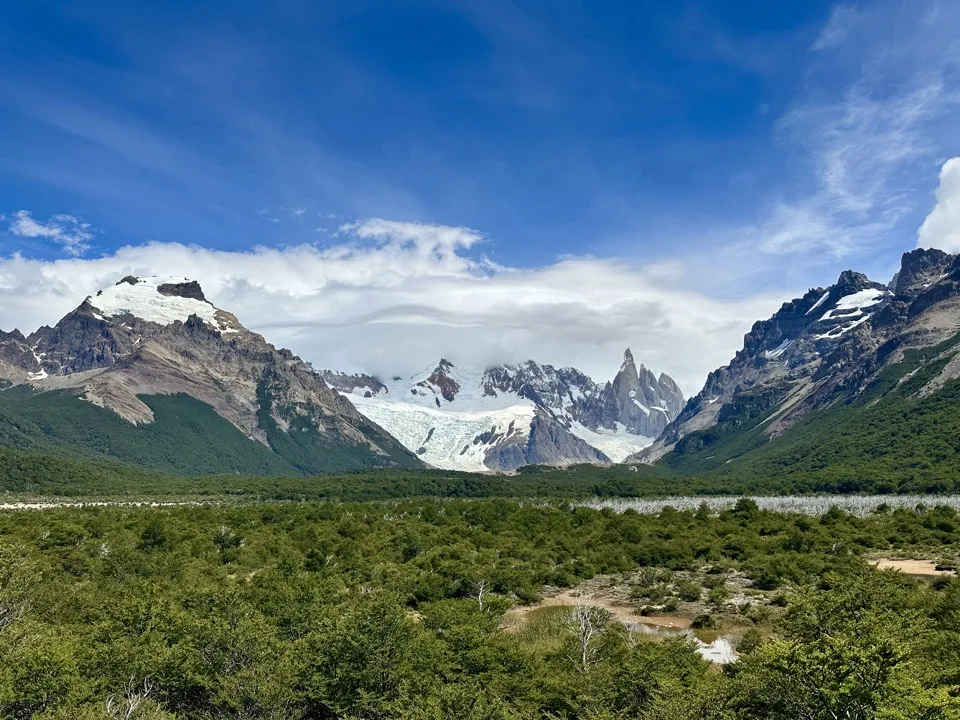
From here, the walk becomes much flatter as you continue through the forest. The trees regularly open up along the way, giving you your first views towards Cerro Torre, Cerro Solo and the snow-capped mountains of the Adela Range. The trail itself is a well-trodden dirt track that is easy to follow, and you will be sharing it with people doing the day hike to Laguna Torre and Mirador Maestri.
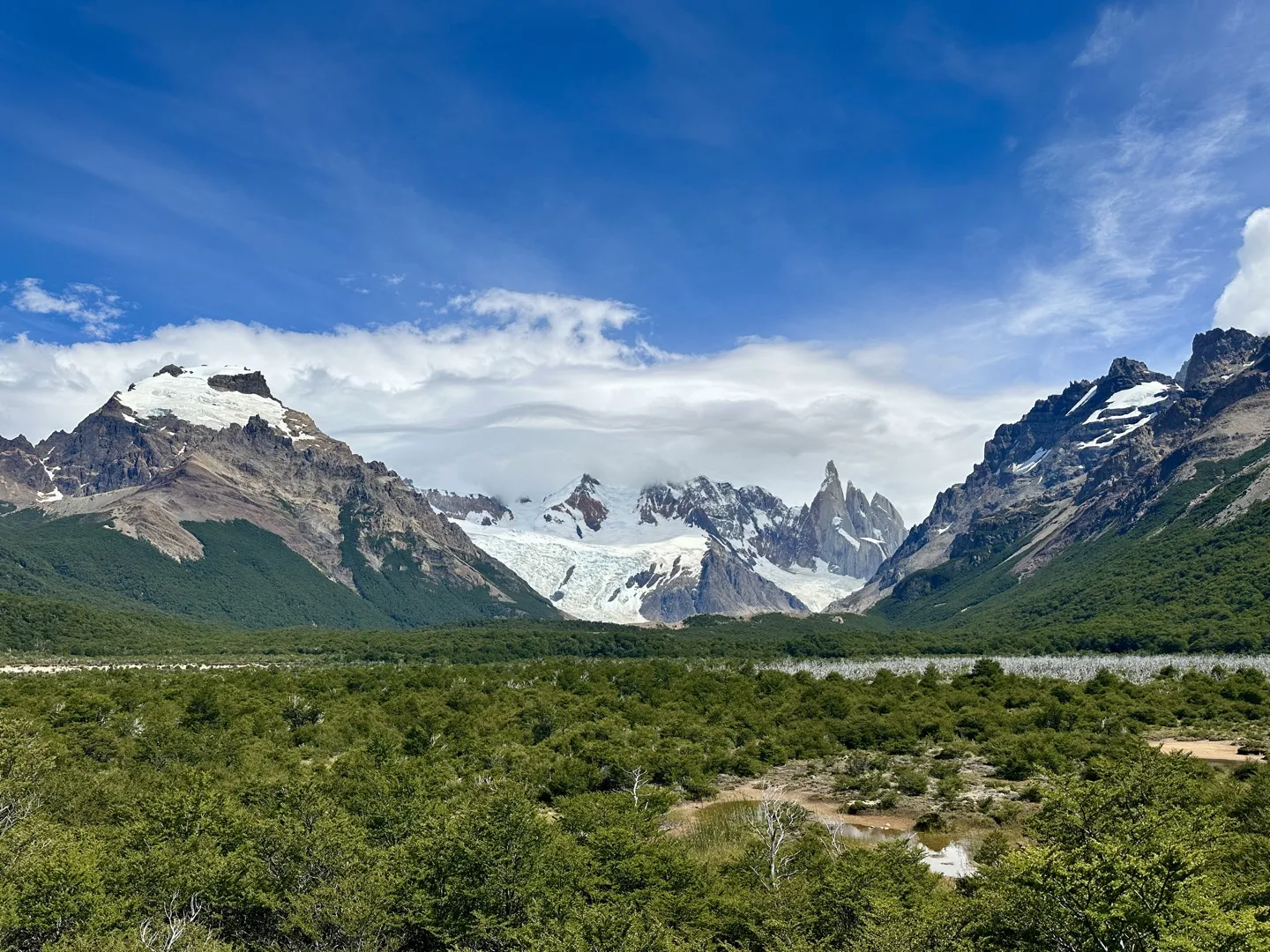
As you get closer to Campamento De Agostini, you will cross a stream where you will probably see other hikers stopping to fill their water bottles. I recommend doing the same and filling everything you have here, as this was the only place we found during the entire three-day trek where we could properly refill our water bottles.
We drank from the stream without getting sick, but I would still carry a few water purification tablets just in case.
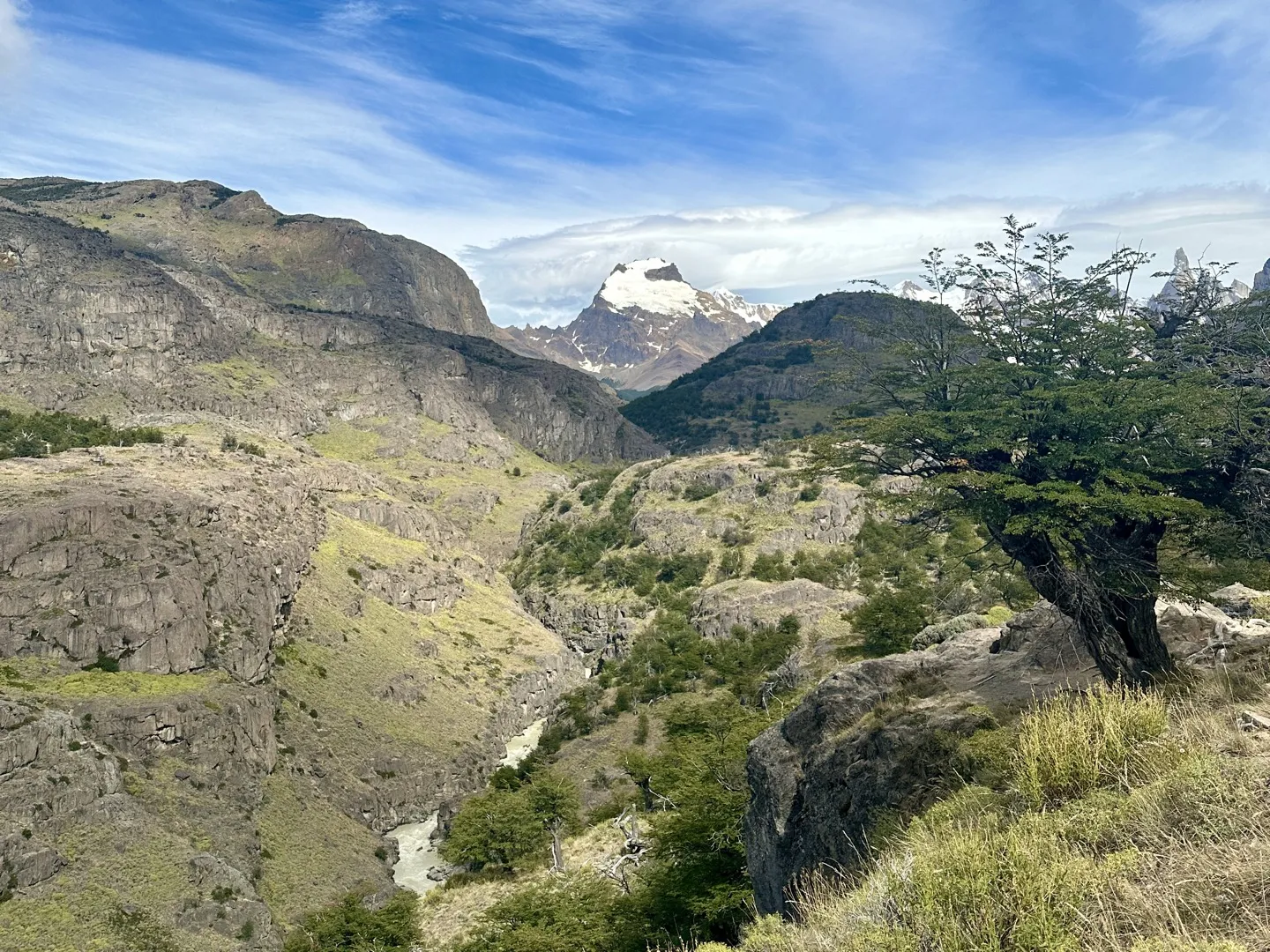
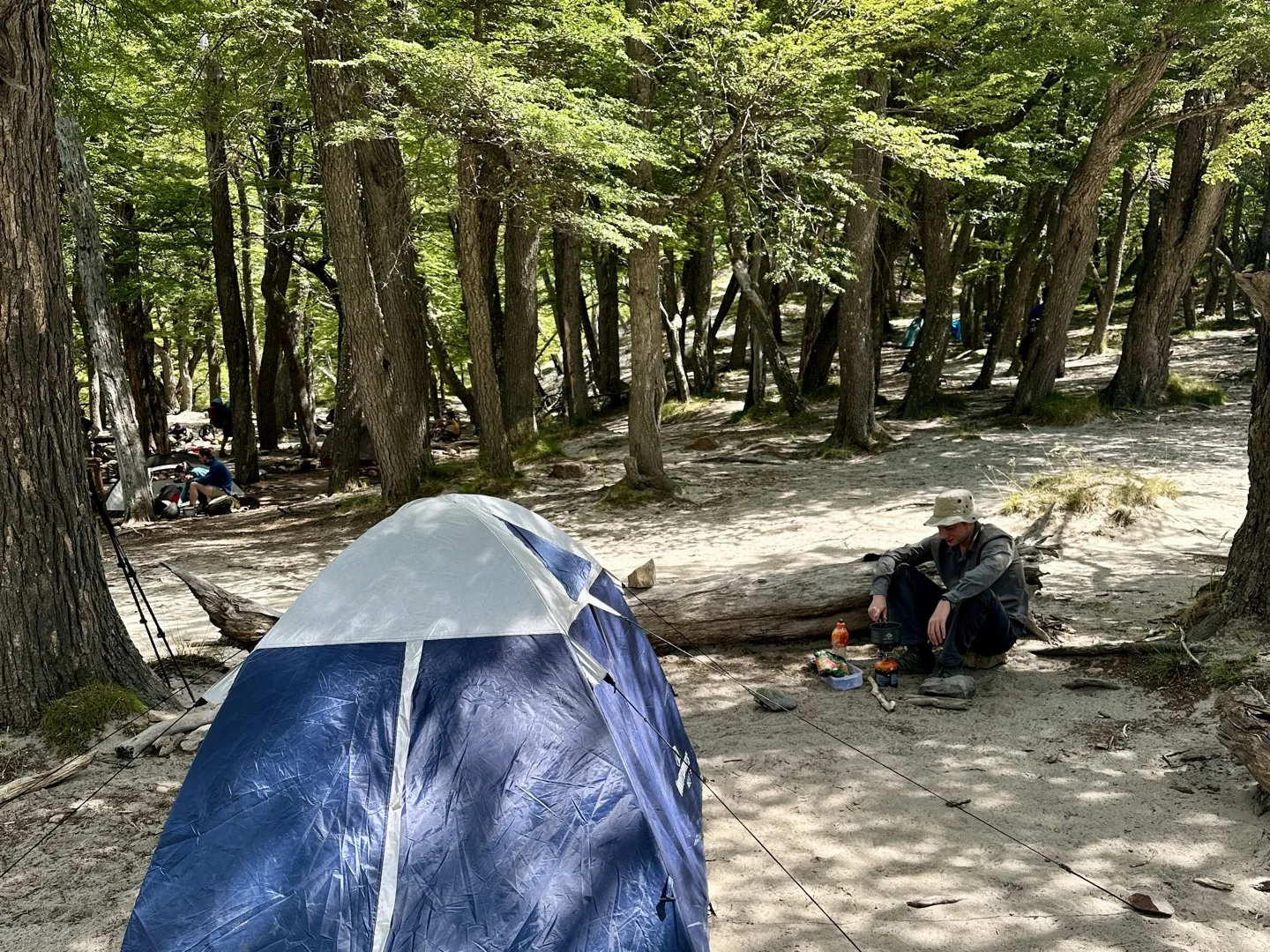
Once you reach Campamento De Agostini, I recommend setting up your tent straight away and having lunch before setting off to Mirador Maestri in the afternoon. The facilities at this campsite were extremely basic and did not offer much more than spaces to pitch your tent between the trees and a drop toilet surrounded by four planks of wood.
When I completed this hike, De Agostini was free to camp at. However, it is now a managed campsite and you need to reserve and pay for your spot in advance through the official booking system.
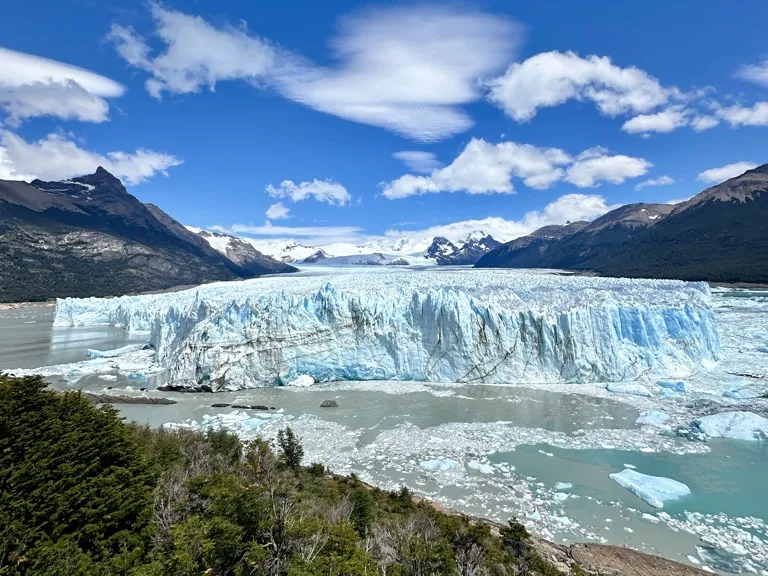
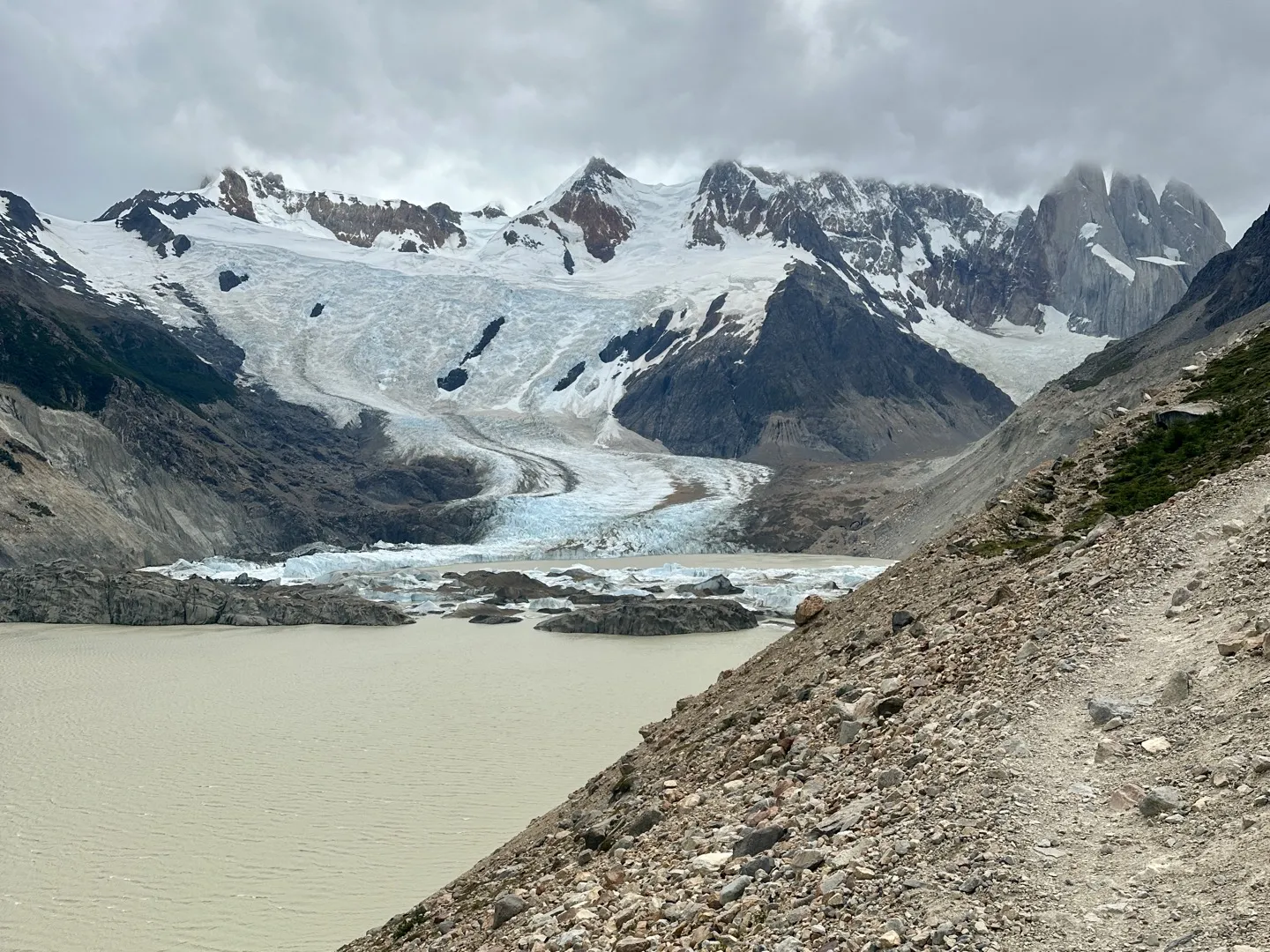
Once you have set up camp and had some time to relax, leave your main pack behind and head towards Mirador Maestri viewpoint with a small day bag. From the viewpoint, you look across Laguna Torre towards Grande Glacier, with Cerro Torre and the surrounding granite spires rising behind it. Icebergs can also gather along the edge of the lagoon after breaking away from the glacier, giving the area a much more rugged, glacial feel than the forested trail you followed earlier in the day.
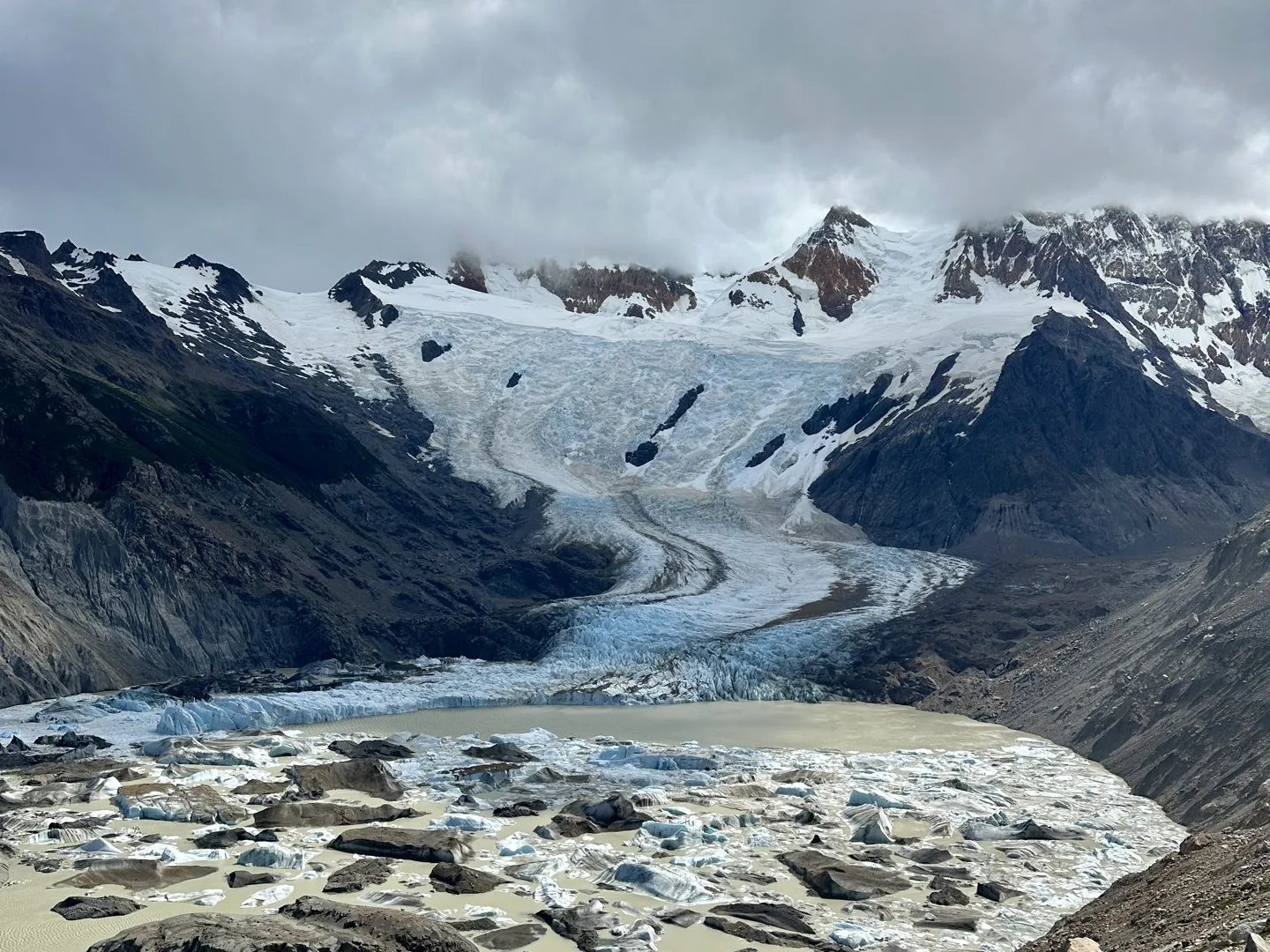
The hike to Mirador Maestri is straightforward but quite exposed. From De Agostini, the trail first climbs onto the moraine above Laguna Torre before following the rocky crest for roughly 2 km (1.2 miles) towards the viewpoint. The route is easy to follow, but there is very little protection from the wind. When I was there, Patagonia’s winds were at their strongest, which made a few stretches along the ridge feel a little sketchy.
Campamento De Agostini → Campamento Poincenot
On the second day of the trek, there is no real rush to wake up early. This is the easiest of the three days, and your only goal is to get from Campamento De Agostini to Campamento Poincenot. The second day starts by retracing part of the route you walked the previous day until you reach the turn-off for the Lagunas Madre e Hija trail. From here, follow the trail towards Poincenot rather than continuing back towards El Chaltén.
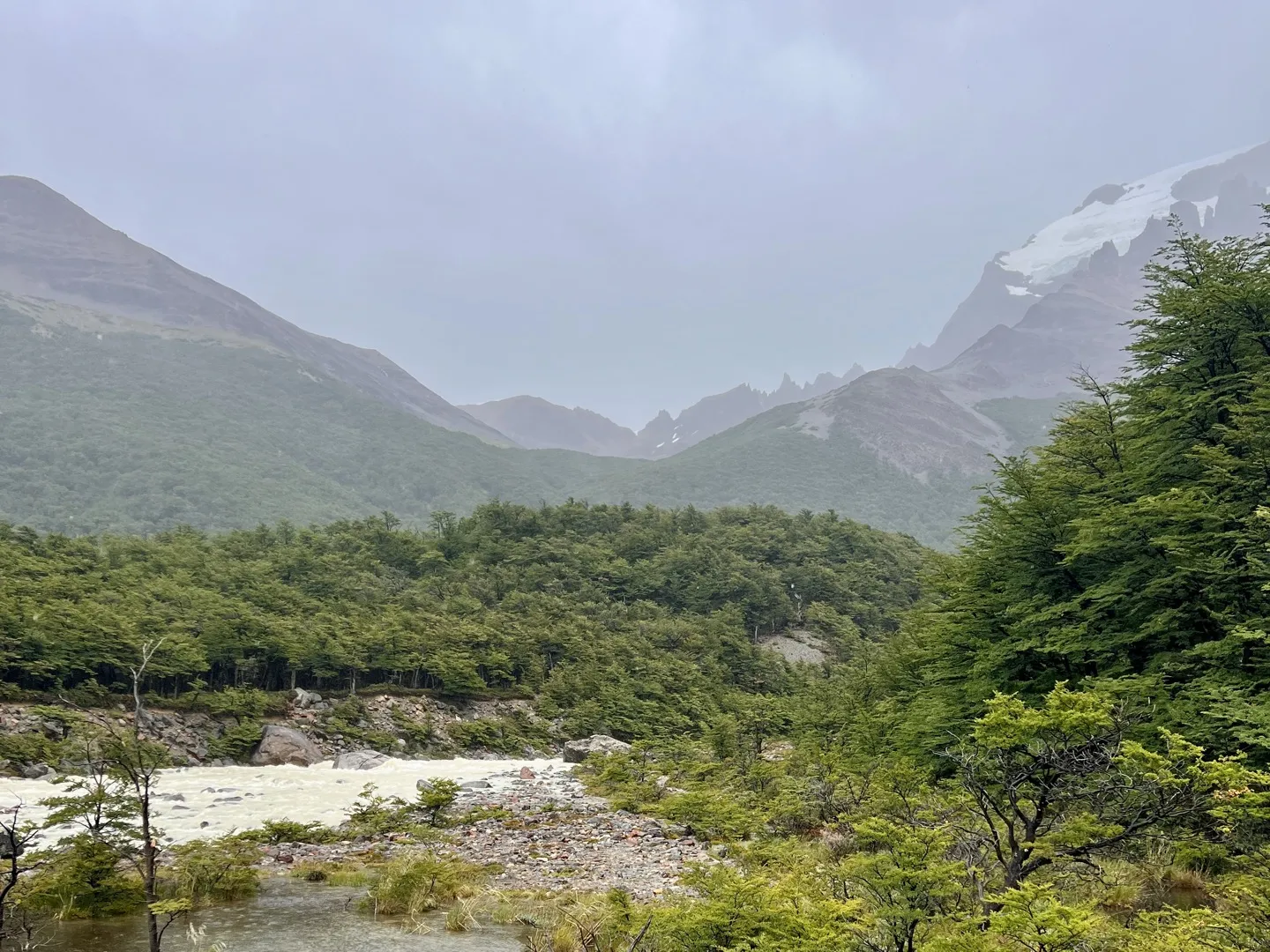
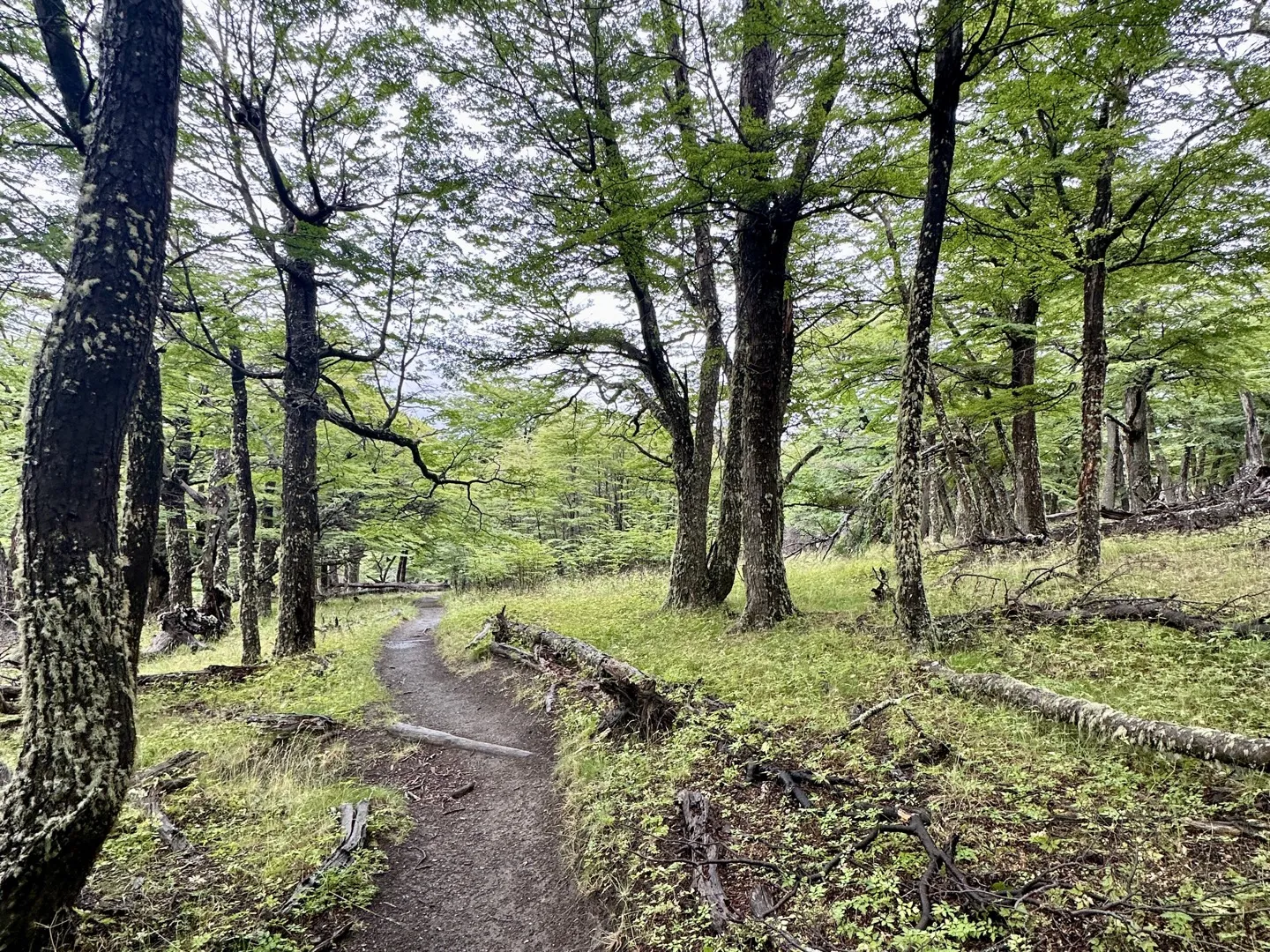
After the turn-off, the scenery changes quite a bit, with most of this section taking you through forest instead of the more open Patagonian landscapes from the first day. The hardest part of the day comes fairly early, with a sustained uphill section that lasts around 1.5 km (0.9 miles). Once you are over this climb, the trees gradually begin to thin out and the surrounding granite peaks start to come back into view.
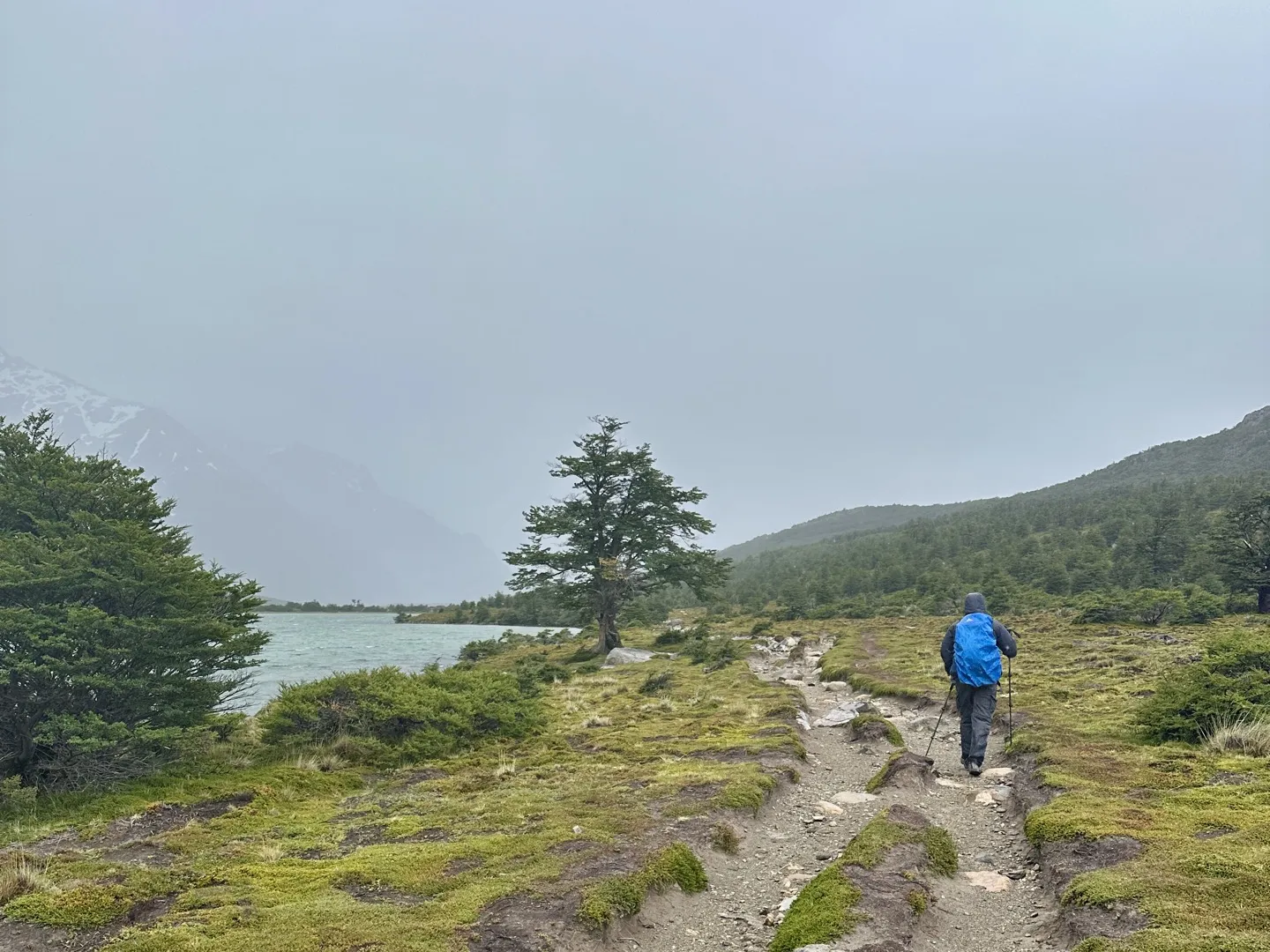
As you come out of the forest, the trail passes Lagunas Madre y Hija, two long lakes sitting beneath Loma de las Pizarras. On a clear day, this section should give you increasingly good views towards the Fitz Roy massif as you continue towards Poincenot. Unfortunately, we had the complete opposite experience. It rained for virtually the entire day and we were completely drenched, so we did not spend much time stopping around the lakes or taking in the views.
I completed this hike right in the middle of the Patagonian summer and still had an entire day of cold rain. The weather around Patagonia can change quickly, so make sure to come prepared no matter what time of year you visit.
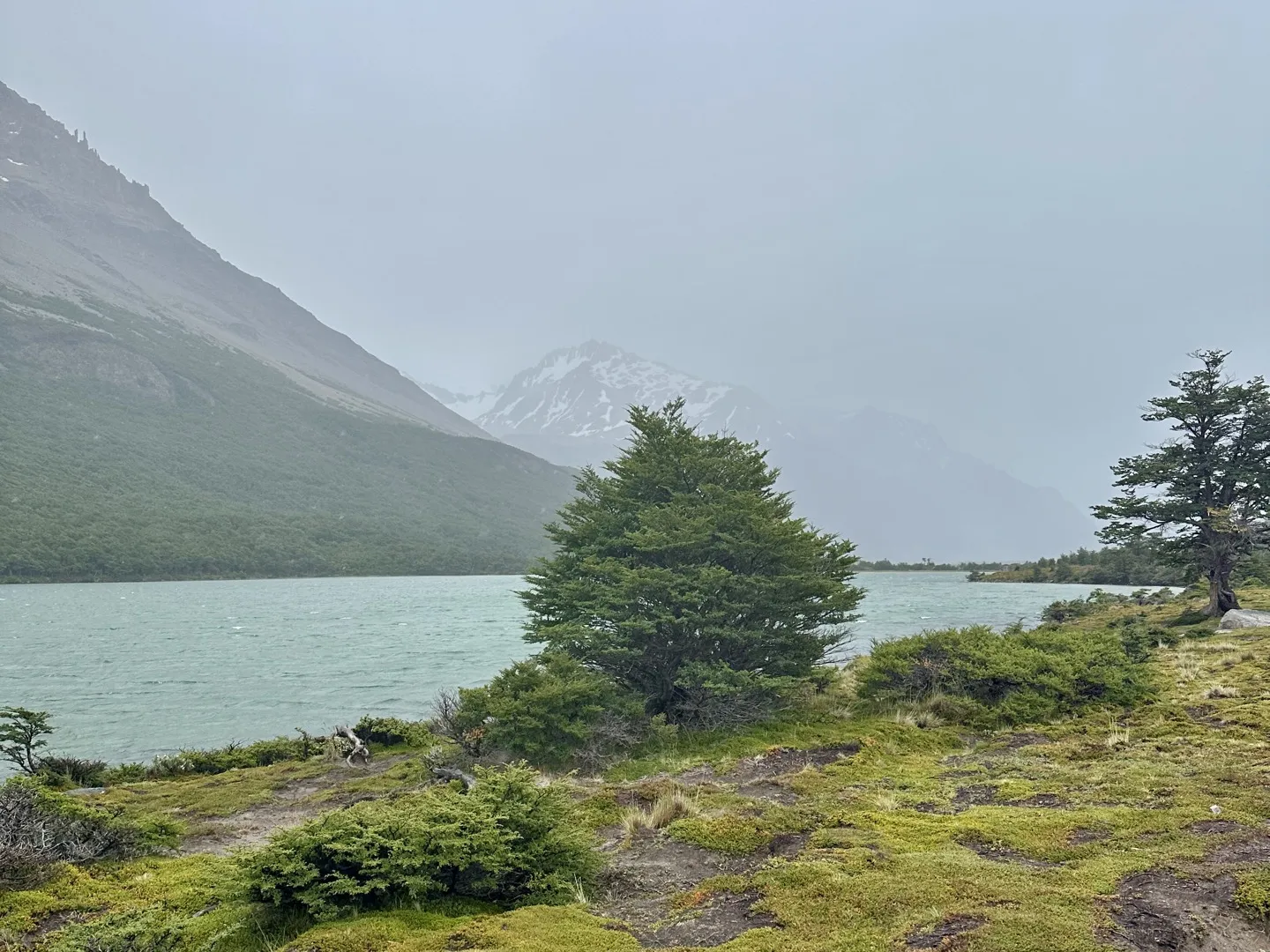
Not long after Lagunas Madre y Hija, you will arrive at Campamento Poincenot. This was another extremely basic forest campsite that did not offer much more than places to pitch your tent between the trees and a few drop toilets.
Poincenot is now also a paid campsite and, like De Agostini, must be reserved and paid for in advance through the official booking system.
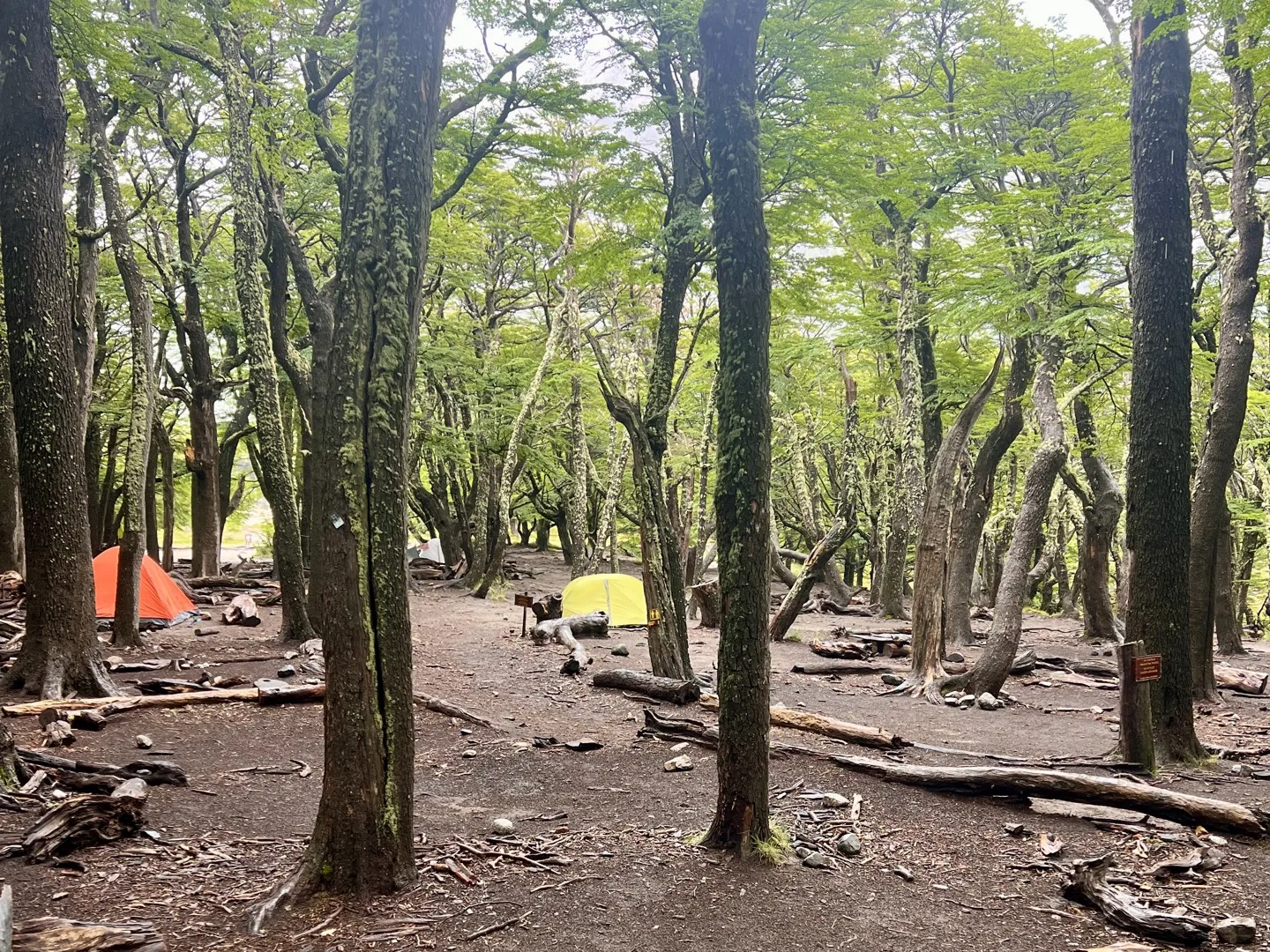
If you arrive at Poincenot with enough time and the weather is good, you can add a short side trip to Mirador Piedras Blancas. The viewpoint is roughly 4 km (2.5 miles) return from the campsite and looks across to Piedras Blancas Glacier, with Fitz Roy towering over it on a clear day. We had planned to do this ourselves, but the rain continued into the evening, so we stayed at camp instead.
You will be waking up before sunrise tomorrow, so I recommend getting everything ready before going to sleep. Make sure your headtorch is working properly and pack enough warm clothes for Laguna de los Tres, as it can get very cold while you are waiting for sunrise.
Campamento Poincenot → Sunrise at Fitz Roy
The third day starts very early, as you need to make the climb from Poincenot to Laguna de los Tres before sunrise. The exact time you need to leave will depend on when you visit, so check the sunrise time the night before and work backwards from there, giving yourself around 1½ hours to complete the climb.
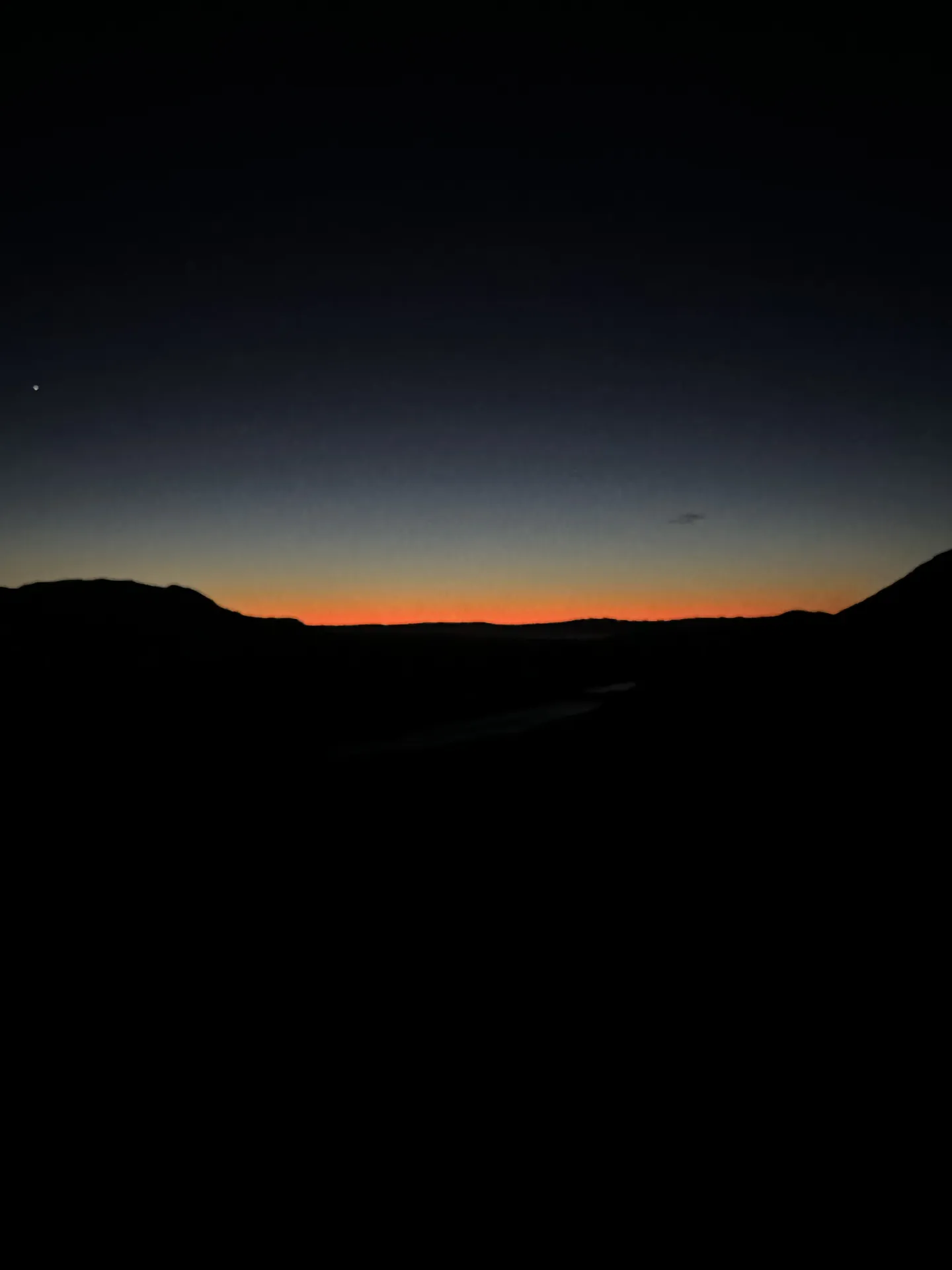
The climb to Laguna de los Tres is easily the most difficult section of the three-day trek, gaining roughly 400 m (1,300 ft) over the final steep section. The trail becomes increasingly rocky and uneven as you get towards the top, so take care with your footing, especially in the pitch dark.
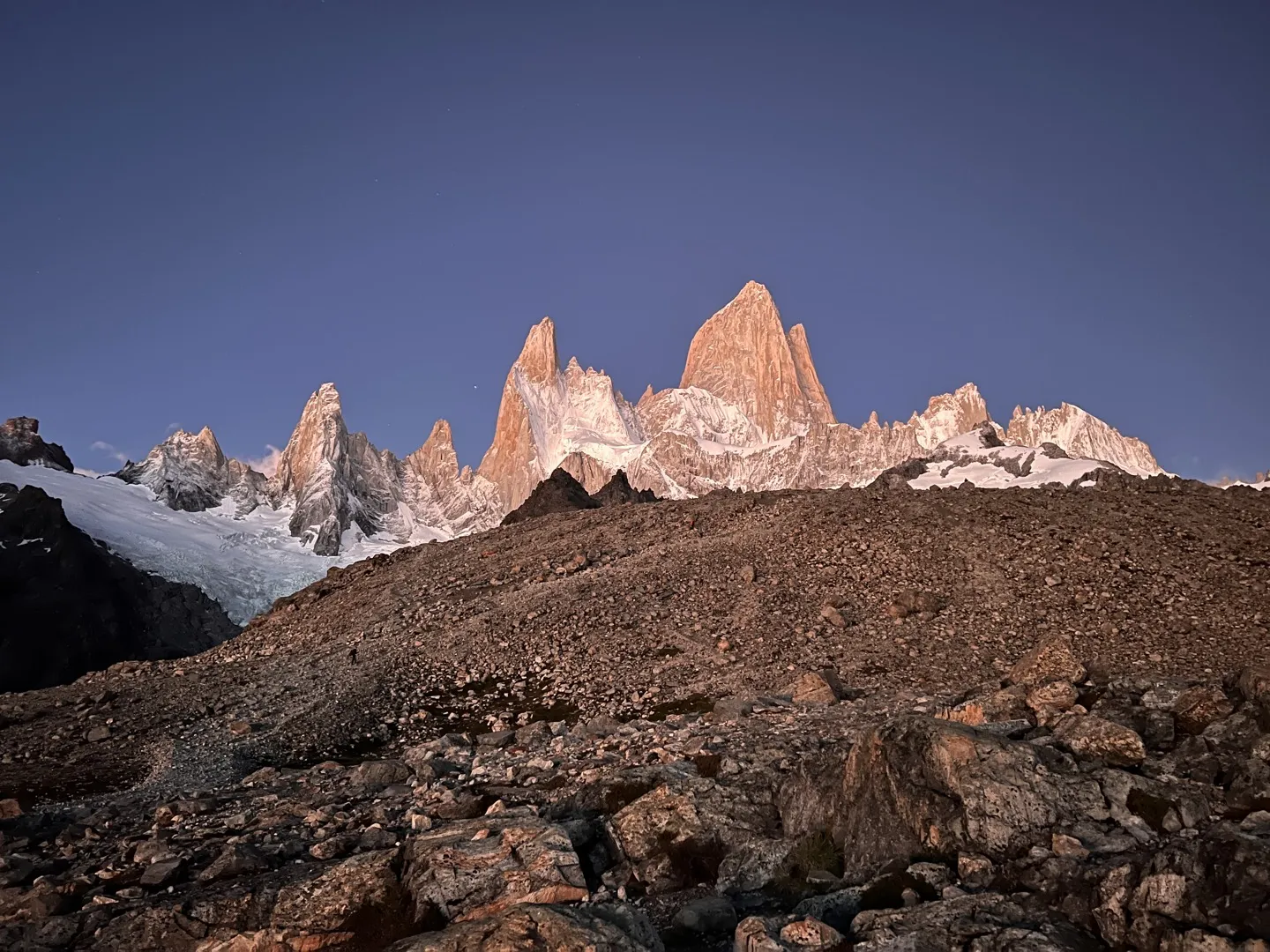
Once you reach Laguna de los Tres, put on all of your warm layers as you will cool down quickly while waiting for the sun to rise. Slowly, the Fitz Roy massif begins to glow orange as the first light reaches the granite, with the colour also reflecting across Laguna de los Tres on a clear morning. There are not many places where you will get a sunrise like this, so take it all in and appreciate the Patagonian surroundings.
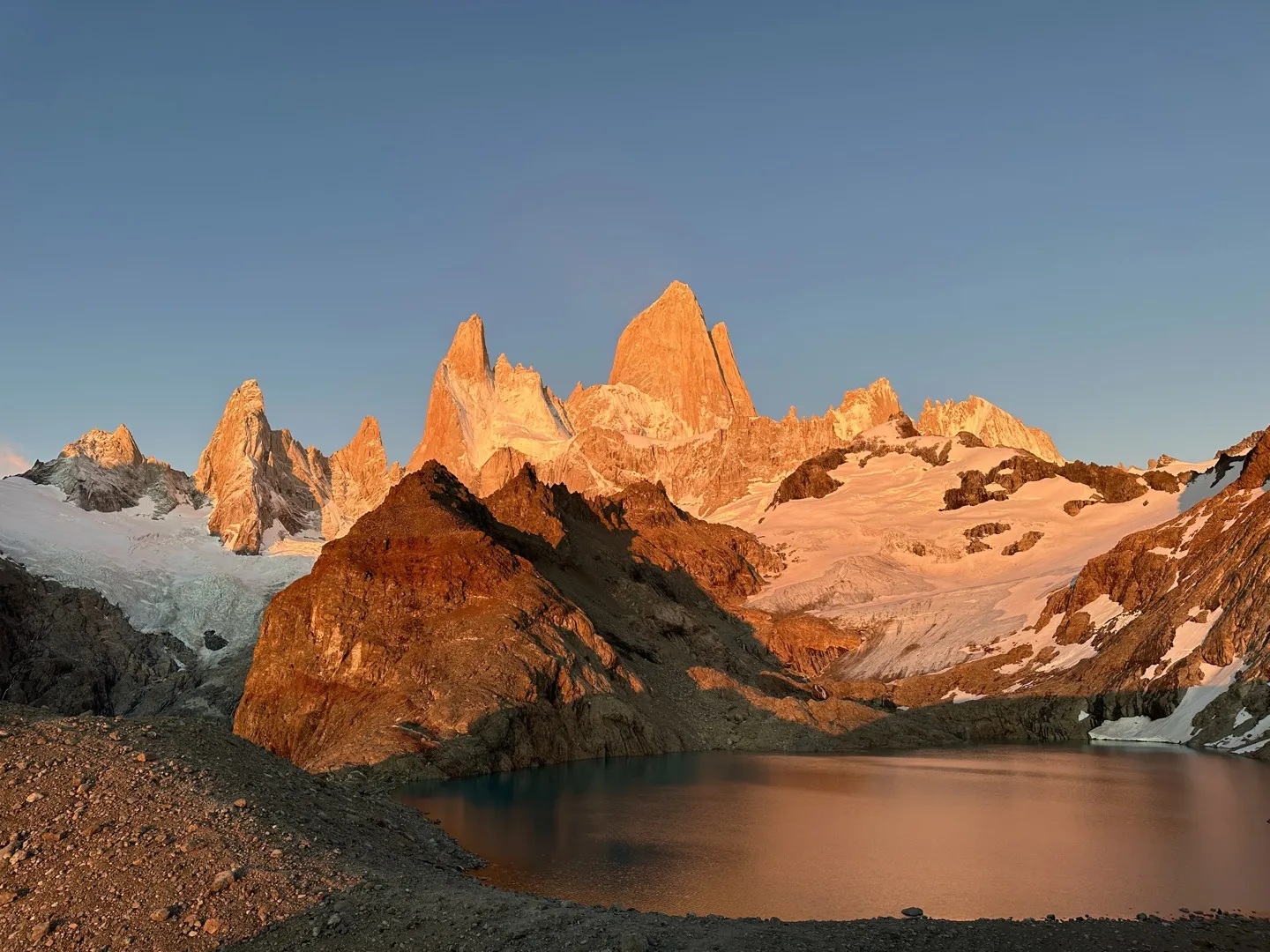
Fitz Roy → Campamento Poincenot → El Chaltén
Once you are ready to head back, return to Poincenot using the same trail you took up to Laguna de los Tres. The descent is steep in places, but it feels much easier once you can actually see the trail in daylight. Back at camp, pack up your tent and the rest of your gear before starting the final walk back to El Chaltén.
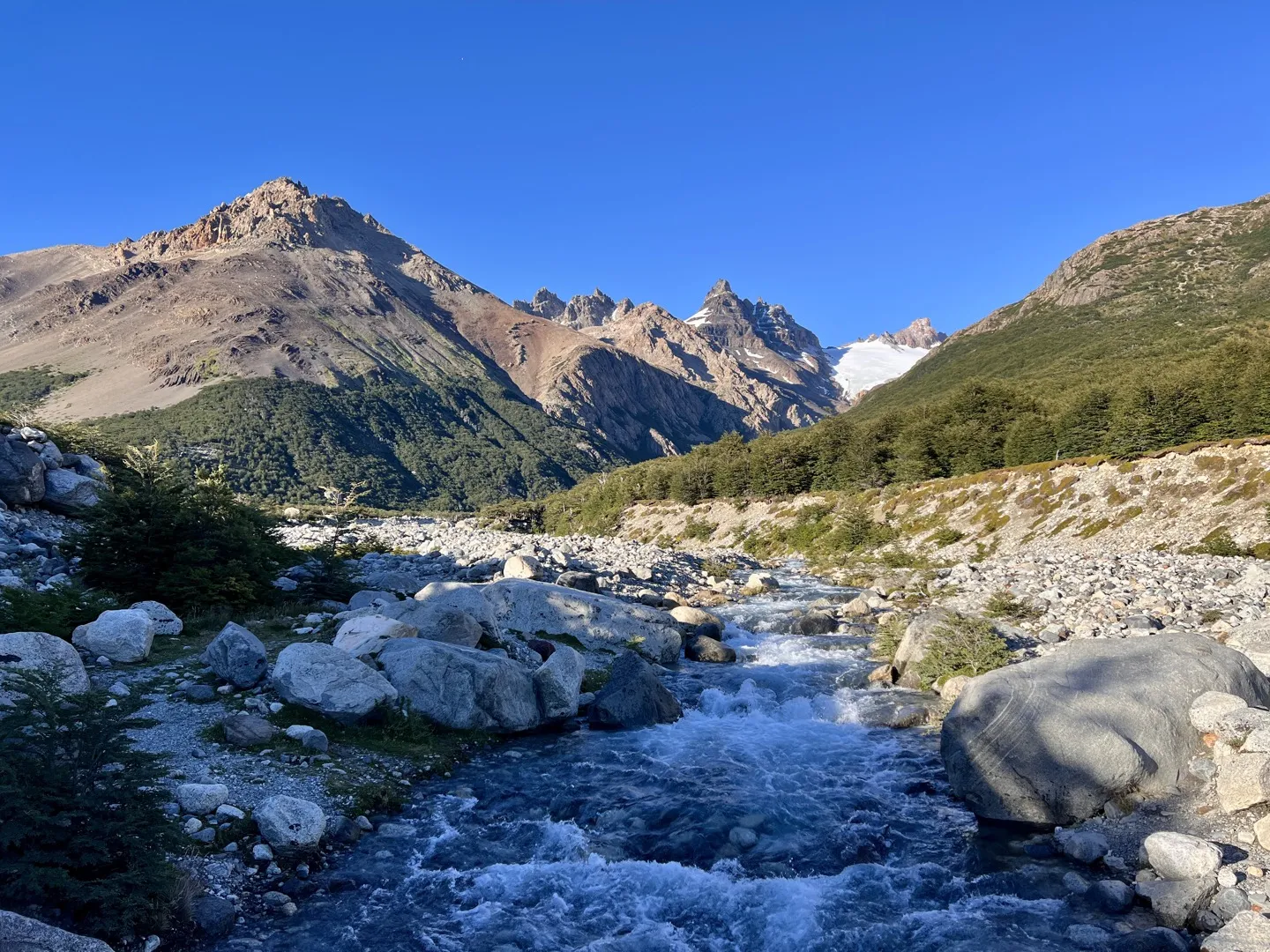
From Poincenot, the walk back to El Chaltén is easily the most relaxed section of the three days, with mostly gentle terrain and a gradual descent towards town. The trail moves between forest and more open sections, where you will get wide views of the surrounding mountains. Make sure to turn around every now and then as well, as Fitz Roy keeps reappearing behind you and slowly becomes more distant.
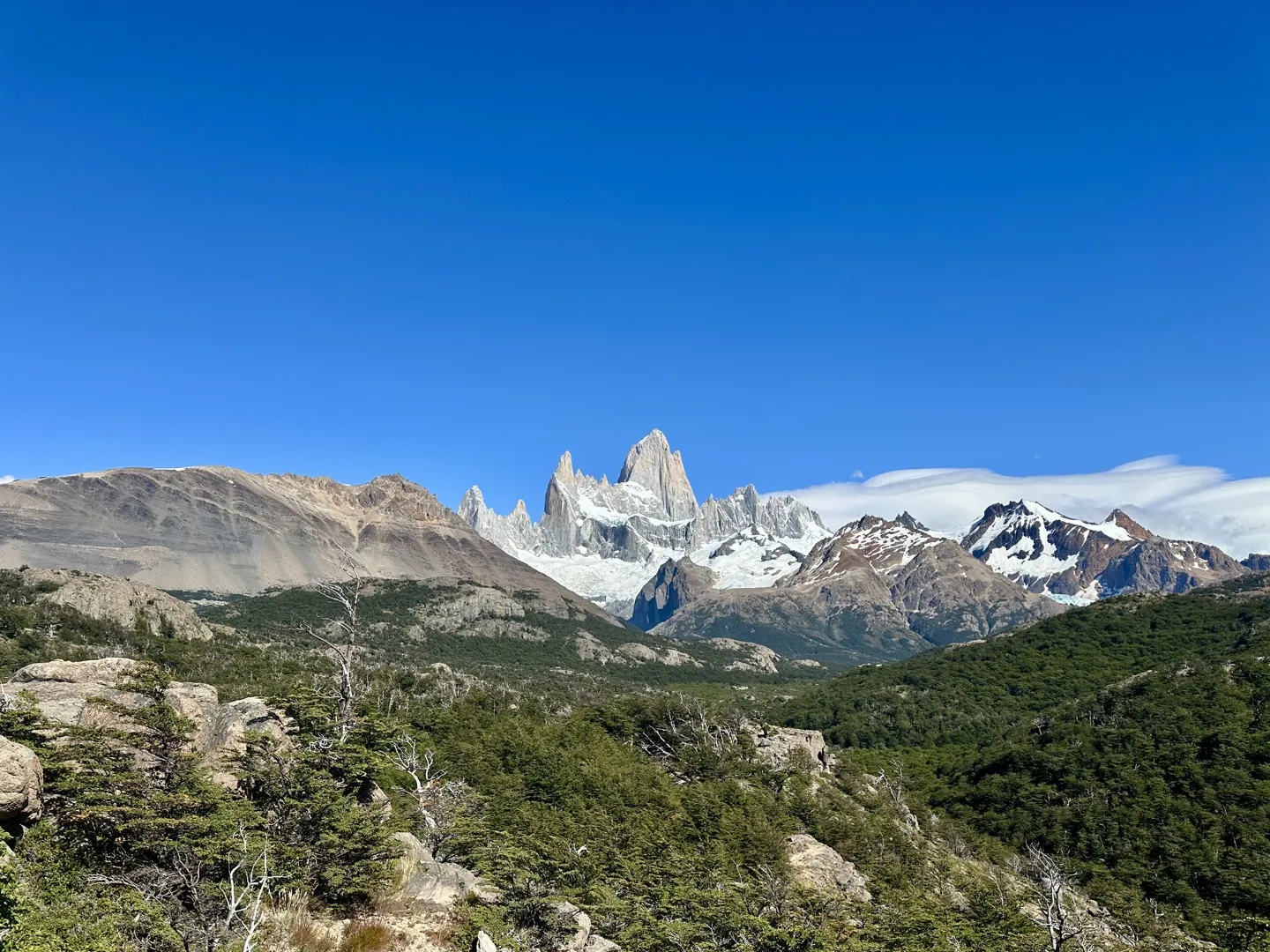
The final few kilometres into El Chaltén will most likely feel long and gruelling, especially after the pre-dawn wake-up and climb to Laguna de los Tres earlier that morning. By this point, you will be more than ready to get back into town, sleep in a real bed and celebrate the end of an incredible 3-day trek to Fitz Roy.



The trail for this three-day trek is easy to follow and not technical, but you do need to be fit enough to carry all your camping gear, food and water for three days. The hardest part comes on the final day, with the climb from Poincenot to the base of Fitz Roy, although you only need to take a day bag for this section.
The 3-day trek to Fitzroy is a relatively inexpensive way to explore the El Chaltén region, with two nights spent camping inside the park rather than paying for accommodation in town. The costs below have been updated to reflect current prices.
-
$ 30,000 $20Campamento De Agostini
-
$ 30,000 $20Campamento Poincenot
-
$ 100,000 $66Entrance ticket to national park
Conversions are approximate and update daily. Check the live rate before you travel.
El Chaltén is a small mountain town in southern Patagonia with no airport or train station. It is quite isolated, so reaching it usually takes a little more planning than other destinations in Argentina.

The best time to do this 3-day Fitz Roy trek depends on the type of experience you want. Patagonia changes a lot throughout the year, so choosing the right time can make a big difference to your trip.
October & November, March & April
Shoulder season- Fewer people on the trails and at the campsites.
- November and March are usually the best shoulder-season months for hiking.
- October and April are colder, with a greater chance of snow on the higher sections.
- Accommodation in El Chaltén is usually easier to find than in peak summer.
- Sunrise is later than in summer, making the early start for Laguna de los Tres a little easier.
December–February
Warmest & busiest- The warmest time of year, but mornings and nights can still be cold.
- Long daylight hours make the hiking days easier to manage.
- This is the busiest time of year, so expect more people on the trails and at the campsites.
- Sunrise is very early, so the Laguna de los Tres climb starts well before dawn.
- Strong winds are common throughout summer, even on clear days.
May–September
Winter, coldest months- Cold temperatures, short days and snow make the route much harder.
- Snow and ice can remain on the higher sections, especially around Laguna de los Tres.
- Some tourism services in El Chaltén operate on reduced schedules or close for winter.
- I would only attempt this route in winter if you have experience hiking and camping in snow.
Completing this 3-day Fitz Roy trek without a guide is straightforward if you are comfortable hiking and camping independently. The route follows established trails and uses designated campsites, so you do not need any technical experience or a guide to navigate it.
Well marked trails
The trails used on this trek are well established and easy to follow. There are signs at the main junctions, but make sure you know which trail you need before leaving each campsite.
Download the map offline
Phone signal can be weak or completely unavailable once you leave El Chaltén. Download the route on AllTrails or Maps.me before starting so you can still check your location without reception.
Be ready for bad weather
The weather is the biggest thing to take seriously on this trek. Conditions can change quickly in Patagonia, so carry waterproofs and warm layers and be prepared to change your plans if the weather becomes unsafe.
Other hikers are nearby
You will see plenty of other hikers on the main trails and people staying at both campsites, particularly during summer. The trek never felt particularly isolated when I completed it, so you can always ask someone for help if needed.
For the 3-day Fitz Roy trek, you will need to carry all of your camping gear, food and water with you. Your backpack definitely will not be the lightest, so packing smart is essential.