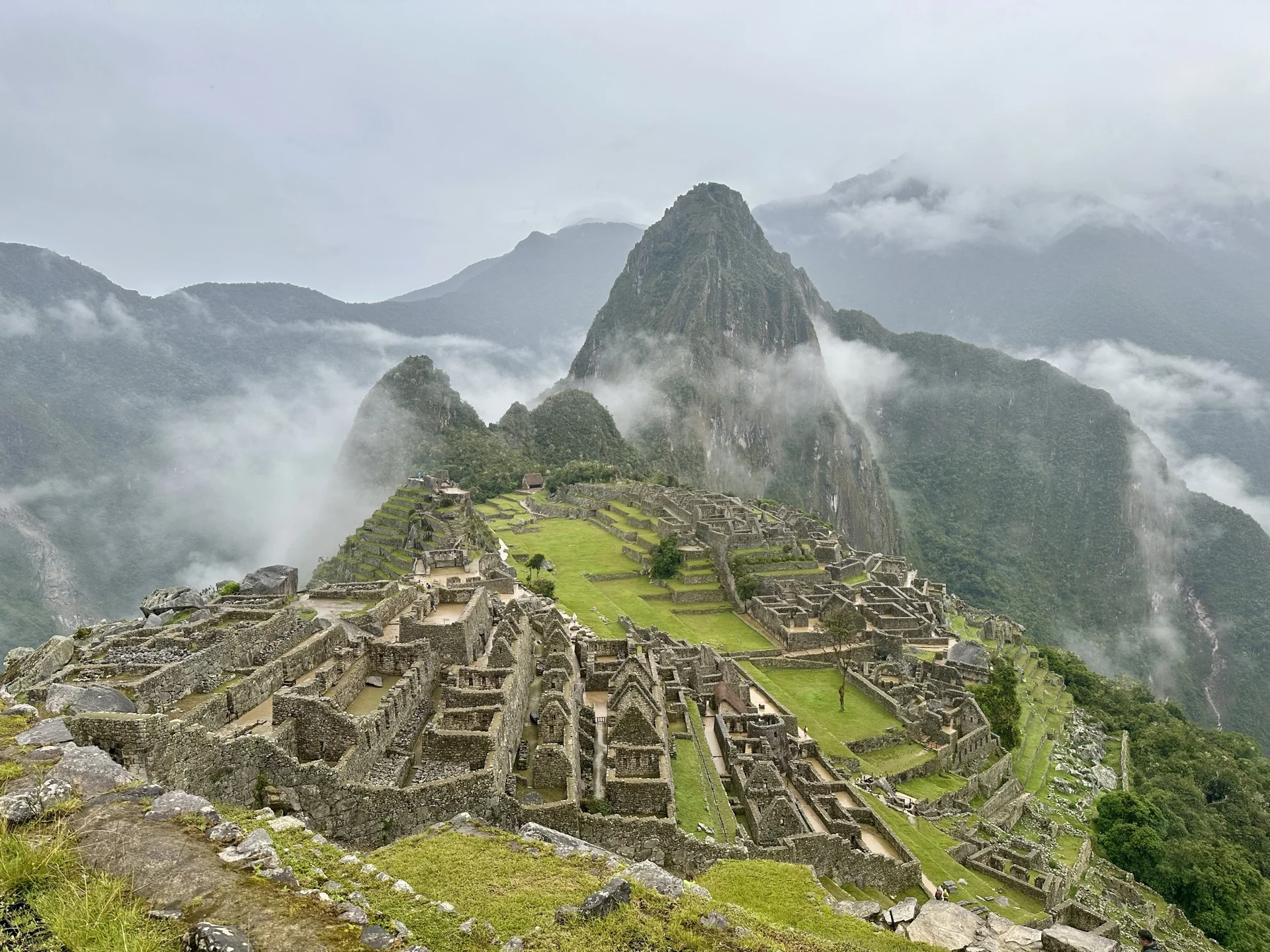
Machu Picchu is one of the New Seven Wonders of the World and one of those places that actually earns the hype. Built by the Incas in the mid-15th century and sitting at 2,430 metres (7,972 feet) above sea level in the Peruvian Andes, it will almost certainly be the most talked-about thing you did when you get home.
You've probably landed on this page because you're thinking about hiking the Salkantay Trek to visit Machu Picchu. Here's the thing most tour operators in Cusco won't tell you: you don't actually need them. The Salkantay Trek is safe, well marked, and lined with small family-run guesthouses that provide hearty meals and a warm bed to sleep in each night. I completed the full five-day Salkantay Trek to Machu Picchu for roughly $160 USD, a fraction of what the guided tours charge. This guide breaks down exactly how to do it yourself, with collapsible sections so you can quickly find what you need on the go.
Salkantay Trek Hiking Map
Some links in this guide are affiliate links. I may earn a small commission if you book through them, at no extra cost to you. I only link to places I have personally stayed and would recommend. Affiliate Disclosure.
Plan Your Salkantay Trek
Cusco → Soraypampa & Laguna Humantay
The first stop on your Salkantay Trek is Soraypampa, a small, remote community sitting at approximately 3,900 metres (12,795 feet) above sea level. While it's the most basic of the places you'll stay along the trek, it offers some of the most dramatic high-Andean landscapes of the entire route.
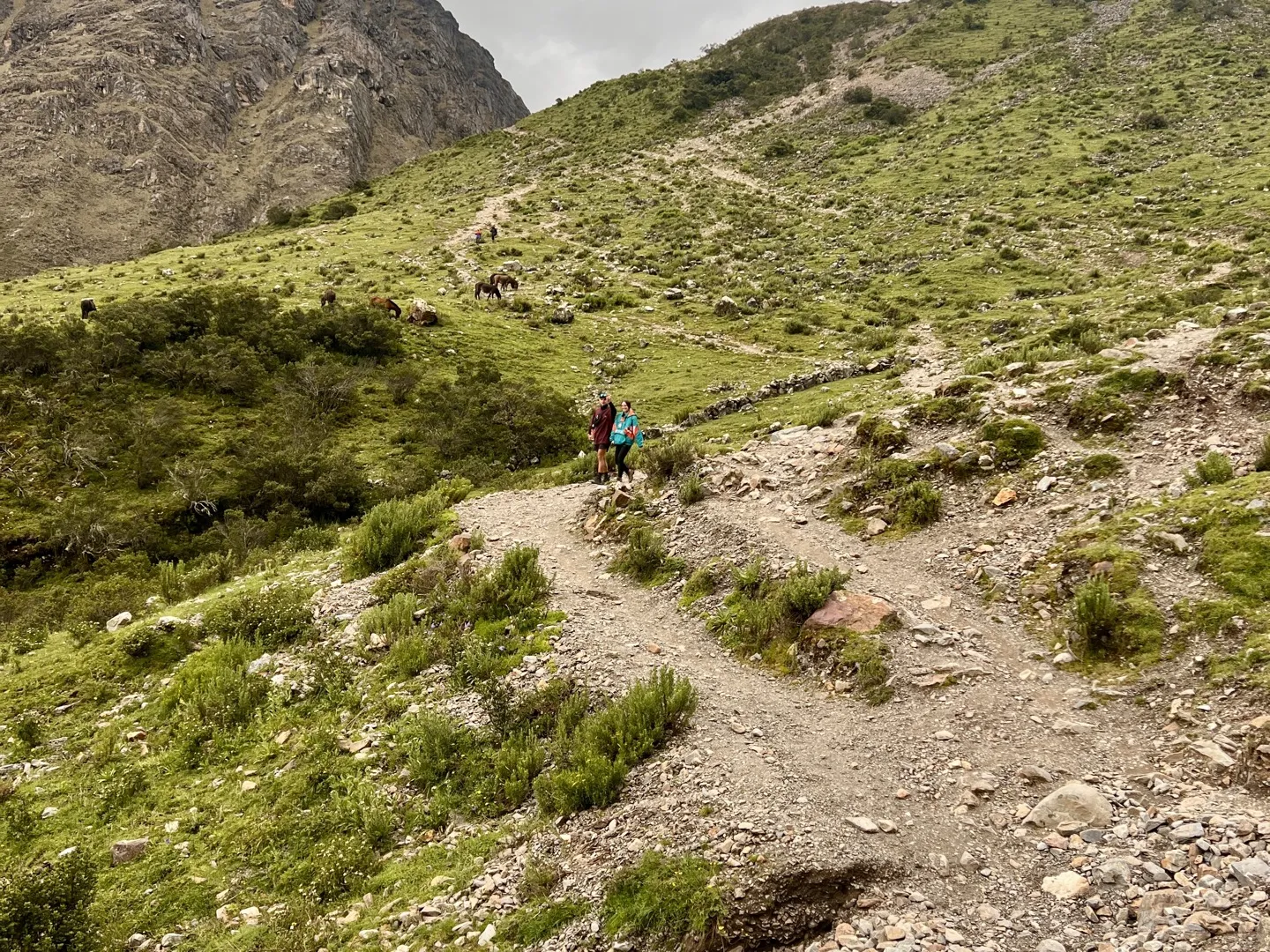
The easiest way to reach Soraypampa is by booking a shuttle through a tour company. Although you won't be joining the tour itself, they'll often let you ride along and drop you off at the trailhead with their group. We organised our ride with the tour agency at Pachinca Tours in Cusco and paid 55 PEN per person, which included both the transport to the start of the Salkantay Trek trailhead and breakfast.
While it is possible to reach Soraypampa via colectivos and taxi, many travellers end up paying more than if they had booked through an agency. Booking with an agency is cheaper and ensures you arrive at the trailhead without any hassle.
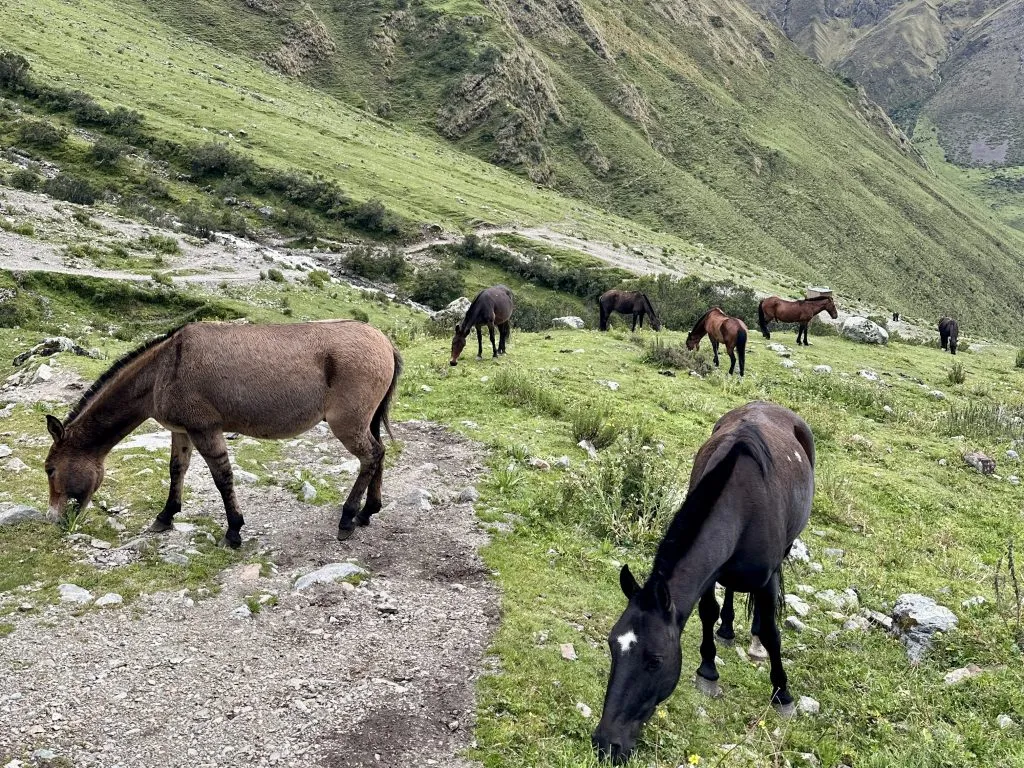
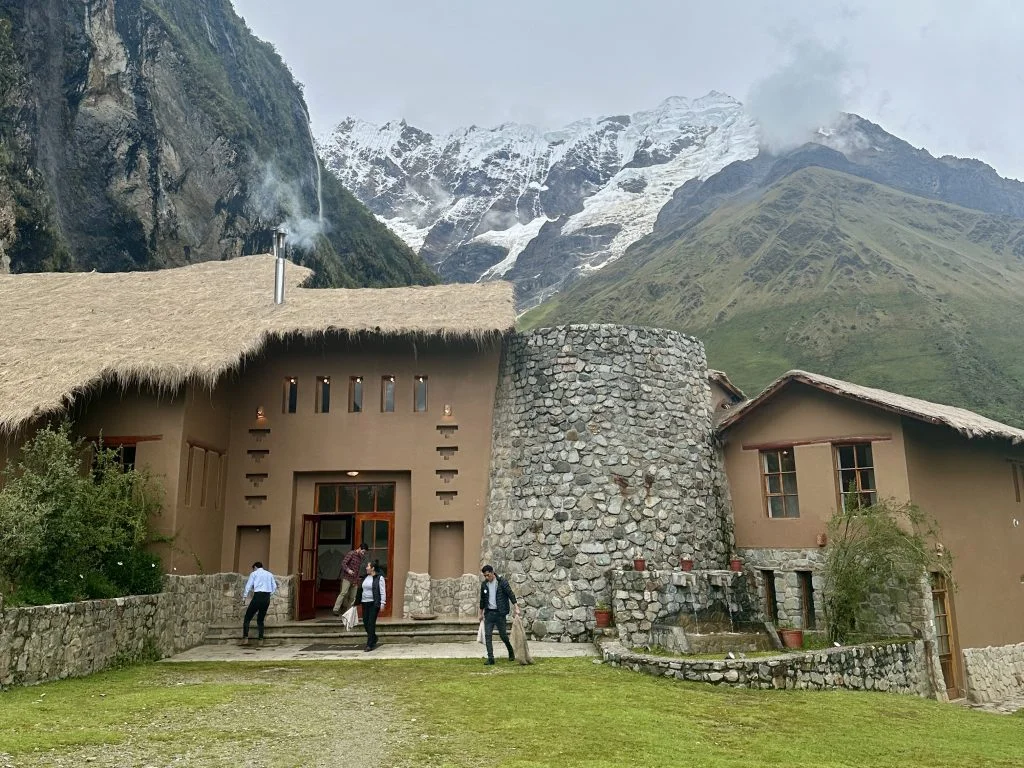
Once you arrive, find accommodation and drop your bags before heading out to Laguna Humantay. We stayed at Refugio Nacho, paying 60 PEN for a shared dorm, an afternoon snack, dinner, and breakfast. You can't book it online (you'll understand why when you get there), but don't let that put you off. The family who hosted us on the first night of the Salkantay trek were incredibly friendly and made us feel welcome in their home. Refugio Nacho is not the only option either, as Soraypampa has enough basic lodging for travellers arriving without a reservation, with warm blankets waiting once the sun drops behind the mountains.
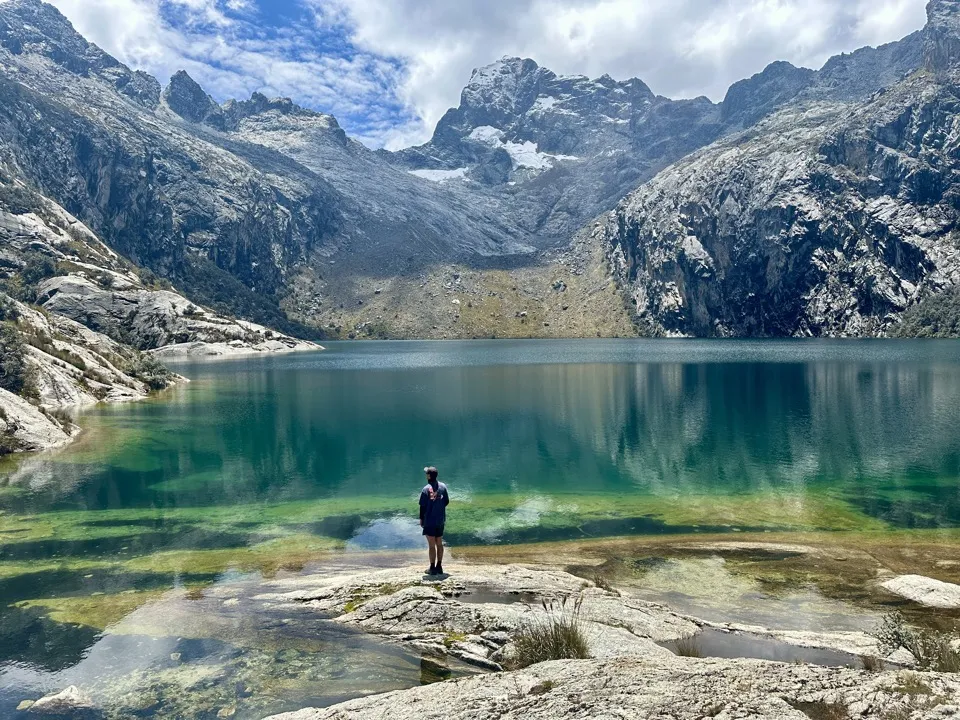
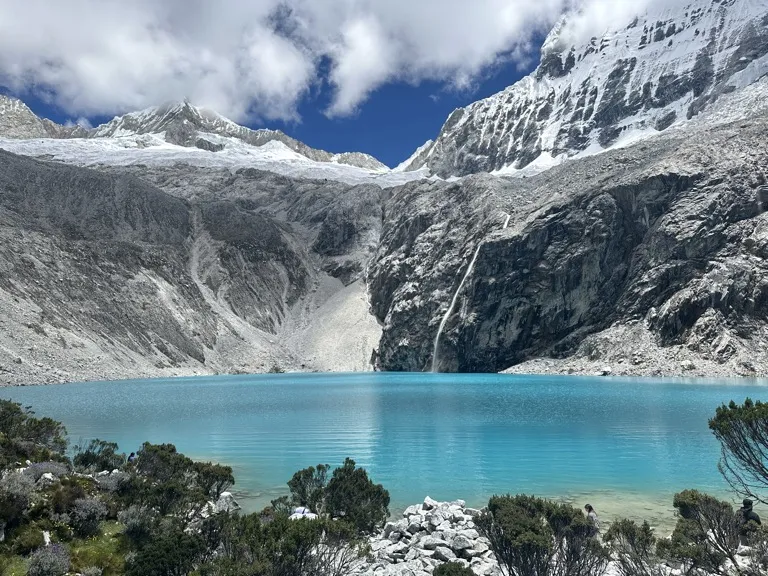
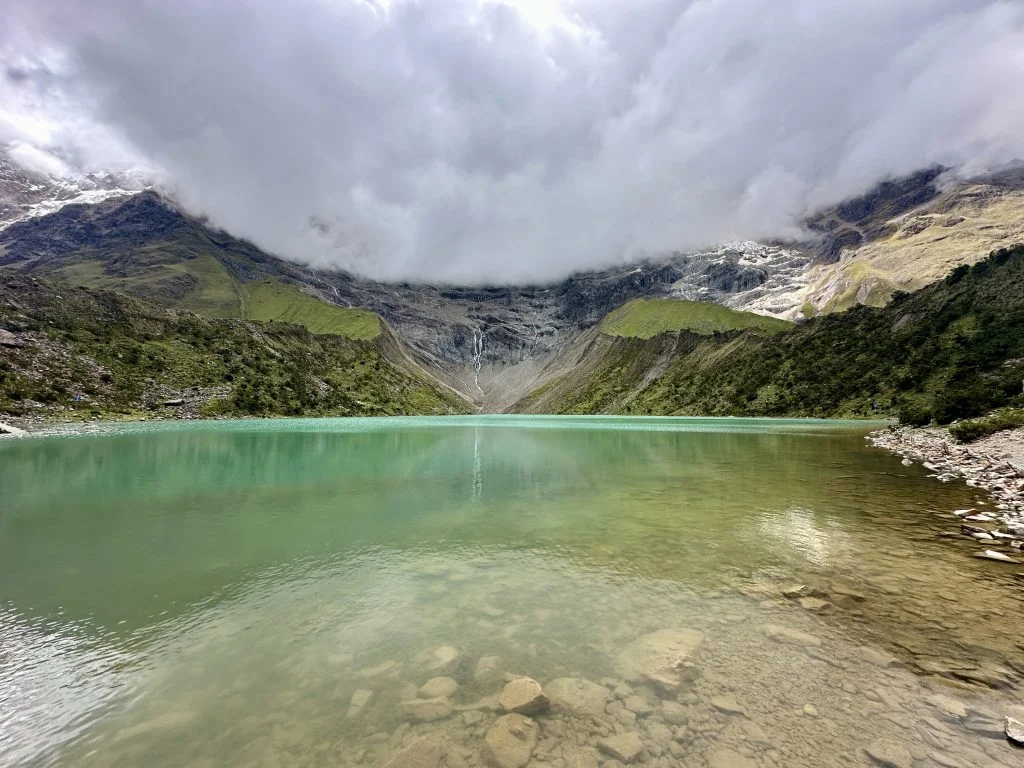
Laguna Humantay is one of the most spectacular glacial lakes you can visit in Peru, especially on a clear day when the snow-capped mountains are fully visible around it. From Refugio Nacho, the return hike is approximately 9.2 km (5.72 miles), with the trail becoming steep shortly after you leave Soraypampa. It is not a technical hike, but it is a steady climb at altitude, so take your time on the way up and save a bit of energy for the descent.
Leave your main backpack at your guesthouse and take a light daypack with water, some food, sunscreen and a warm layer. You don't want to carry five days of gear up the hill to the lake.
Soraypampa → Salkantay Pass → Chaullay
The second day is the toughest of the five, which in my opinion is a good thing to get out of the way early. Make sure to eat a big breakfast and leave Soraypampa no later than 6:15am to give yourself plenty of time.
At 4,630 metres (15,190 feet), the altitude makes every step harder. Take it slow, even if you're fit, and give yourself time on the way up. Mild headaches, nausea or shortness of breath are signs to slow down and take a break.
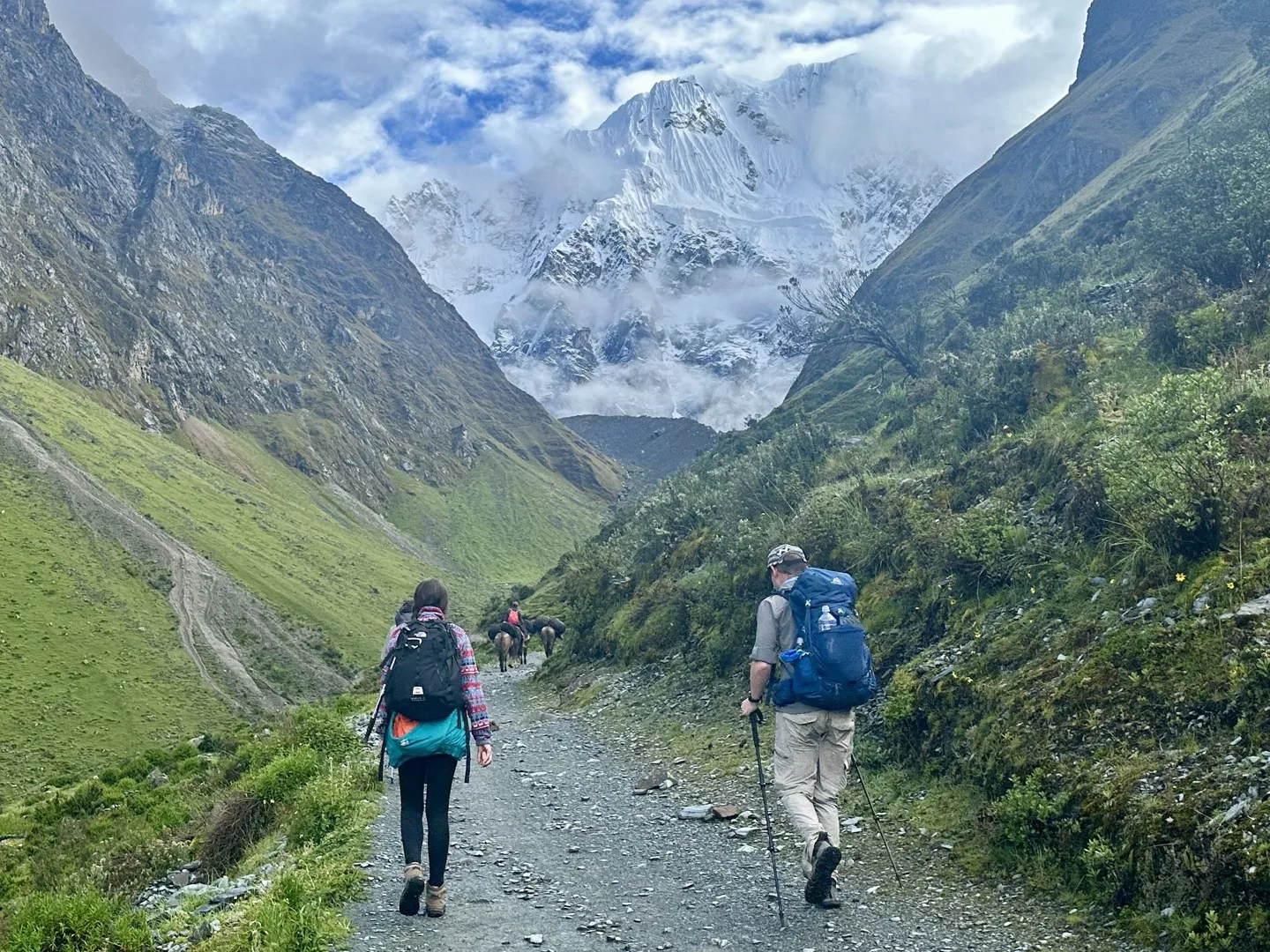
Shortly after leaving Soraypampa, you'll begin the climb towards Salkantay Pass at 4,630 metres (15,190 feet). Even if you're hiking independently, this is one of the busiest sections of the Salkantay trek to Machu Picchu, as everyone slows down on the steep climb towards the pass. Once you reach the top, sit down, have some food and water, and take in the snow-capped mountains in every direction. From here, the long descent begins, and the landscape soon changes from jagged peaks to lush green rainforest.
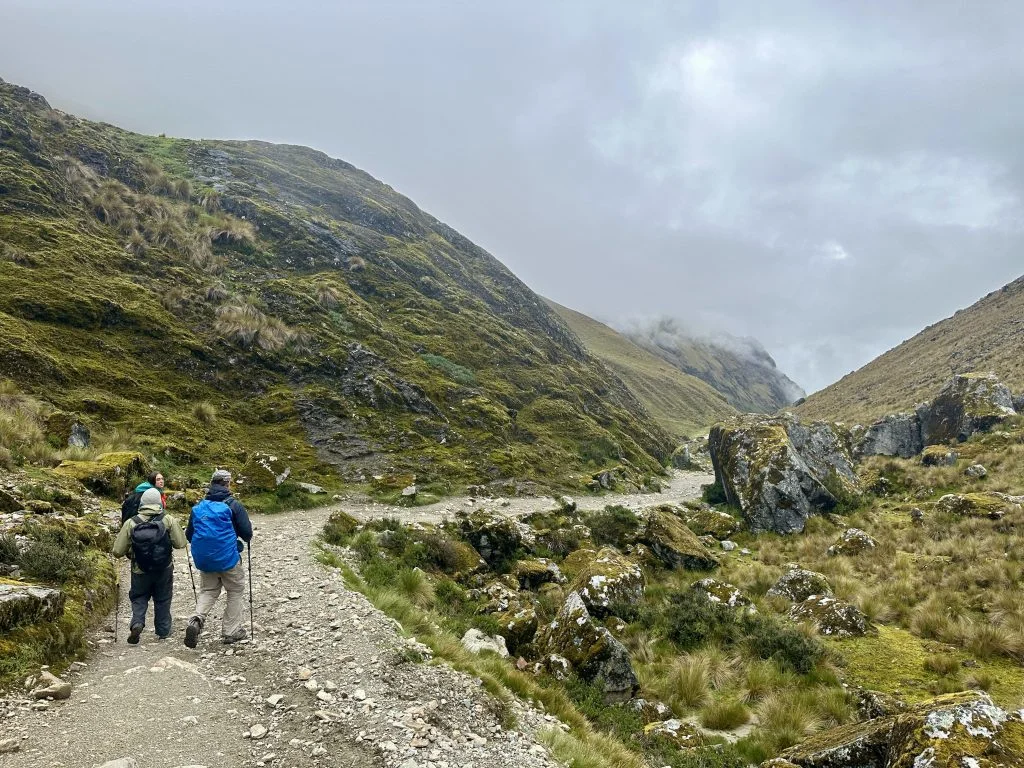
Finding lunch on day two was trickier than expected without a guided group. Most places we tried were set up for tours, and a few scoffed before turning us away because their tables were already reserved. Fortunately, a family next to Wayra Lodge, who usually cooks for passing tour groups, snuck us into their kitchen, where we had a warm home-cooked meal surrounded by dogs, cats, ducks, guinea pigs and rabbits. It was one of those small, unplanned moments that made hiking without a guide feel worth it.
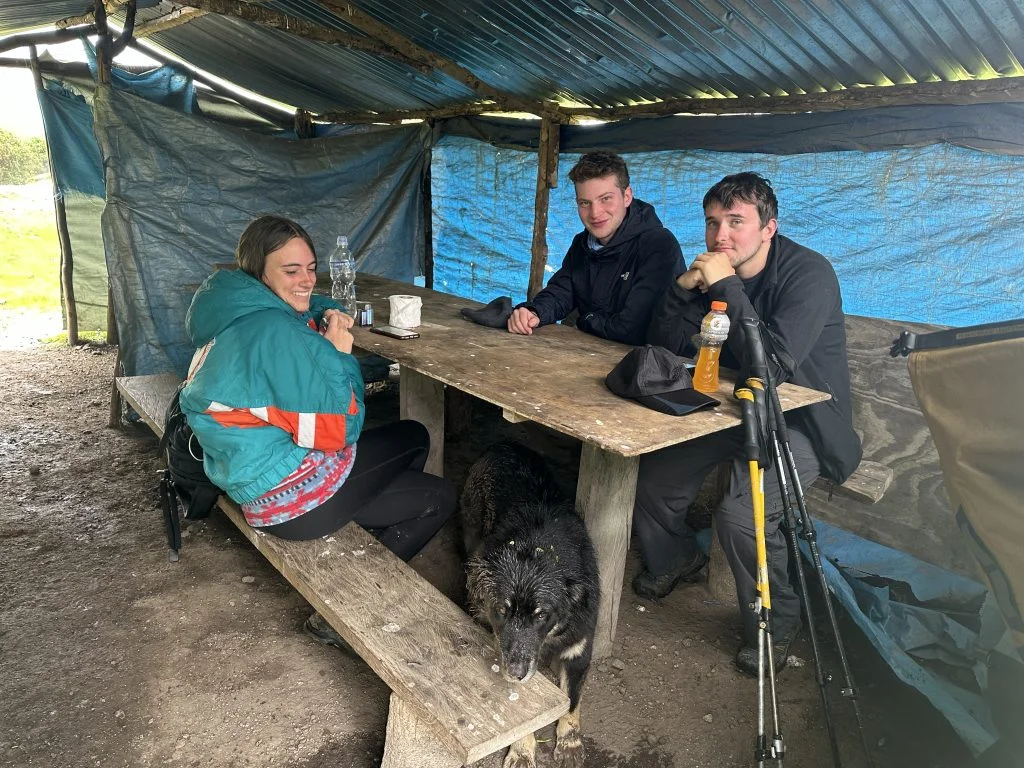
After nearly 23 km (14.29 miles) and 770 metres (2,500 feet) of climbing, you'll arrive in Chaullay feeling wrecked and probably ready to find a room and a warm meal as soon as possible. We stayed at Salkantay Hostel, which cost 70 PEN for a private room with warm showers, dinner, breakfast and semi-functional Wi-Fi. However, the best part of this accommodation is that it sits right on the edge of the valley, with most rooms looking out over dense green forest.
If there's no accommodation in Chaullay, don't stress. You can always hike a bit further to the next town, Collpapampa, and spend the night there instead.
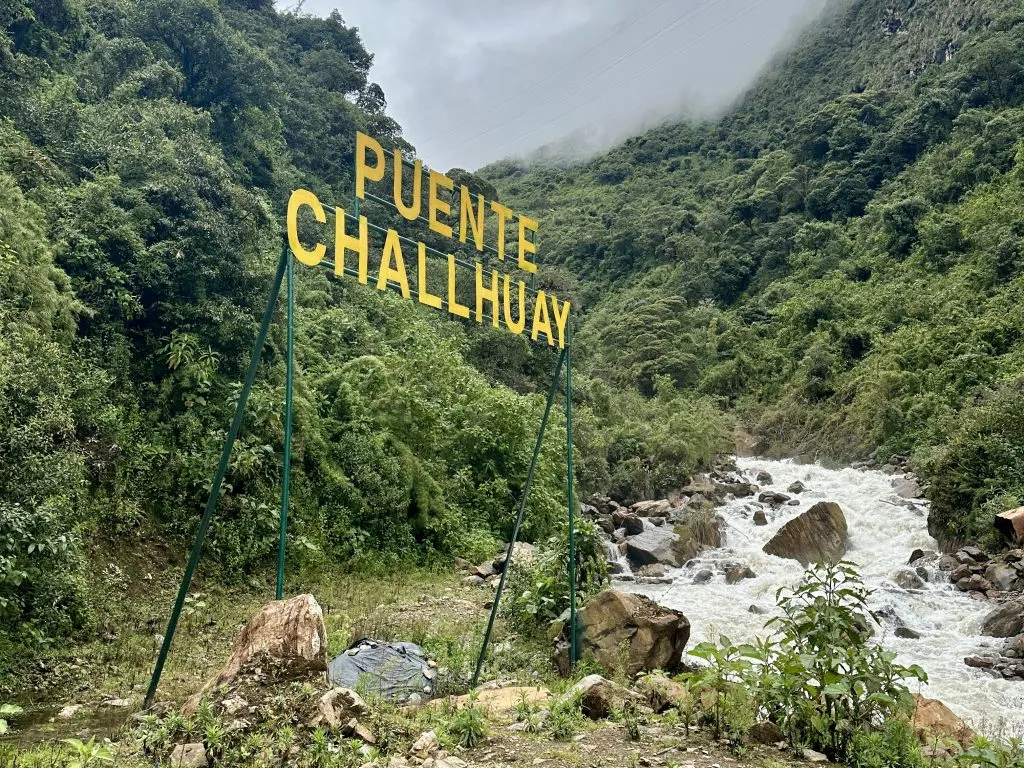
Chaullay → Lucmabamba
In Australia, we say the third day is always better than the second, and the Salkantay Trek is no exception. After the climb over Salkantay Pass the day before, the walk from Chaullay to Lucmabamba feels much kinder on the legs. The trail is mostly flat as it follows the river through a humid, subtropical valley, passing through Peru's coffee and avocado-growing region along the way. It is usually warm and sticky here, so you'll probably start peeling off layers not long after leaving Chaullay.
This section of the trail may be closed due to landslides, especially during the rainy season. Be sure to check with your guesthouse if you are required to take an alternative route before leaving Chaullay or Collpapampa.
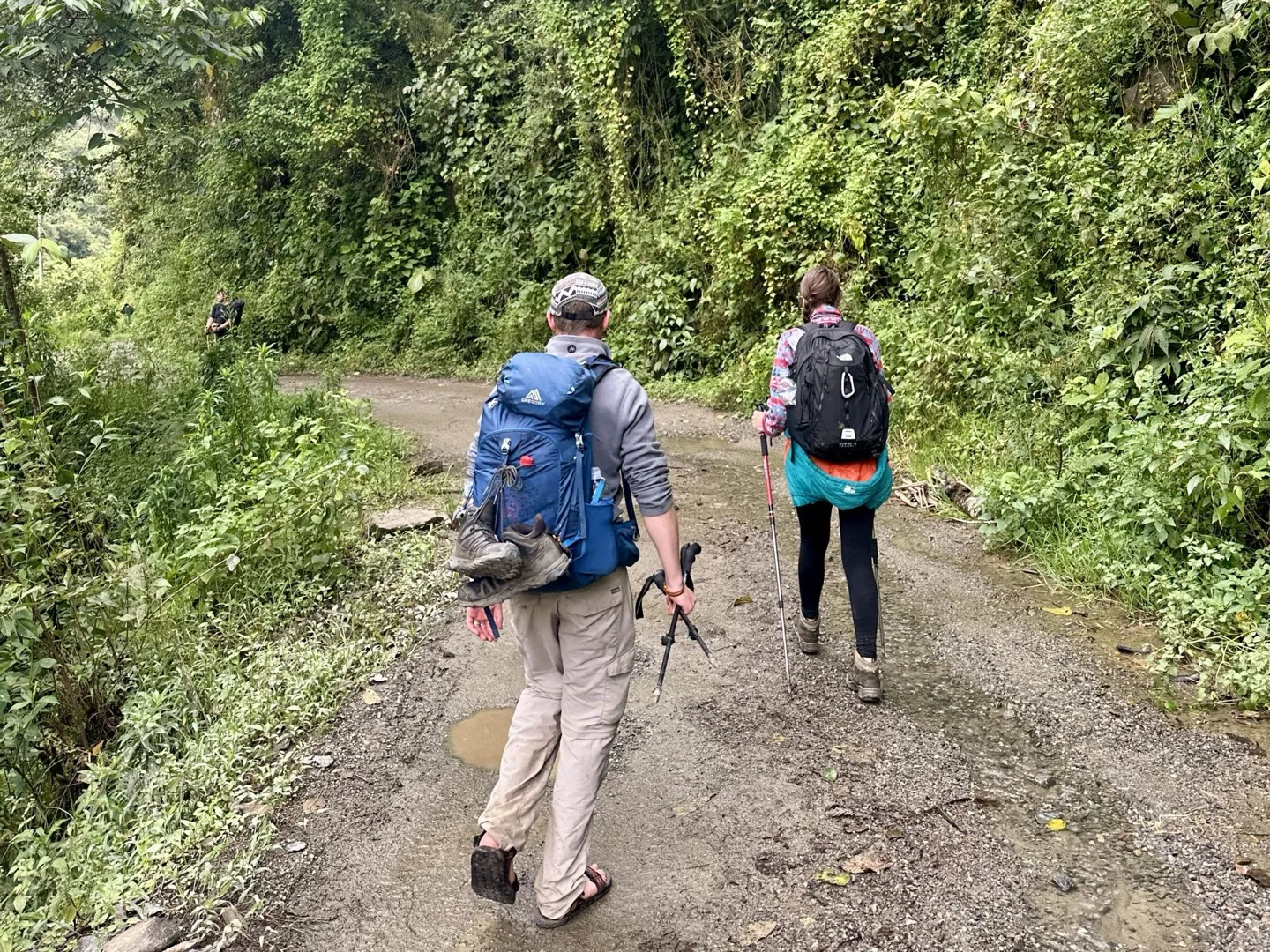
For me, the highlight of day three was stopping at a local farm mid-hike for fresh avocado sandwiches and a cup of coffee grown nearby. We liked it so much that we kept ordering sandwiches until the family ran out of bread. I haven't been able to pin down the exact location of the farm, but there were plenty of similar stops along the trail, so you should still have a good chance of finding somewhere for food and coffee.
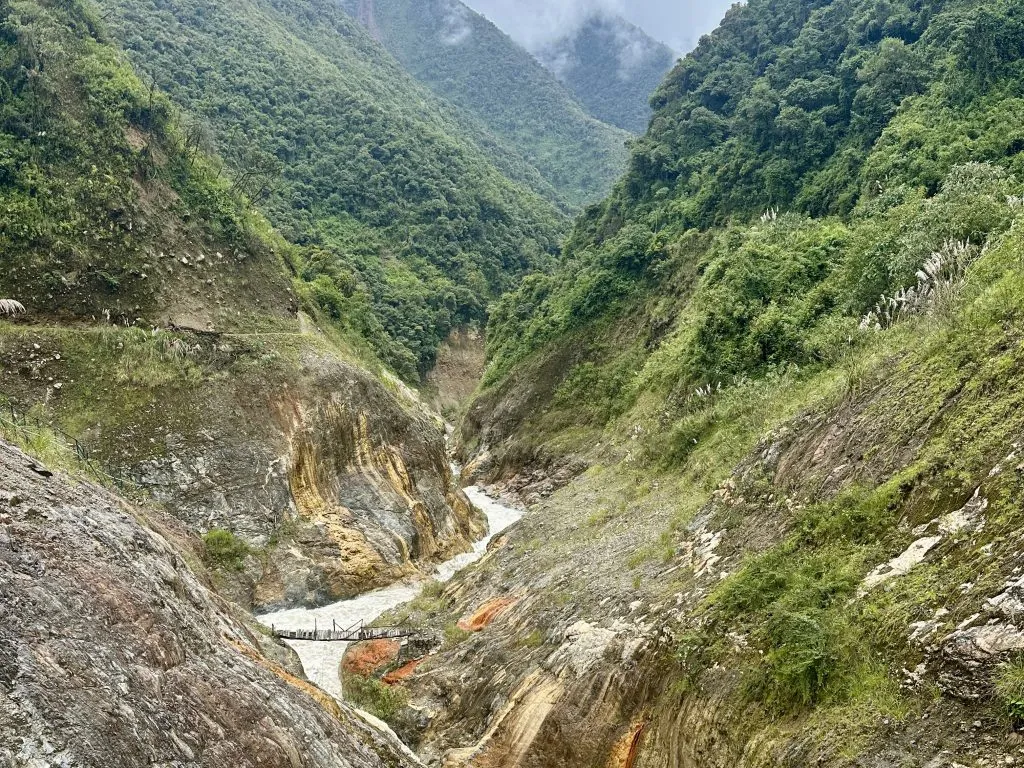
When you arrive in Lucmabamba, you'll find local farms offering simple accommodation and meals. We stayed at Lucmabamba Lodge, which cost 60 PEN for a private room with hot showers, Wi-Fi, dinner and breakfast. What made the stay memorable was the way the owner and his family joined us for both dinner and breakfast and, despite our limited Spanish, made a real effort to chat about Peru and our travel plans. Every meal came with a generous serving of avocado and a complimentary cup of coffee, which felt very fitting for the part of Peru we were in.
Machu Picchu is incredibly popular, so I'd recommend booking your ticket through the official website as soon as you know your Salkantay hiking dates. Last-minute tickets can still be available, but I wouldn't rely on them, especially if you want a particular circuit or entry time.
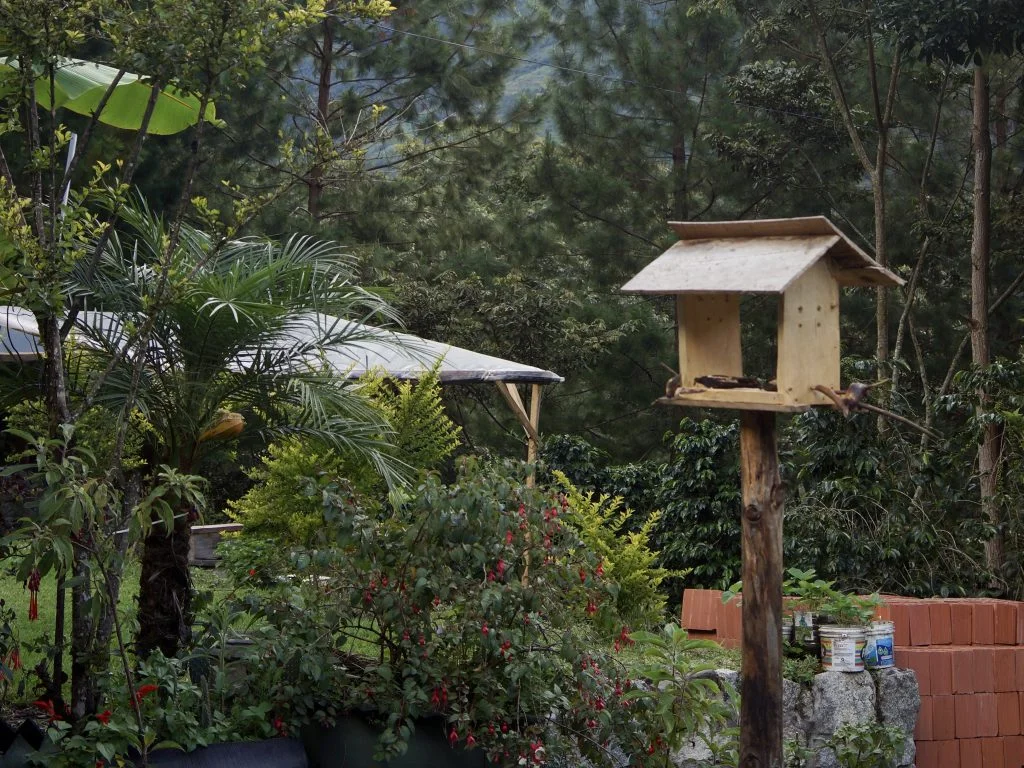
Lucmabamba → Hidroelectrica → Aguas Calientes
Day four starts with a steep uphill climb. It is not the most physically demanding section of the trek, but the humid, sticky conditions made it one of the least enjoyable parts for us. Just before you reach the top of the climb, you'll spot a small path leading to a flat farm area called Mesa Pata Inca Observatory, which is well worth the short detour.
If the weather is clear, this is where you'll catch your first faint glimpse of Machu Picchu across the valley. Mesa Pata Inca is also a small farm where you can stop for coffee, fresh juice and a sandwich before heading back to the main trail.
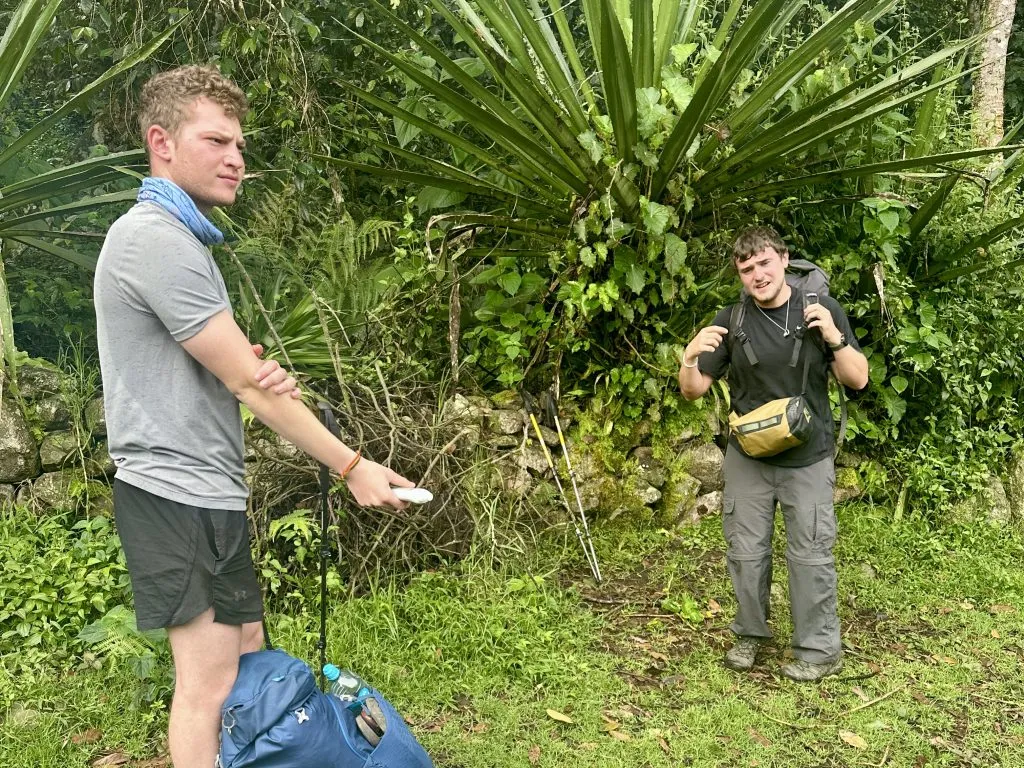
After the viewpoint, you'll continue downhill towards Hidroelectrica, which is the last proper food stop before the walk to Aguas Calientes. There are plenty of restaurants here if you want lunch, though we found the food fairly bland and overpriced compared to most other places we ate in Peru. There are also plenty of small tiendas (shops), where you can buy more water and snacks for the last leg of the trip.
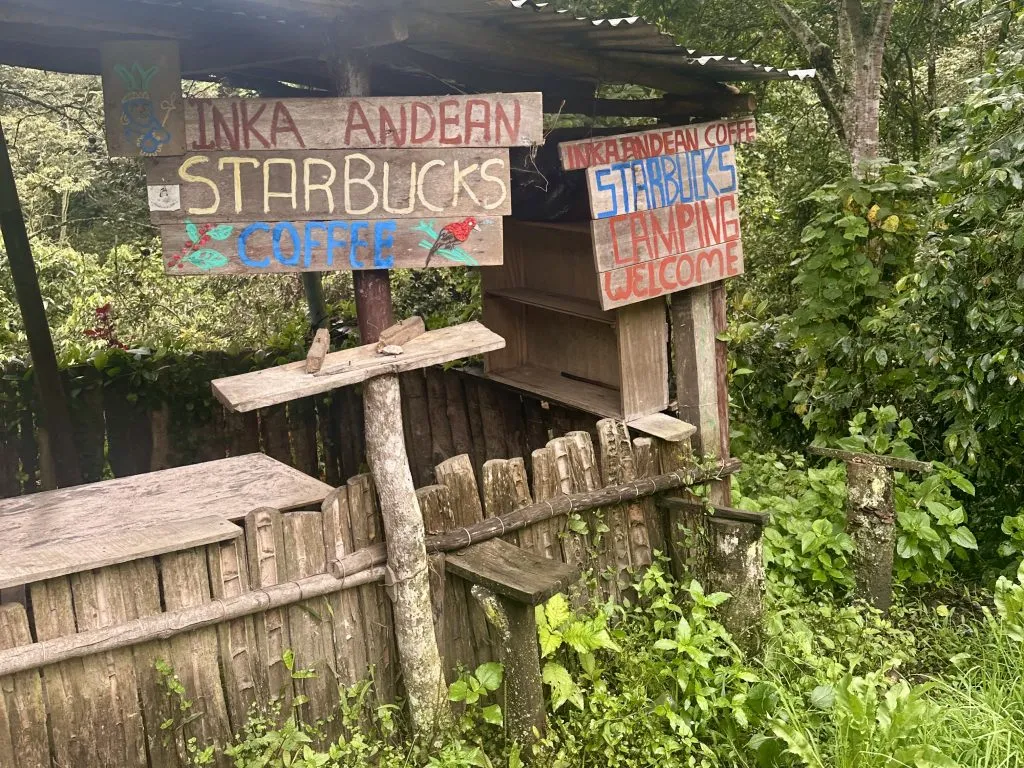
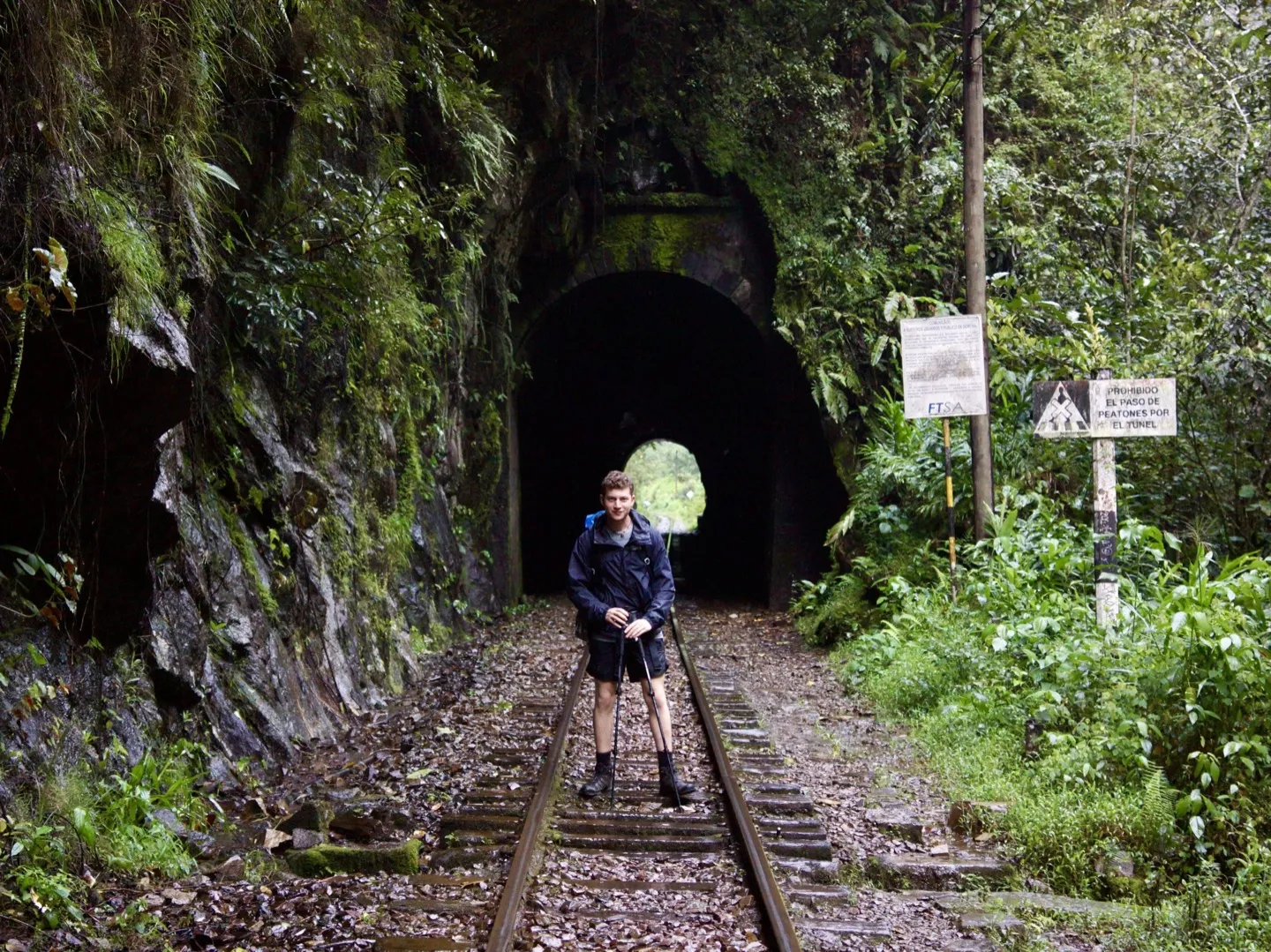
From Hidroelectrica, the walk to Aguas Calientes becomes something special. The path follows the train tracks through thick green forest, with the rail line on one side and the river running beside you for much of the way. This section feels completely different from anything else on the Salkantay Trek and, even if your legs are sore by this point, it is worth taking the time to appreciate it.
Be careful when walking near the train tracks, even if the PeruRail trains are not running. Local construction workers sometimes use modified motorbikes along the railway, and they can be much quieter and harder to hear than trains.
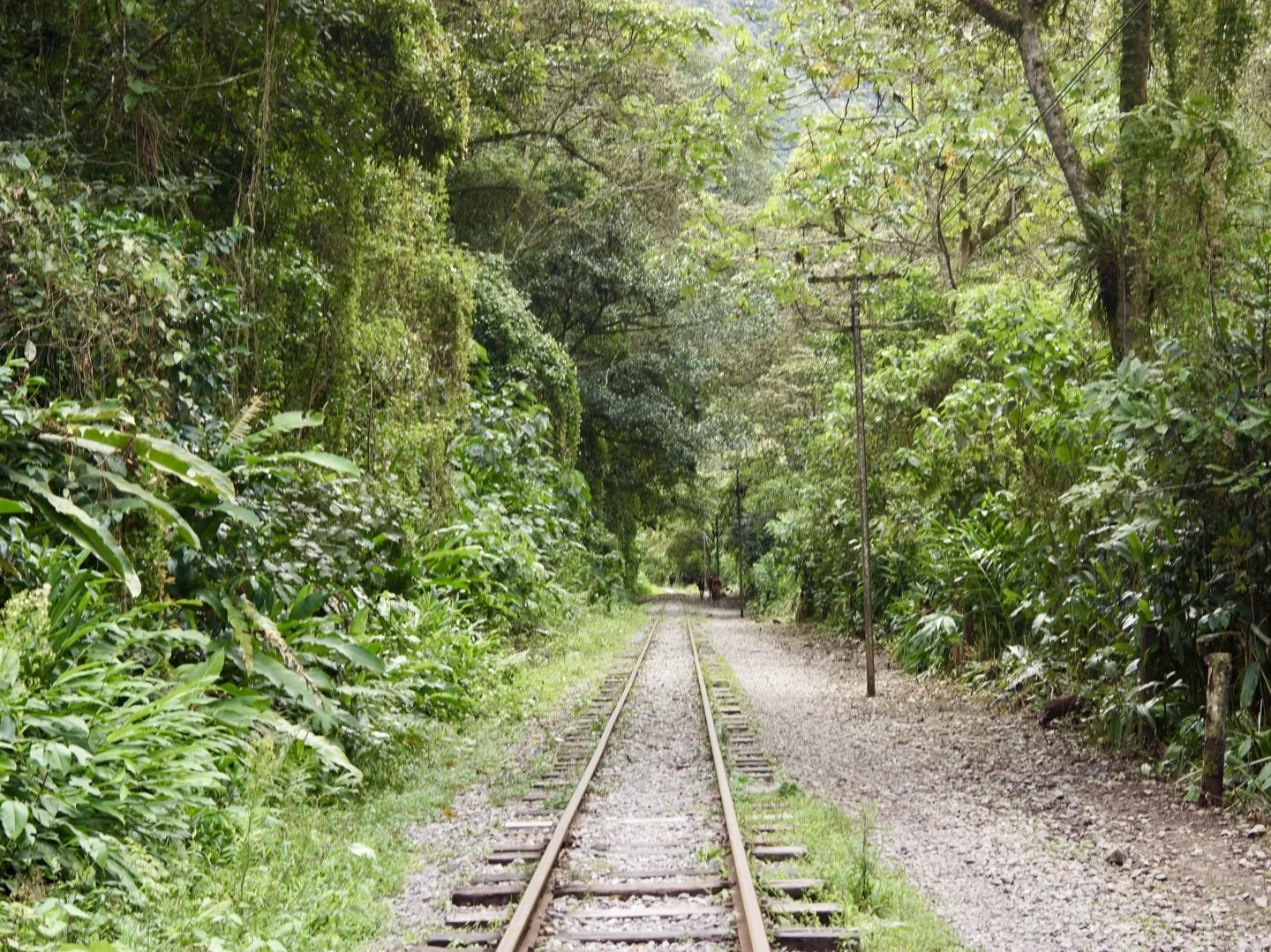
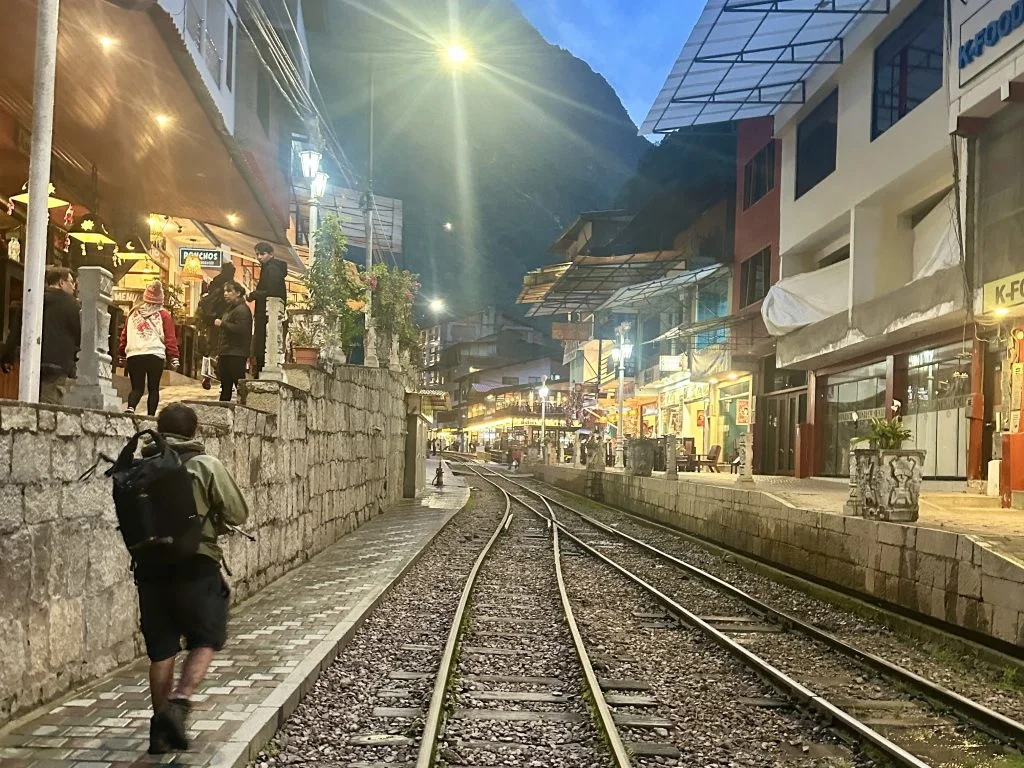
Arriving in Aguas Calientes (also called Machu Picchu Town) can be a bit of a shock after the quiet villages along the trek. It is far more built-up, with hotels, restaurants, a train station, hot springs and even a synthetic football field tucked into the valley below Machu Picchu. For accommodation, we found a good balance at Inka's Land, paying 40 PEN per person for a private room with hot showers, the fastest Wi-Fi of the trek and a filling breakfast.
Even if you have the earliest entrance ticket to Machu Picchu, the breakfast included with your stay at Inka's Land will be ready before you need to leave.
Not feeling Inka's Land?




Aguas Calientes → Machu Picchu
To visit Machu Picchu, you'll need to book your entrance ticket in advance, ideally before you reach Aguas Calientes. The best place to buy your ticket is through the official website, where you'll choose your date, entry time and circuit. For context on how quickly Machu Picchu tickets can sell out, we completed the Salkantay trek in the off-season and bought our tickets on day three, but only the earliest entrance time was still available. If you know the date you're starting the trek, you can work out when you'll reach Machu Picchu and use that to book your ticket ahead of time.
If Circuit 2-A: Classic designed route is available, that's the one I'd choose. It gives you the famous panoramic view of Machu Picchu before taking you through the main part of the ruins.
From Aguas Calientes, there are two ways up to Machu Picchu: the shuttle bus or the walk. The official bus tickets are run by Consettur and cost around 50 PEN one way. You can buy them online through the official website, or in person at the authorised ticket booths in Cusco or Aguas Calientes. We took the bus up for our 6 AM entrance and walked back down afterwards, which felt like the right balance after five days on the trail. If you walk up, expect a 3.4 km (2.1 mile) hike with around 680 metres (2,230 feet) of elevation gain, including roughly 1,750 stone steps over the final kilometre (0.6 miles). Depending on your pace, the walk usually takes around 1.5 to 2 hours.
If you want to save on one bus fare, take the shuttle up and walk back down to Aguas Calientes afterwards. The downhill walk takes about an hour and feels much easier once Machu Picchu is behind you.
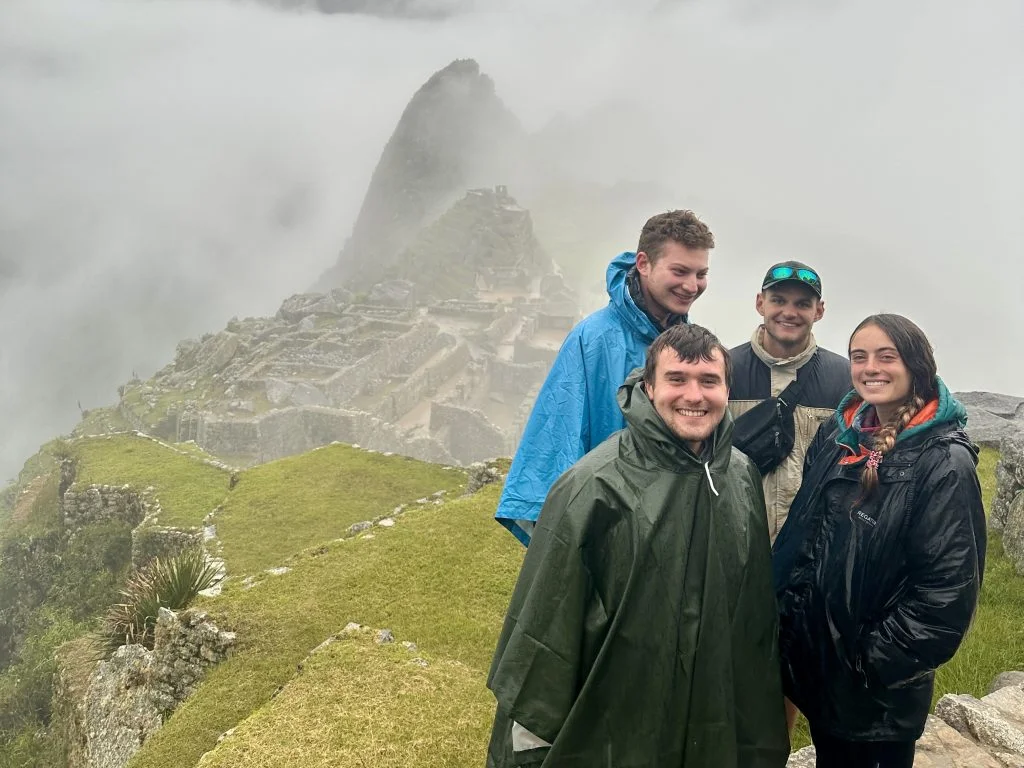
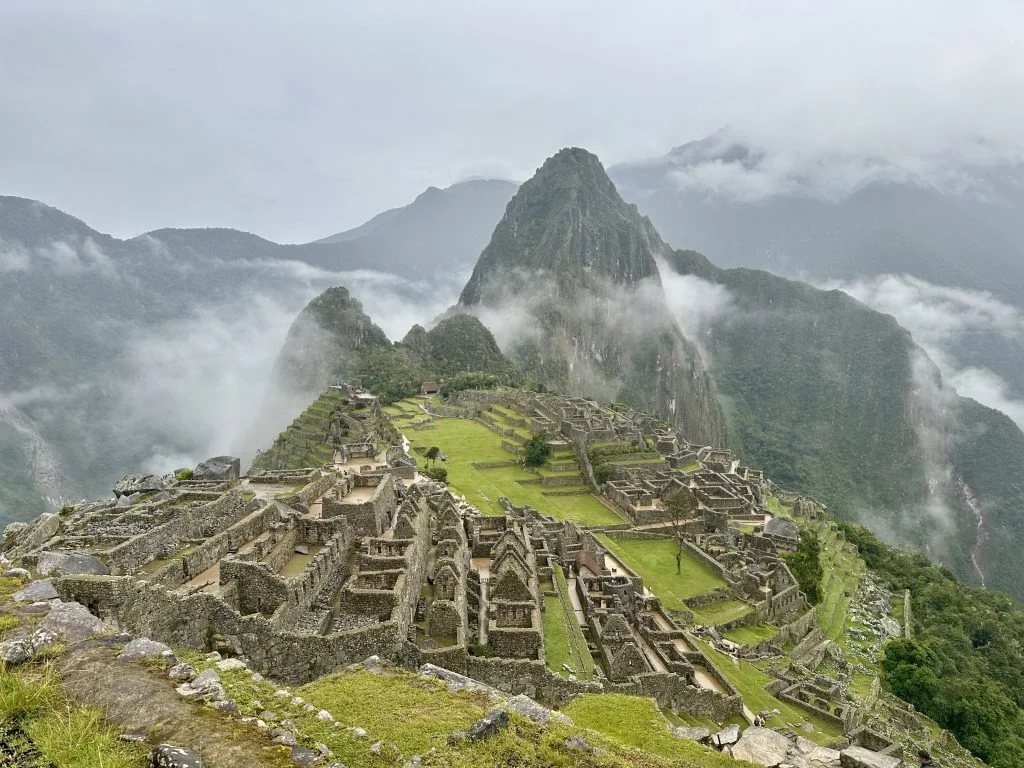
After five days of snow-capped mountains, cloud forest, coffee plantations and jungle, arriving at Machu Picchu almost feels as exciting as opening presents on Christmas morning when you were a child. It is a place you have probably seen in photos countless times, but finally standing there after completing the Salkantay Trek, one of Peru's most iconic routes, is completely different. No photo really prepares you for the scale of it, with the ruins sitting high above the valley and green mountains rising all around. An added benefit of booking an early entrance ticket is that you can beat the crowds and take your time inside, since your ticket does not have an exit time.
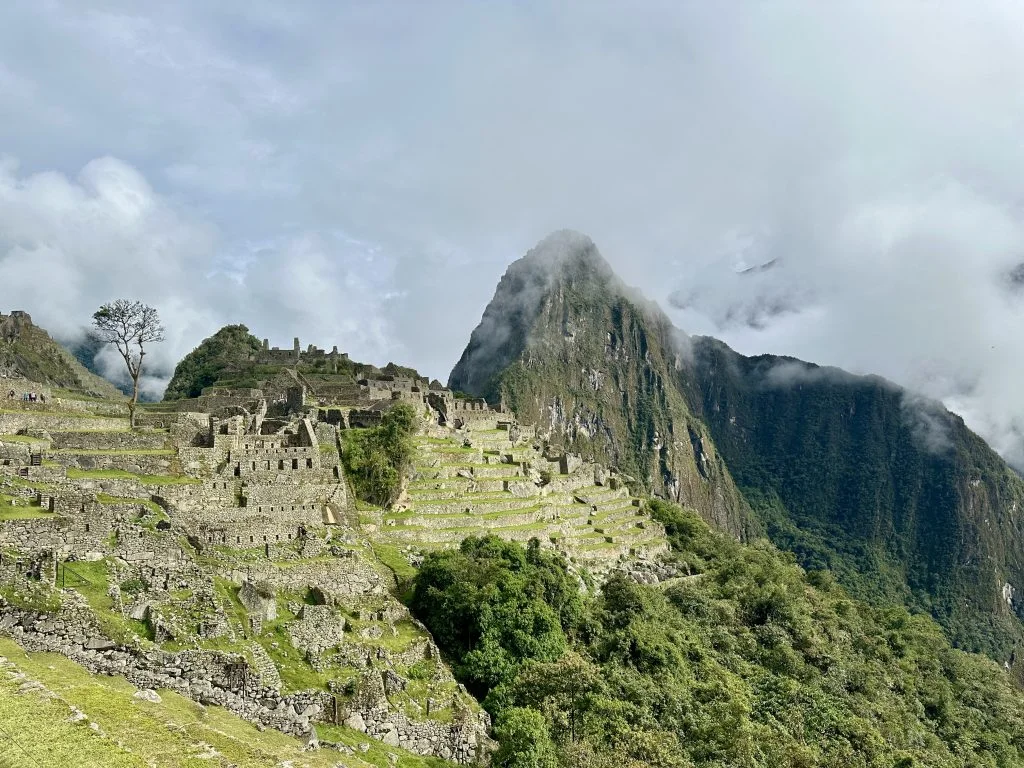
If the weather is clear and your legs have something left, Huayna Picchu is worth considering. Huayna Picchu is the steep mountain behind Machu Picchu, and the climb gives you a top-down view over the ruins and the valley around them. You'll need a separate add-on ticket for Circuit 3-B, which you can buy through the same official website as your Machu Picchu entrance ticket. Spots are limited, so book early if this is something you want to do.
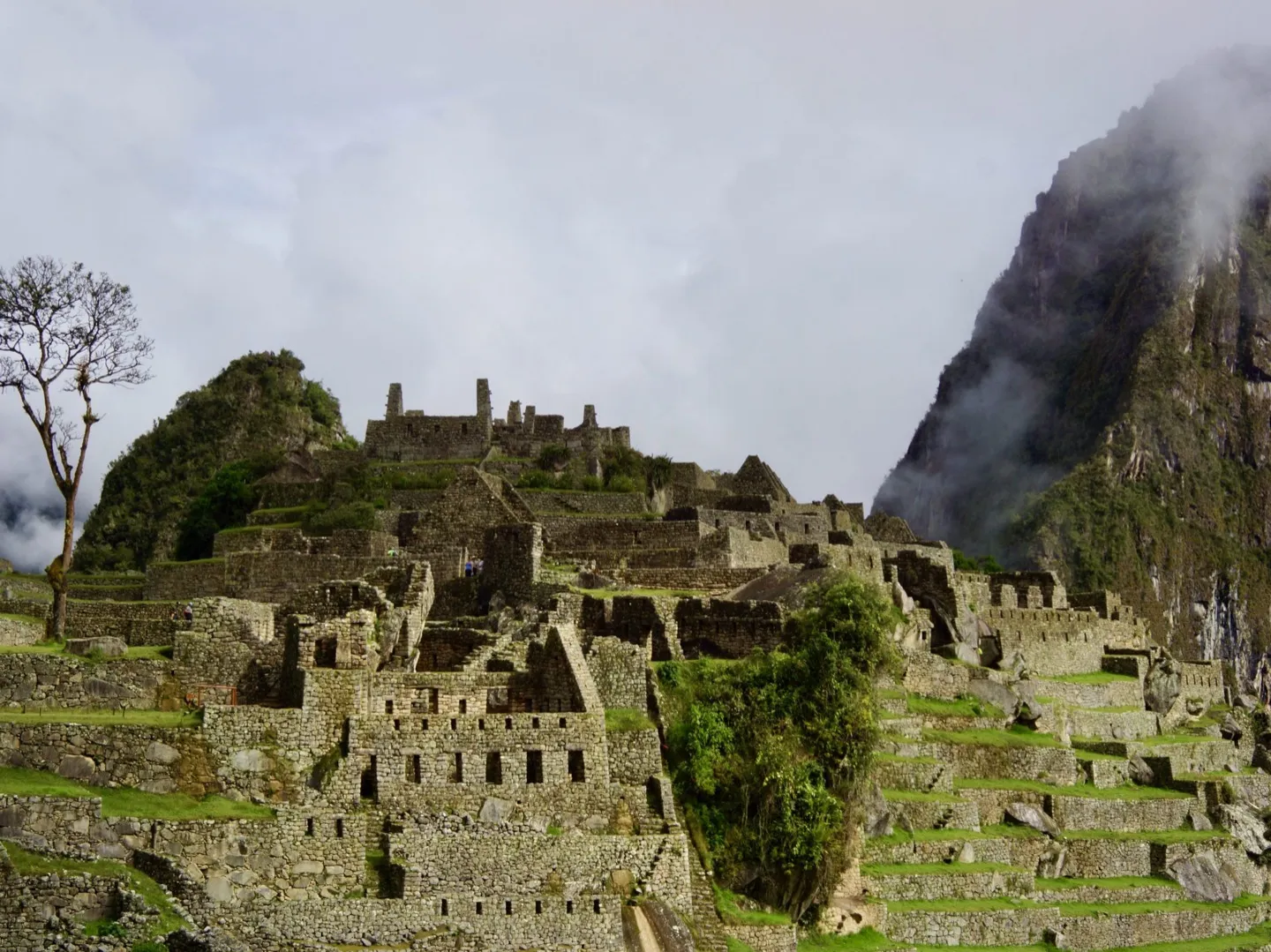
Aguas Calientes → Hidroelectrica → Cusco
The cheaper way back to Cusco is to walk back along the train tracks to Hidroelectrica and catch a bus from there. Although it means retracing your steps, the walk is still just as scenic, and there is something nice about knowing these are your final steps on the Salkantay trail. You can organise transport on day four before reaching Aguas Calientes, or arrange it over WhatsApp once you're there. We booked through Soledad, who charged 40 PEN per person (WhatsApp: +51 984 286 146), and the process was straightforward.
If you're feeling tired after five days on the Salkantay Trek, you can take the PeruRail train directly from Aguas Calientes back to Cusco. You can book tickets online through the official website or in person at PeruRail ticket offices in Cusco or Aguas Calientes. If you're visiting during peak season, book well in advance.
The journey takes around 7 to 8 hours, with one stop for dinner at a roadside spot along the way. We shared a table with other trekkers and had the most satisfying plate of rice, chicken and soup after five days on the trail. It might not sound gourmet, but after completing the Salkantay Trek, it absolutely hit the spot.
The last bus from Hidroelectrica leaves at 3pm, so make sure you leave Aguas Calientes with enough time to walk back and grab something to eat before departing. There are plenty of shops in Hidroelectrica where you can pick up a full meal, snacks or drinks for the journey back to Cusco.
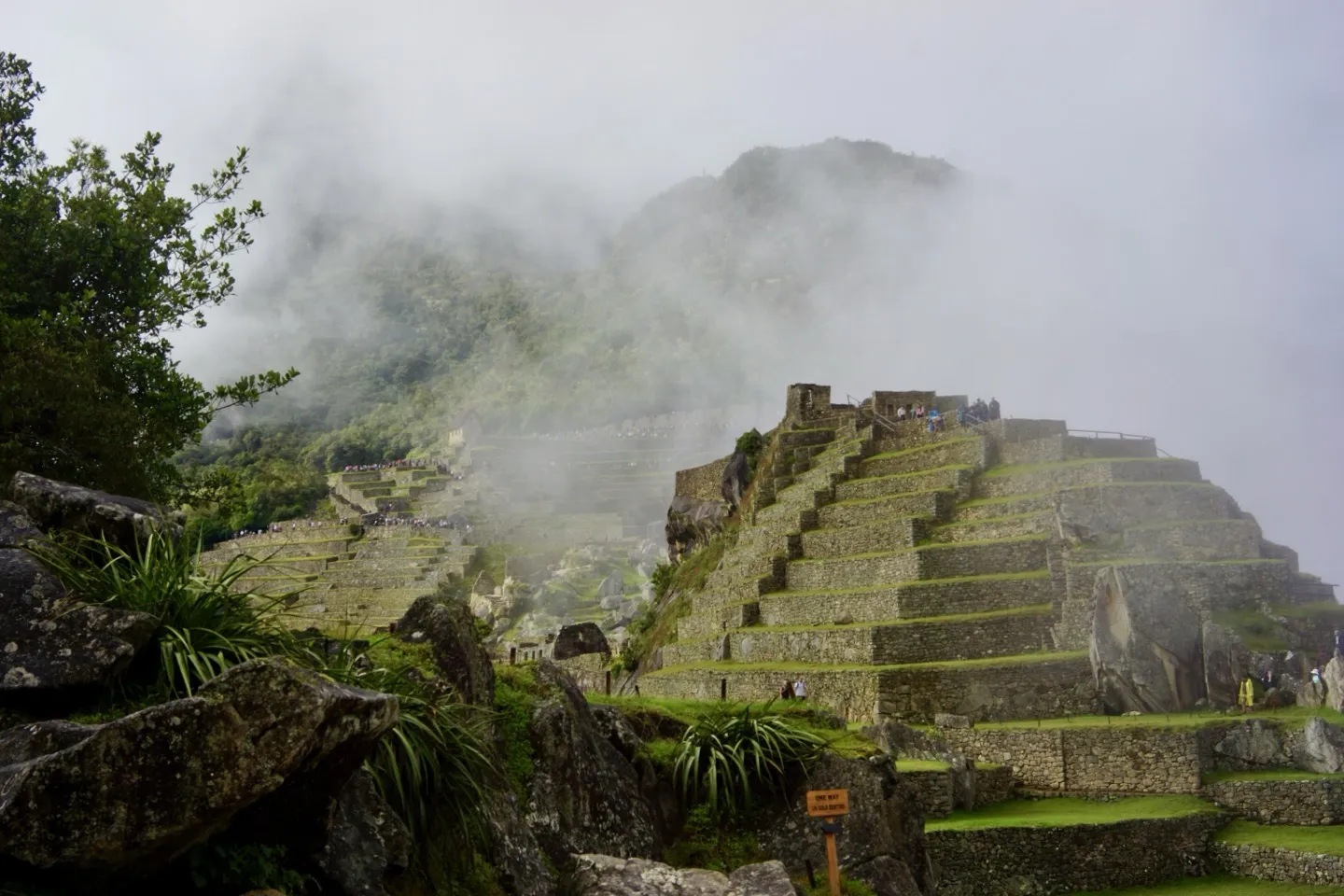
Doing the Salkantay Trek without a guide might feel like a leap at first, but looking back, it was moments like eating in a kitchen surrounded by seven different types of animals, or walking at your own pace beside the train tracks on the final stretch to Aguas Calientes, with thick forest around you and the river rushing beside the trail, that made the experience so rewarding. Those are the small moments you probably would not get in the same way with a guide, and I cannot recommend doing this trek without a guide enough.
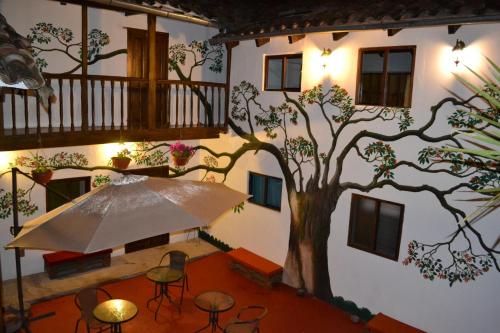
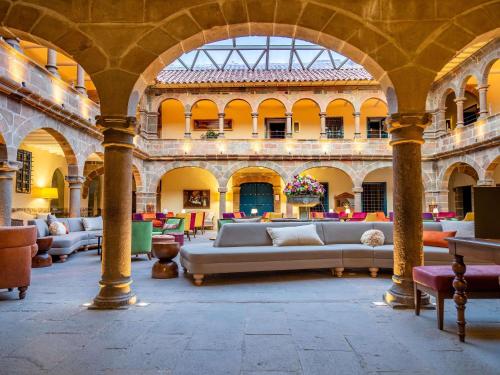
Salkantay Trek Done? Sleep Here.

Hiking to Machu Picchu via the Salkantay Trek is manageable if you hike regularly or have a decent level of fitness. The hardest part of the trek is getting over Salkantay Pass on day two, which reaches 4,630 metres (15,190 feet). The climb is steep, but the altitude is what makes it feel much harder than a normal uphill hike. Once you get through the pass, the rest of the route is mostly downhill or flatter, and the walking becomes much easier.
Guided tours for the Salkantay Trek to Machu Picchu often cost around $400–600 USD per person. By doing it without a guide, I completed the trek for roughly a quarter of that price. Here's exactly where that money went.
-
S/ 55 $15Shuttle from Cusco to SoraypampaIncludes breakfast
-
S/ 20 $6Laguna Humantay entrance ticket
-
S/ 60 $16Accommodation Night 1Refugio Nacho, including dinner & breakfast
-
S/ 70 $19Accommodation Night 2Salkantay Hostel, including dinner & breakfast
-
S/ 60 $16Accommodation Night 3Lucmabamba Lodge, including dinner & breakfast
-
S/ 40 $11Accommodation Night 4Inka's Land, including breakfast
-
S/ 150 $40Machu Picchu entrance ticket
-
S/ 50 $13Bus to Machu Picchu gateOne way
-
S/ 40 $11Return bus from Hidroeléctrica to Cusco
Conversions are approximate and update daily. Check the live rate before you travel.
Cusco is well connected by domestic flights and long-distance buses, making it straightforward to reach from elsewhere in Peru. Flying is usually the quickest option, while overnight buses are a good way to save money and avoid losing a full day to travel. The main routes below cover the options you are most likely to use.

The best hiking conditions on the Salkantay Trek are generally in the middle of the year, but every season comes with its own trade-offs. Use the season-by-season guide below to find the best time for your trip.
April, May, September & October
Shoulder season- Good balance of drier trails, clearer mornings around Salkantay Pass and fewer people on the route
- Great window for visiting Machu Picchu without the peak-season crowds of June, July and August
- Machu Picchu tickets are usually easier to secure than in peak season, but you should still book once your dates are fixed
- April and May are greener after the rainy season, with the cloud forest sections feeling lush without the worst of the rain
- October is a good late-season option, with generally drier conditions than the wet season and fewer hikers than mid-year
June, July & August
Dry season, most popular months- Most reliable months for hiking the Salkantay Trek, with the lowest chance of rain on the trail
- Best chance of clear conditions around Salkantay Pass and the higher sections of the trek
- Machu Picchu tickets can sell out quickly in July and August, so book well in advance
- Nights around Soraypampa and the higher sections can be very cold, even when the days are clear
- These are the busiest months, with more hikers on the trail and around Aguas Calientes
November to March
Wet season- Wettest period for the Salkantay Trek, especially from December to February
- February is usually the hardest month to recommend, with heavy rain, muddy trails and a higher chance of delays
- The lower cloud forest sections can become slippery and deeply muddy after sustained rain
- Landslides and weather-related disruptions are more likely during the wet season, especially on remote road and trail sections
- Cloud cover can reduce visibility around Salkantay Pass and Machu Picchu
Altitude sickness on the Salkantay Trek is one of the main reasons people struggle, especially on day two. The Salkantay Pass sits at 4,630 metres (15,190 feet), and the altitude can affect you no matter how fit you are. The tips below will help you prepare for the altitude and reduce your risk of altitude sickness on the trek.
Acclimatise in Cusco before you start
Cusco sits at 3,400 metres (11,155 feet), so this is the perfect opportunity to acclimatise before starting the Salkantay Trek. Give yourself at least two full nights in the city before heading to the trailhead. Altitude sickness in Cusco is common, and Salkantay Pass is another 1,200 metres (3,940 feet) higher.
Pick up coca leaves and understand your medication
Coca leaves are cheap, easy to find and commonly used throughout Peru by locals and travellers to relieve altitude symptoms. If you carry altitude medication, make sure you know how it works. Acetazolamide is generally taken before ascending to help prevent symptoms, while dexamethasone is usually taken after symptoms develop.
Complete Rainbow Mountain hike as a warm-up
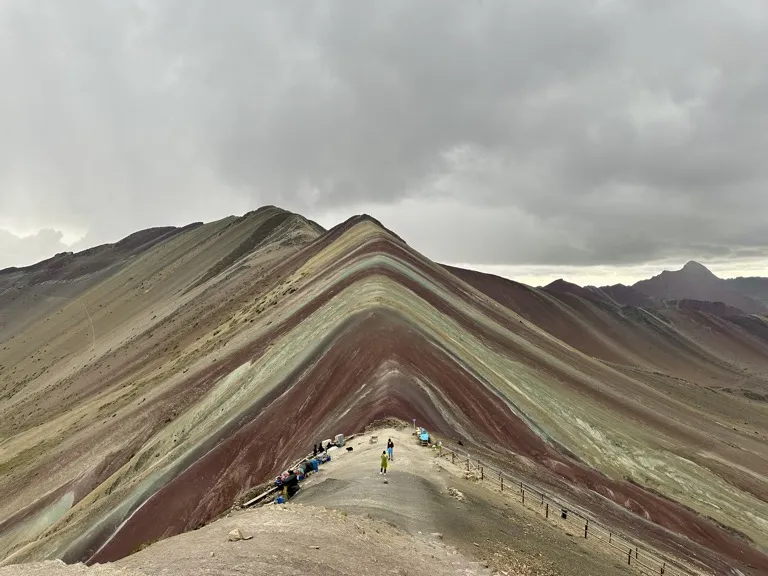
At 5,036 metres (16,522 feet), Rainbow Mountain is the perfect day hike to complete before taking on the Salkantay Trek. If you have already spent time acclimatising in Cusco and feel good, it can be a useful way to see how your body handles higher altitude before reaching Salkantay Pass.
Take the Salkantay Pass slowly
On day two, leave Soraypampa early and set a pace where you can still hold a conversation. Take breaks often and do not rush the climb. Watch for a persistent headache, nausea, dizziness or unusual fatigue. If your symptoms get worse, do not push on. Rest, descend and get help if needed.
Hiking the Salkantay Trek without a guide is safe and straightforward if you are prepared. If you are thinking of completing a hike without a guide, then this is the perfect one to start with. You still get the experience of completing a multi-day trek independently, without the isolation or complicated logistics of a more remote route.
Well marked trail
The route from Soraypampa to Aguas Calientes is well used and generally easy to follow. You do not need a guide for navigation, but it still helps to know the main stops before you start.
Other trekkers are nearby
Even if you are hiking independently, you will rarely feel completely alone. The trail is popular with guided groups, other self-guided hikers and locals using different sections of the route.
Download the trail offline
Phone signal is patchy, and homestay Wi-Fi can be unreliable. Download the route on AllTrails or Maps.me before leaving Cusco so you can still navigate if you lose reception.
Altitude is the real risk
The main challenge is the Salkantay Pass, which sits at 4,630 metres (15,190 feet). Spend at least two nights in Cusco beforehand to acclimatise properly, then take the climb slowly on day two.
Your Salkantay Trek packing list is probably shorter than you expect. Because you'll be sleeping in guesthouses each night, you do not need to carry a tent, sleeping bag or sleeping mat. A 30–35L daypack is plenty for clothes, water, snacks and a few essentials. Keep it light and your knees will thank you by day two.