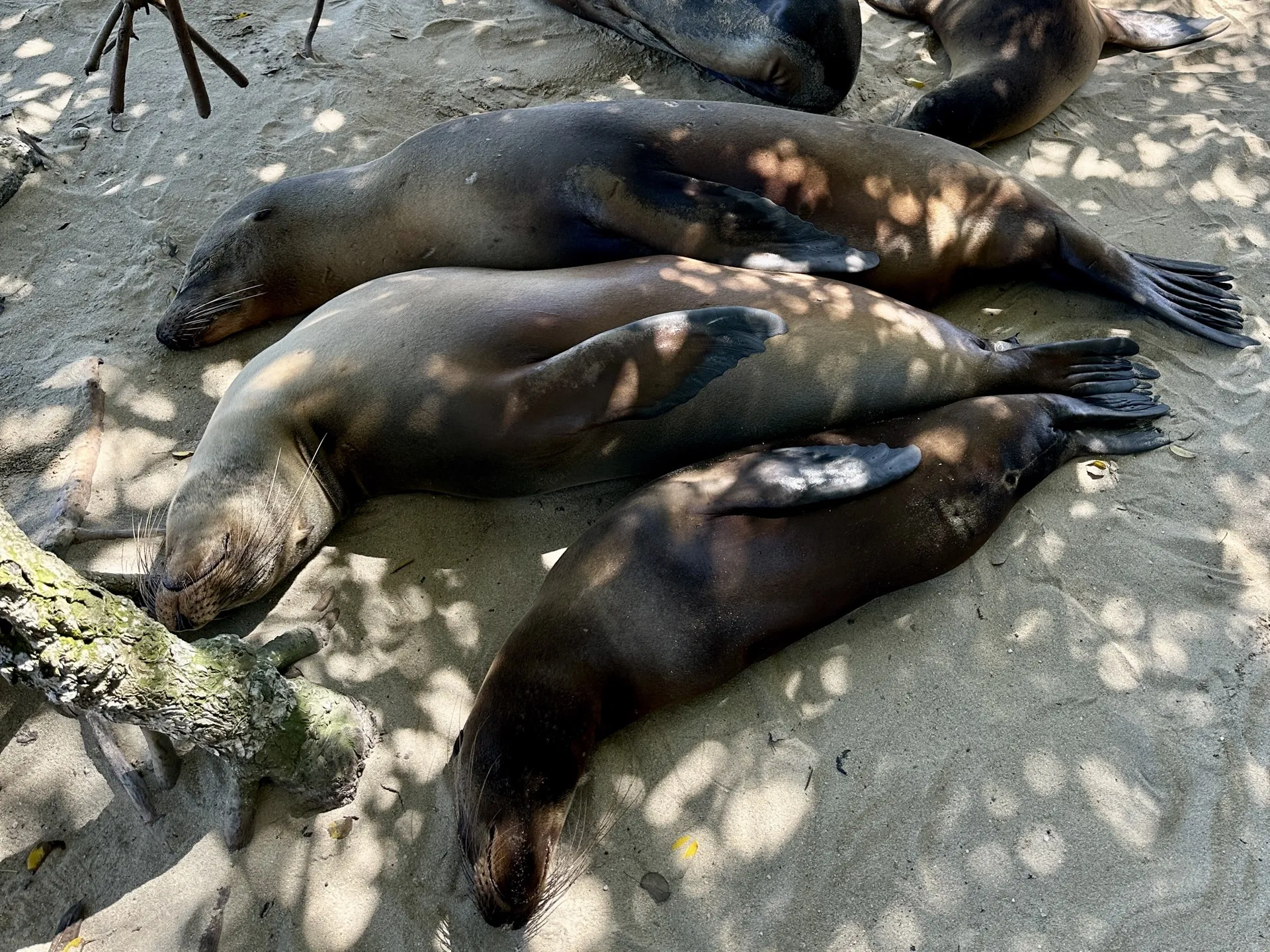
Three Galápagos sea lions asleep side by side on the sand in dappled shade

Galápagos Islands Travel Guide

A group of volcanic islands off the coast of Ecuador, unlike anywhere else you’ll go in South America.

Island hopping Wildlife Snorkelling & diving

The Galápagos Islands are one of the most unique stops you can add to a South American itinerary, and somewhere you can see an incredible range of animals living in their natural habitats. You can walk past giant tortoises that have been alive for more than 100 years, see marine iguanas scattered along the coastline, and even find hammerhead sharks and endemic Galápagos penguins in the waters surrounding the islands. After all, it was these islands that famously helped shape Charles Darwin’s ideas on evolution.

This guide gives you a full overview of the Galápagos Islands and everything you need to know before planning your trip. When I was planning mine, I struggled to find one place that clearly explained how the islands worked, and it nearly made me skip them altogether. This guide is here to make sure you do not make the same mistake.

Where Are the Galápagos?

Hover a route to explore Tap a route to explore

Some links in this guide are affiliate links. I may earn a small commission if you book through them, at no extra cost to you. I only link to places I have personally stayed and would recommend. Affiliate Disclosure.

Plan Your Trip to the Galápagos

Let me tell you what these islands are actually like

The Galápagos are a group of volcanic islands sitting around 1,000 km (620 miles) off the coast of Ecuador. While they are technically part of Ecuador, life on these islands feels completely different from the mainland, especially compared with cities like Guayaquil or Quito.

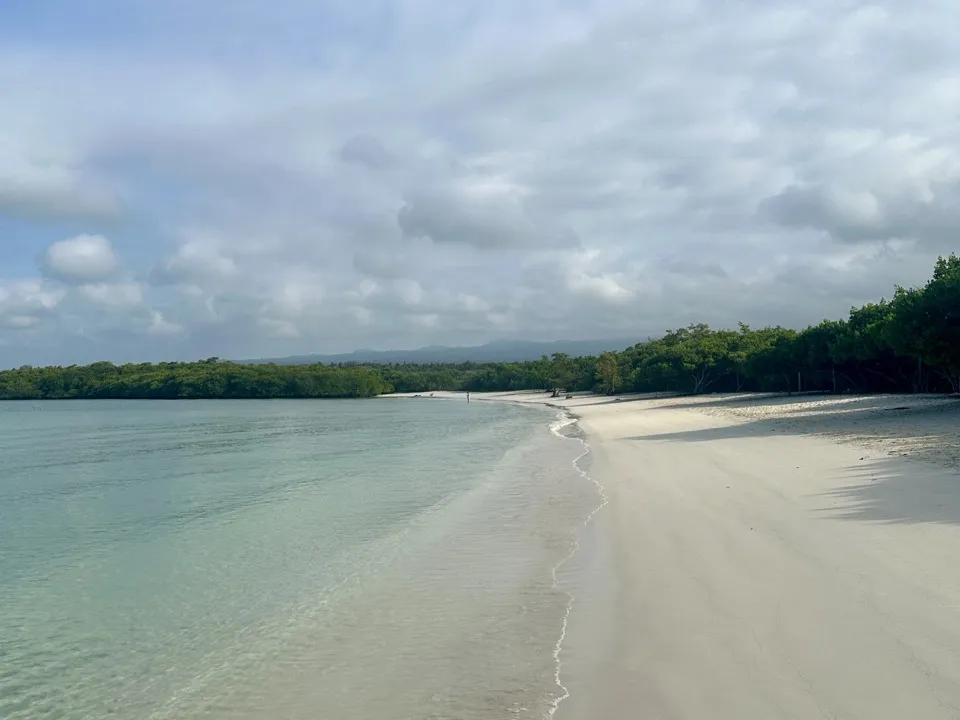
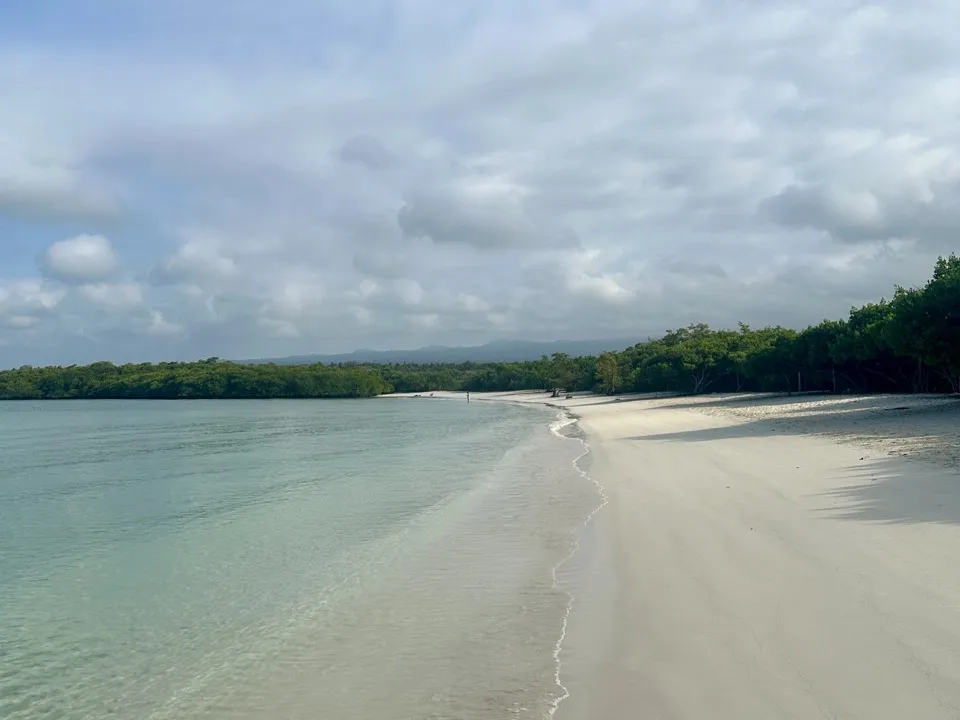
A long, empty white-sand beach lined with green trees beside calm turquoise water at Tortuga Bay in the Galápagos

The islands are most famous for the animals that inhabit them. On a day-to-day basis, you will encounter giant tortoises, countless sea lions, marine iguanas, the endemic Galápagos penguin and a huge variety of seabirds. While the islands may be close together, it is surprising how much the climate can change from one to another. Some are dry and almost desert-like, while others have green highlands, huge volcanic landscapes and beaches covered in sea lions.

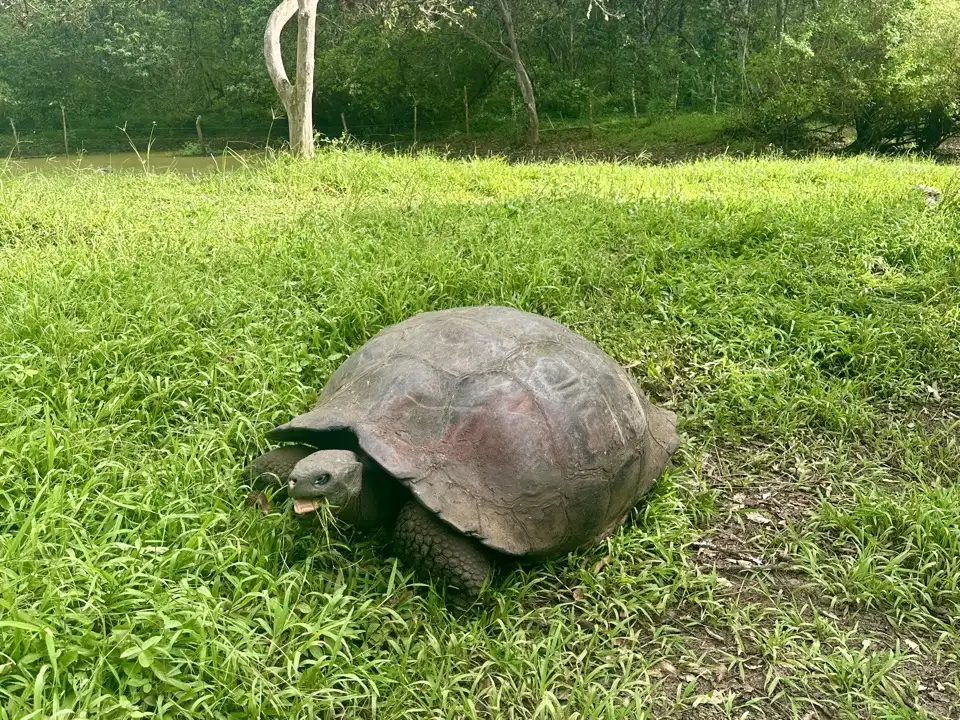
A giant tortoise grazing in long green grass in the Galápagos

There are a few inhabited islands, each with a main town or settlement that is not too different from the beach towns you may be used to. You will find everything from high-end hotels to simple homestays, along with a good mix of restaurants, cafés and small local eateries.

One of the best things about the Galápagos is that there is something to do for everyone. How you spend your time completely depends on what you want to do and how large your budget is. And trust me, things can add up very quickly on the islands.

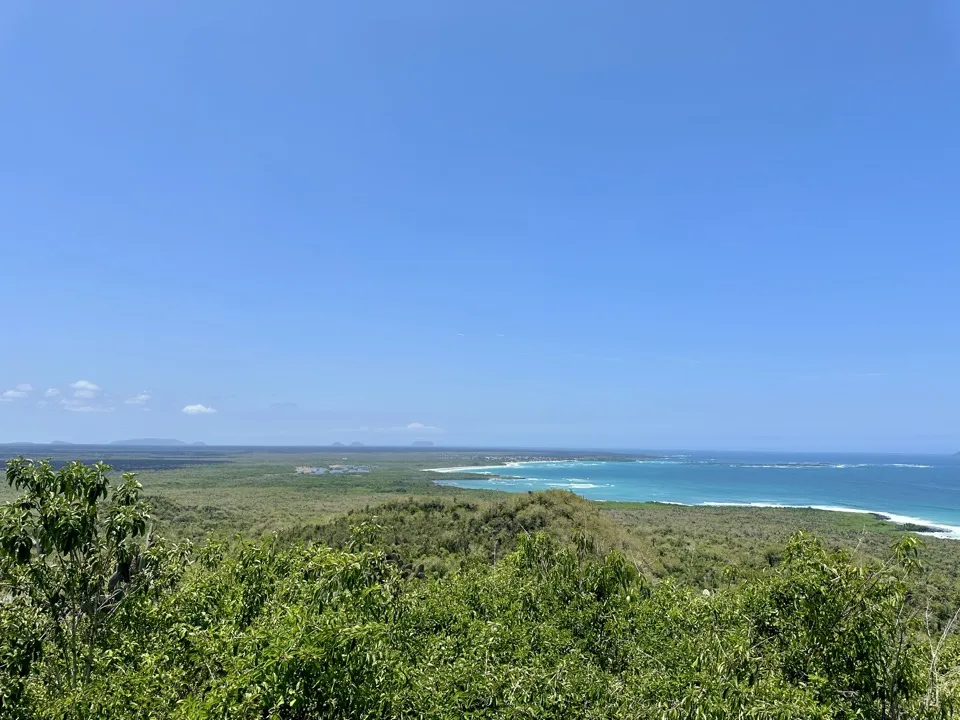
Green scrub stretching down to a turquoise bay and white-sand beach under a clear blue sky

To keep things simple, you can go to the beach, cycle around the islands, take short walks or spend your days snorkelling and looking for wildlife. Snorkelling is one of the best things to do here, and a lot of the time you can do it directly from the beach rather than having to book a tour. Depending on where you go, you might find yourself swimming alongside baby hammerhead sharks, sea turtles, sea lions, rays, marine iguanas, penguins and huge schools of fish.

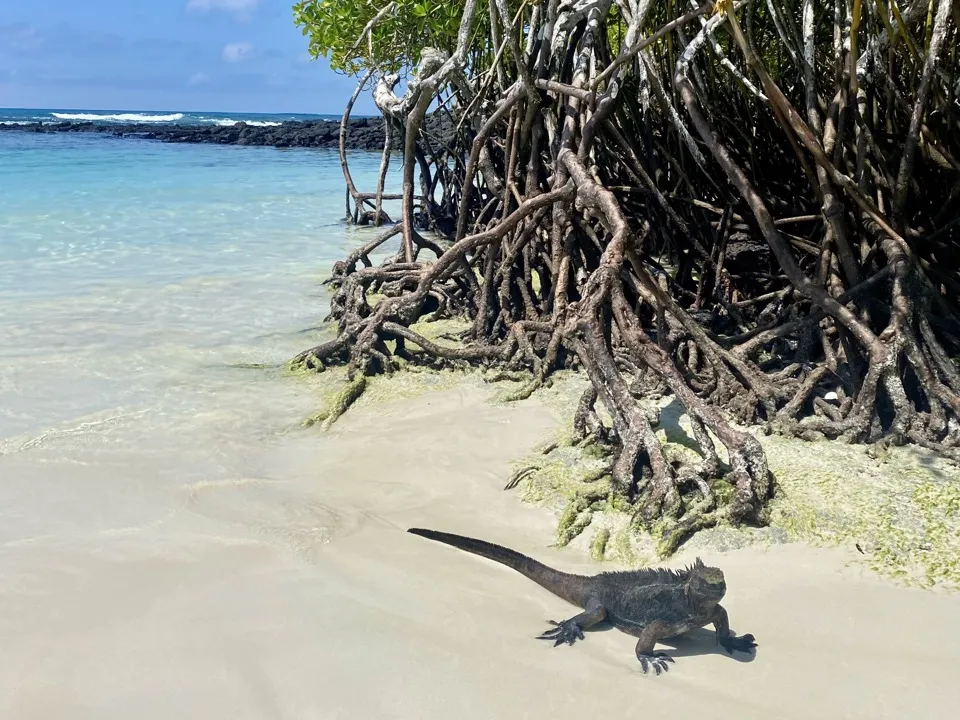
A marine iguana crossing white sand beside the tangled roots of a mangrove, with the sea behind

There are also plenty of organised day trips that take you to places you simply cannot reach on your own. These include boat trips such as the 360° Tour, snorkelling and scuba diving trips where you can see hammerhead sharks, and visits to more remote beaches, reefs and wildlife sites. Some are full-day trips, while others only take a few hours, so you can easily mix them in with days exploring independently.

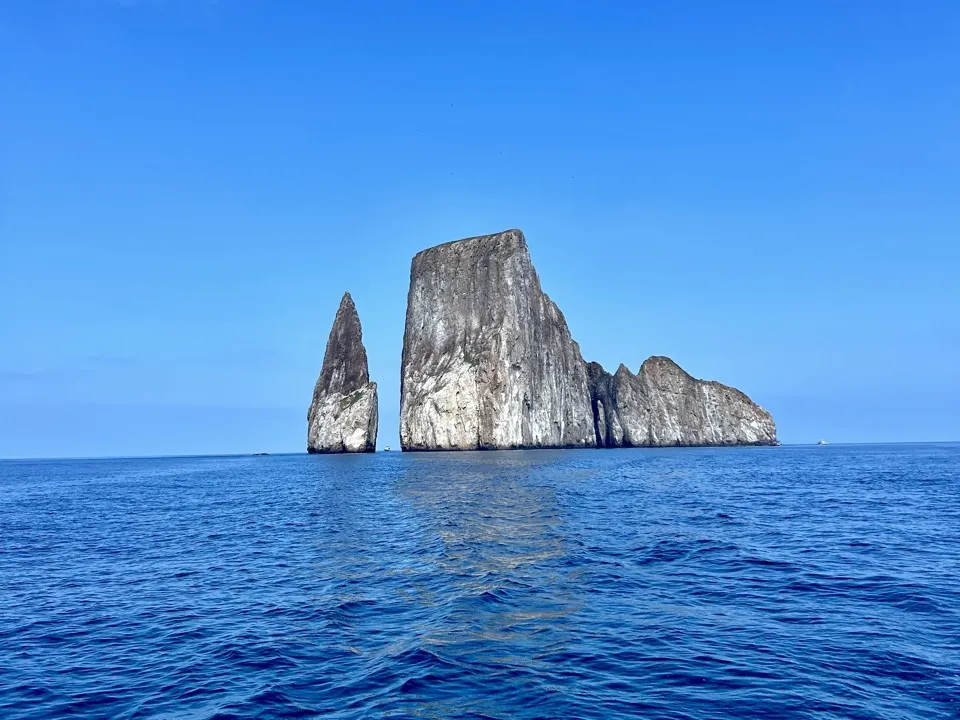
Kicker Rock, a tall split rock rising out of deep blue sea off San Cristóbal

If you have a seriously large budget, a multi-day boat cruise opens up another side of the Galápagos. There is a huge range of cruises, following different itineraries and lasting anywhere from a few days to more than a week. They can take you to remote islands and wildlife sites that are impossible to reach independently, making them a genuine once-in-a-lifetime experience.

Absolutely worth it, and it is not your typical beach holiday destination. Whether you are a beach person or not, the amount of wildlife and variety of distinctive landscapes you are exposed to make the Galápagos a genuinely unique destination and something you cannot experience just anywhere else.

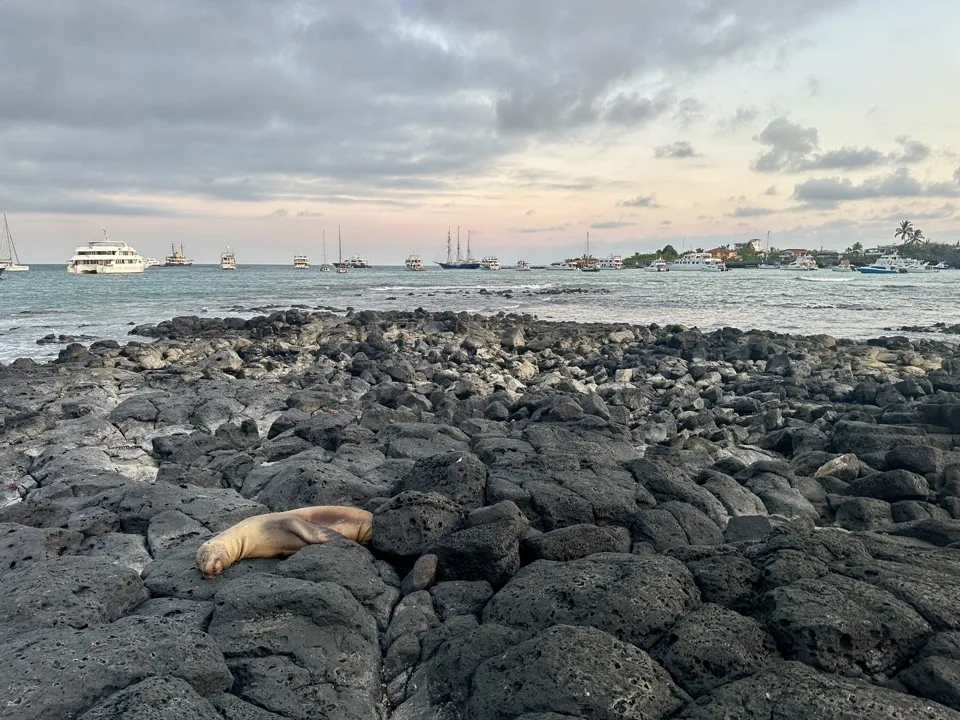
A sea lion asleep on black lava rocks at sunset, with boats anchored in the bay behind

The islands also work really well as a break during a longer trip around South America, particularly if the rest of your itinerary involves a lot of hiking and time at altitude in the mountains. In my case, this was the perfect place to decompress after spending three straight months at altitude in Peru and Bolivia.

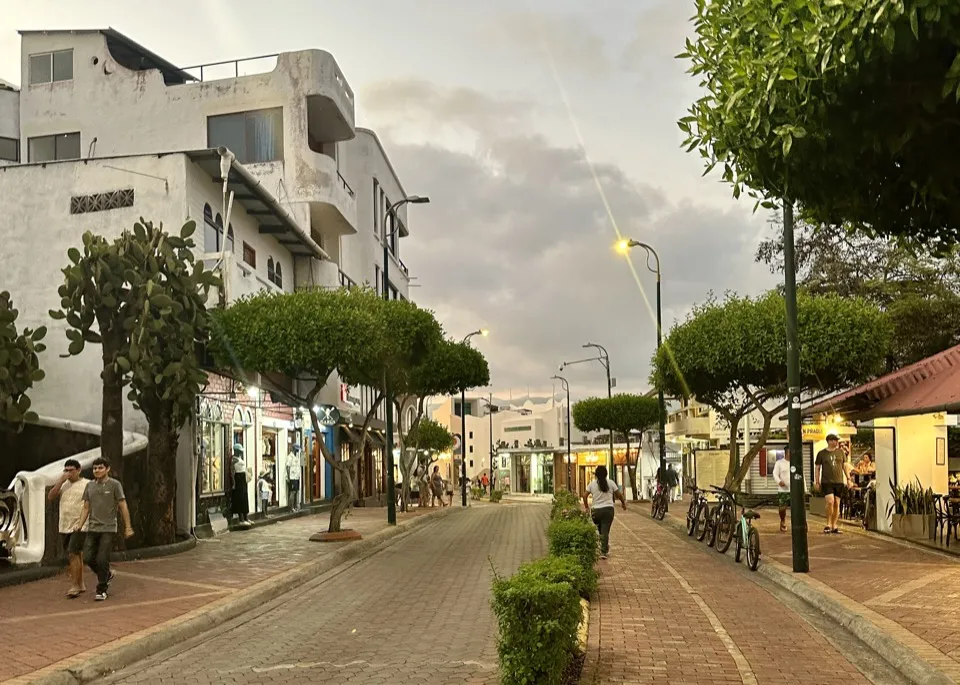
A quiet, tree-lined street of low white buildings in a Galápagos town

The main hesitation you may have about visiting the islands is the cost, but there are ways to make the trip much more manageable. If you have more time on your hands, some officially recognised volunteer programs can exempt you from the National Park entrance fee, and once you are there, staying in homestays and eating at local eateries can keep your day-to-day costs fairly close to mainland Ecuador.

The logistics that make this trip happen

You can visit the Galápagos Islands independently and absolutely do not need to join an organised tour. You are able to obtain all of the required entry documents yourself, and once you arrive, you can follow your own itinerary, book activities as you go and travel freely between the islands. Some protected visitor sites do require you to visit with an authorised guide, but this does not stop you from organising the rest of the trip yourself.

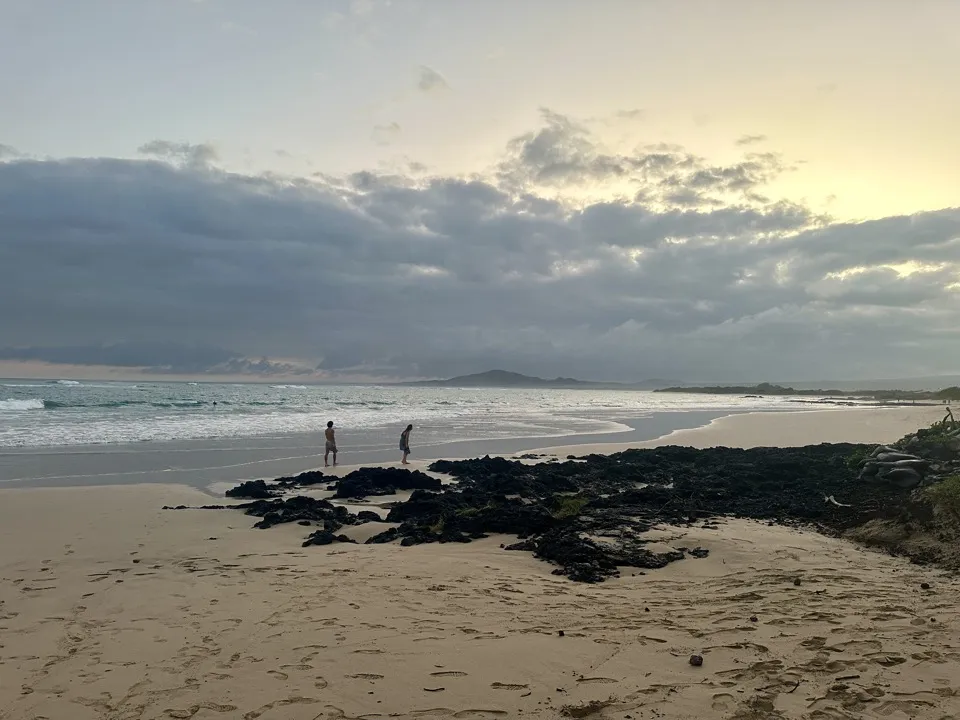
Two people at the water’s edge on a wide sandy beach at dusk, with black lava rocks in front

You can experience the Galápagos either by staying on the inhabited islands, joining a multi-day cruise, or combining the two if you have the time and budget. Use the two cards below to learn more about each option and work out which one suits your trip best.

Land-based

Cheaper way to visit
Cruise

Reach places you otherwise can’t

Land-based

Pros
  • Much more flexibility over your itinerary
  • Easy to change plans depending on weather, availability or how you feel
  • You can choose exactly which day tours are worth paying for
  • More time to explore the towns, beaches and free attractions
  • Easier to keep costs down with homestays, local restaurants and self-guided activities
Cons
  • You need to organise accommodation, transport and tours yourself
  • Moving between islands takes time and usually means a few hours on a speedboat
  • Some of the best wildlife sites and remote islands are difficult or impossible to reach on a land-based trip

Cruise

Typical starting price

Prices vary hugely depending on the boat and cabin, but for 2026 you can roughly expect:

  • 4 days: from around US$1,500–2,200 per person
  • 5 days: from around US$1,800–3,300 per person
  • 8 days: from around US$3,000–5,300 per person

Luxury cruises can cost considerably more.

When to book

Cruises can be booked online in advance or through travel agencies once you arrive.

  • Booking ahead gives you much more choice of boat and itinerary
  • Last-minute deals can sometimes be found if your dates are flexible
Pros
  • Reach remote islands and sites that are difficult or impossible to see on a land-based trip
  • Accommodation, meals, transport and most excursions are organised for you
Cons
  • Significantly more expensive than travelling independently
  • You are locked into a set itinerary and departure date
  • You have less flexibility over how long you spend at each location

Once you get to the Galápagos, you can travel between the main inhabited islands by boat or small plane. Use the two cards below to see which option works best for your trip.

By boat

Cheaper but slower

By plane

Faster but more expensive

By boat

Cost
  • US$50 per person when booked in person + around US$1–2 for the water taxi
  • Online bookings: usually around US$50–60 per person
Where to book

Book in person at travel agencies near the main piers or online before you arrive. Booking locally is usually cheaper.

When to book

Aim to book 1–2 days in advance to secure the departure you want.

Journey time

Most crossings take around 2–3 hours.

Good to know

These are small speedboats, so the journey can get rough depending on the sea conditions. If you get seasick easily, come prepared.

You also cannot travel directly between every island, and some routes require a change in Santa Cruz. Use the custom-built tool below to work out the best way to travel between each island.

By plane

Cost

Usually around US$120–200 per person, depending on the route.

Where to book

Book directly with Emetebe or Fly Galapagos, or through a travel agency on the islands.

When to book

Flights have limited seats, so I would book a few weeks in advance if your dates are fixed.

Journey time

Most inter-island flights take around 30–45 minutes.

Good to know

Inter-island flights use three main airports:

  • Baltra / Seymour Airport (GPS): serves Santa Cruz. Getting there from Puerto Ayora involves road transport, a short ferry crossing and another transfer to the airport.
  • San Cristóbal Airport (SCY): located just outside Puerto Baquerizo Moreno and only a short taxi ride from town.
  • General Villamil Airport (IBB): serves Isabela and is only a short taxi ride from Puerto Villamil.

The planes are small, so make sure you check your baggage allowance before booking.

Book your ferry in advance

Departure date
Travellers 2
Find ferries on Bookaway

Getting From Island to Island

There are 19 islands in the Galápagos, so here’s a quick summary of the main ones
A street of shops and cafés on Santa Cruz at sunset, with a scooter parked by the kerb

Santa Cruz

The main hub with a bit of everything

Main town
Puerto Ayora
I’d allow
3–4 days

Santa Cruz is the busiest and most developed of the three main islands, with Puerto Ayora feeling more like a proper town than the other island bases. It has the biggest choice of restaurants, accommodation and day tours, while beaches, giant tortoises and the highlands are still easy to reach.

Best for
  • First-time visitors
  • Day trips
  • Easy logistics
  • Shorter stays
Standout activities
  • Walk to Tortuga Bay
  • See giant tortoises in the highlands
  • Swim at Las Grietas
No guide yet
Sea lions sleeping together on the sand in dappled shade

Isabela

Beaches, volcanoes and a slower pace

Main town
Puerto Villamil
I’d allow
2–3 days

Isabela feels much quieter and less developed, with most travellers staying around the small beach town of Puerto Villamil. It is the best mix of long beaches, volcanic landscapes and independent exploring, with plenty to do without booking a tour every day.

Best for
  • Slower pace
  • Beach time
  • Hiking
  • Bike riding
  • Snorkelling
Standout activities
  • Snorkel at Los Túneles
  • Hike Sierra Negra & Volcán Chico
  • Cycle to the Wall of Tears
No guide yet
Sea lions asleep on a boardwalk and under a bench beside the rocky shore on San Cristóbal

San Cristóbal

Marine wildlife and easy snorkelling

Main town
Puerto Baquerizo Moreno
I’d allow
2–3 days

San Cristóbal feels quieter and more compact than Santa Cruz, with Puerto Baquerizo Moreno sitting right beside beaches, snorkelling spots and plenty of wildlife. Sea lions are everywhere along the waterfront, and it is easy to explore independently. It is also a great base for boat trips, snorkelling and diving.

Best for
  • Marine wildlife
  • Snorkelling
  • Diving
  • Easy exploring
Standout activities
  • 360° Tour
  • Snorkel or dive at Kicker Rock
  • Walk to La Lobería
No guide yet
View from Asilo de la Paz over green forest in the Floreana highlands, with the sea on the horizon

Floreana

History, snorkelling and a remote island feel

Main town
Puerto Velasco Ibarra
I’d allow
2 days

Floreana is the quietest and least developed of the inhabited islands, with a tiny main town and a much more remote feel than Santa Cruz, Isabela or San Cristóbal. It suits travellers who want a slower pace, fewer crowds and a more low-key side of the Galápagos. Scheduled boats only run between Santa Cruz and Floreana on Tuesdays and Thursdays, so plan around those days.

Best for
  • Getting off the beaten path
  • Galápagos history
  • Quiet surroundings
  • Snorkelling
Standout activities
  • Visit Asilo de la Paz
  • Snorkel at La Lobería
  • Swim at Playa Negra
No guide yet
  • Santa Cruz

    4 nights

    1. Day 1Arrive and settle in
    2. Day 2Tortuga Bay
    3. Day 3Highland tortoises & Las Grietas
    4. Day 4Nearby island day trip · optional
    5. Day 5Depart

Everything about flights, the best time to visit and your budget

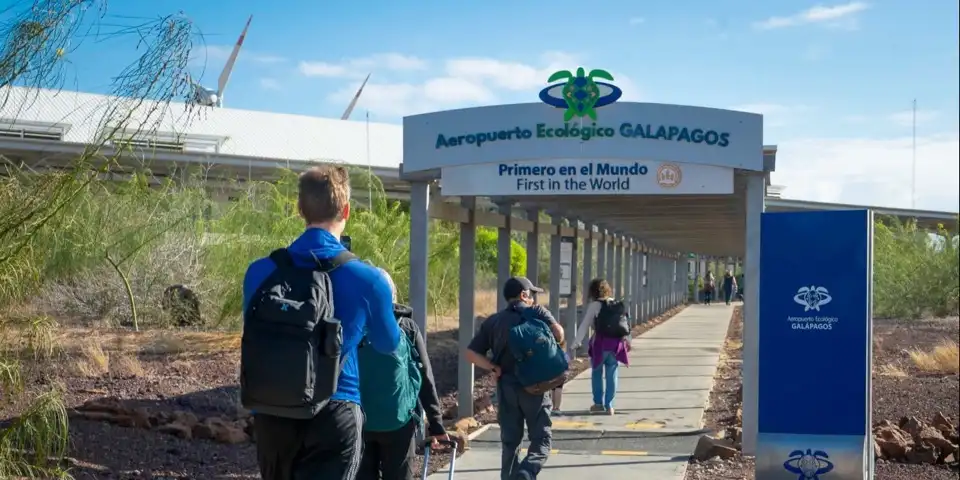
There are two main airports in the Galápagos: San Cristóbal Airport (SCY) on San Cristóbal and Seymour Airport (GPS) on Baltra Island, which is the airport you fly into for Santa Cruz. You can only fly to the Galápagos domestically from Quito or Guayaquil.

A LATAM plane on the apron at San Cristóbal Airport, with passengers walking out to board

San Cristóbal Airport (SCY)

Location: San Cristóbal Island

  • The airport sits right beside Puerto Baquerizo Moreno, the main town on San Cristóbal
  • Town is 5–10 minutes by taxi or 20–30 minutes on foot
  • If required, plane tickets can be bought at the airline counters in the airport
Travellers with backpacks and a suitcase walking under the covered entrance to Seymour Airport on Baltra

Seymour Airport (GPS)

Location: Baltra Island

  • The airport is on Baltra Island but serves Santa Cruz
  • To reach Puerto Ayora: airport bus → ferry → bus or taxi
  • Allow around 1–1.5 hours for the full transfer

You can visit the Galápagos at any time of year and still have good weather for exploring the islands. The experience does change throughout the year, so I would focus on what you want to get out of the trip rather than trying to find one perfect month. Use the cards below to work out which period suits you best.

★ Best Balance

May

Warm weather with fewer drawbacks
  • Warm days without the strongest heat and humidity
  • Sea temperatures are still comfortable for swimming and snorkelling
  • Generally calmer conditions for boat trips
  • The islands are still green from the wetter months
  • A good month if you want a bit of everything without visiting at the busiest time
Warmest & Calmest

December to April

Warm and wetter season
  • The hottest time of year, with warm water for swimming and snorkelling
  • Seas are generally calmer, making boat trips more comfortable
  • Expect more sunshine, but also short periods of heavy rain
  • The islands are greener and feel more tropical during these months
  • Christmas, New Year and Easter will be noticeably busier
Cooler

June to November

Cooler and drier season
  • Cooler days and noticeably colder water
  • Better conditions for seeing active marine wildlife
  • More cloud and mist, particularly in the mornings
  • Seas can be rougher, so boat crossings may be less comfortable
  • Better suited to wildlife and diving than relaxing beach days

The mandatory fees and the longer-than-usual airport process

The Galápagos has two mandatory fees that you will need to organise as part of your trip: the National Park entrance fee and the Transit Control Card. Use the two cards below to see how much each one costs and when you need to pay it.

Galápagos National Park entrance fee

Pay when you arrive

Transit Control Card (TCT)

Organise before you fly

Galápagos National Park entrance fee

Cost

Standard foreign visitor:

  • US$200 for adults aged 12+
  • US$100 for children under 12
Where to pay

Pay the entrance fee when you arrive at Baltra or San Cristóbal Airport, before leaving the airport.

Payment
  • Payment is in cash in US dollars
  • Bring clean, undamaged notes, as damaged bills may not be accepted
Good to know

If you are considering volunteering to avoid the fee:

  • Some officially recognised volunteer programs can qualify for an exemption
  • Volunteering through Worldpackers or Workaway does not automatically qualify you

Transit Control Card (TCT)

Cost

US$20 per person

Where to buy
  • Purchase it online through the official Galápagos Government portal before travelling
  • Or organise it at the CGREG counter at Quito or Guayaquil Airport
Good to know

The TCT is used to record visitors entering and leaving the Galápagos. Keep it with your travel documents throughout the trip, as you may need it again when leaving the islands.

Travelling to the Galápagos involves a few extra steps compared with a normal domestic flight. Here is what to expect from arriving at Quito or Guayaquil Airport to leaving the airport in the Galápagos.

  1. Arrive at the airport

    3 hours before departure

    Arrive at Quito or Guayaquil Airport around 3 hours before departure to allow time for the additional Galápagos checks.

  2. Validate your Transit Control Card

    10–30 minutes

    Go to the CGREG counter to have your TCT checked. If you bought it online, have your QR code and passport ready.

  3. Have your luggage inspected

    10–20 minutes

    Take your bags to the ABG biosecurity inspection. This is separate from normal airport security and checks for restricted food, plants and other organic products.

  4. Check in and go through security

    30–60 minutes

    Check in with your airline, drop off your luggage and continue through normal airport security.

  5. Fly to the Galápagos

    Around 2 hours

    Your flight will arrive at either Seymour Airport on Baltra or San Cristóbal Airport.

  6. Pay the National Park entrance fee

    10–30 minutes

    After landing, go through the arrival controls and pay the Galápagos National Park entrance fee. Most foreign adults currently pay US$200.

  7. Collect your bags and complete the final check

    10–20 minutes

    Collect your luggage and pass through the final biosecurity checks before leaving the airport.

Galápagos Islands Live Weather

Galápagos Islands Puerto Ayora, Santa Cruz · Live conditions
Fetching conditions…

Frequently Asked Questions

The things worth knowing before you arrive in the Galápagos

Yes, very. The Galápagos are noticeably calmer than mainland Ecuador, especially compared with big cities like Quito and Guayaquil. That said, make sure you always keep an eye on your belongings if you are at the beach and going for a swim.

No, I would not drink the tap water. Water quality varies between the islands and it is not considered reliably safe for drinking. Most accommodation provides filtered water, so bring a reusable bottle and refill it rather than constantly buying bottled water.

Yes. There are ATMs in Puerto Ayora on Santa Cruz and Puerto Baquerizo Moreno on San Cristóbal. As of 2026, there is also one ATM in Puerto Villamil on Isabela, but I would not rely on it as your only source of cash because there is no backup if it is empty or out of service.

Sometimes, but I would always have cash with you. Larger hotels, restaurants and dive shops are more likely to accept cards, while smaller restaurants, shops, water taxis and some tour agencies still prefer cash.

Good enough in the main towns, but do not expect reliable internet everywhere. Puerto Ayora, Puerto Baquerizo Moreno and Puerto Villamil generally have mobile coverage, but signal can disappear once you leave town, head out on a boat or visit more remote areas. For a local SIM, Claro and Movistar are the two main options, with Claro being generally better for coverage in the Galápagos.

Not everything. I would book popular scuba diving trips such as Gordon Rocks and Kicker Rock in advance because places are limited. Most other day tours can usually be organised once you arrive. Accommodation is also easy to find across the main islands, although I would book ahead over Christmas, New Year and the busier June to August period if you want a particular place.

Yes. The main towns have supermarkets, smaller grocery stores and local markets where you can buy food, drinks and everyday essentials. If your accommodation has a kitchen, cooking some of your own meals is one of the easiest ways to keep your Galápagos budget under control.

Come along for the next stop

Every guide on this site comes from a trip I actually made. Leave your email and I'll send you each new one the day it goes live.

One email per new guide, nothing else. Unsubscribe in one click. Privacy policy

5 countries covered Up next
  1. Iceland
  2. Georgia
  3. Albania

More from Ecuador

More hikes, routes and practical Ecuador travel guides to plan the rest of your trip.