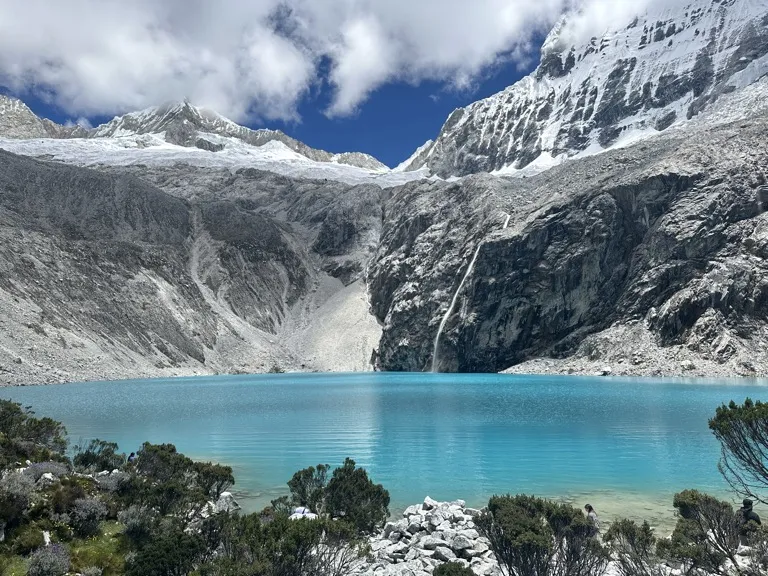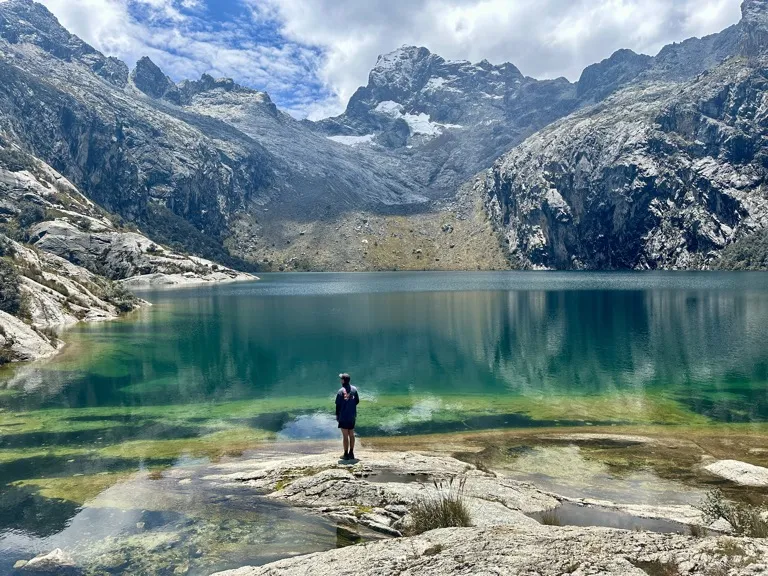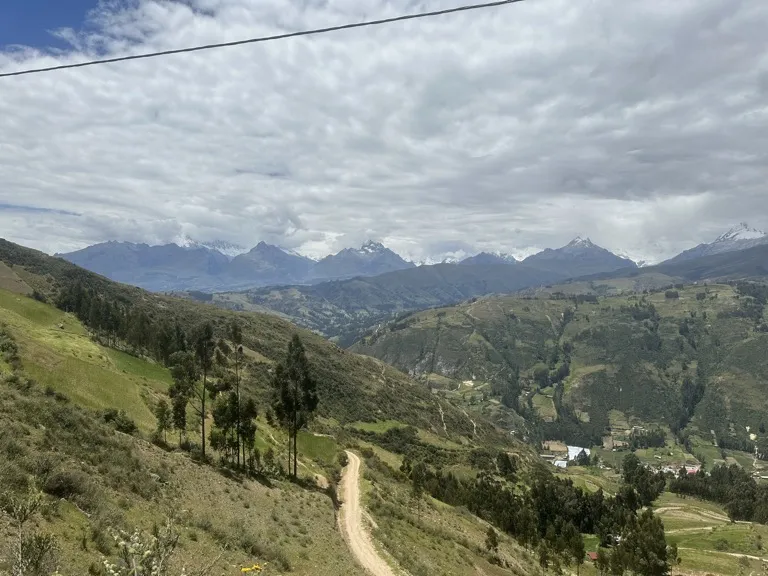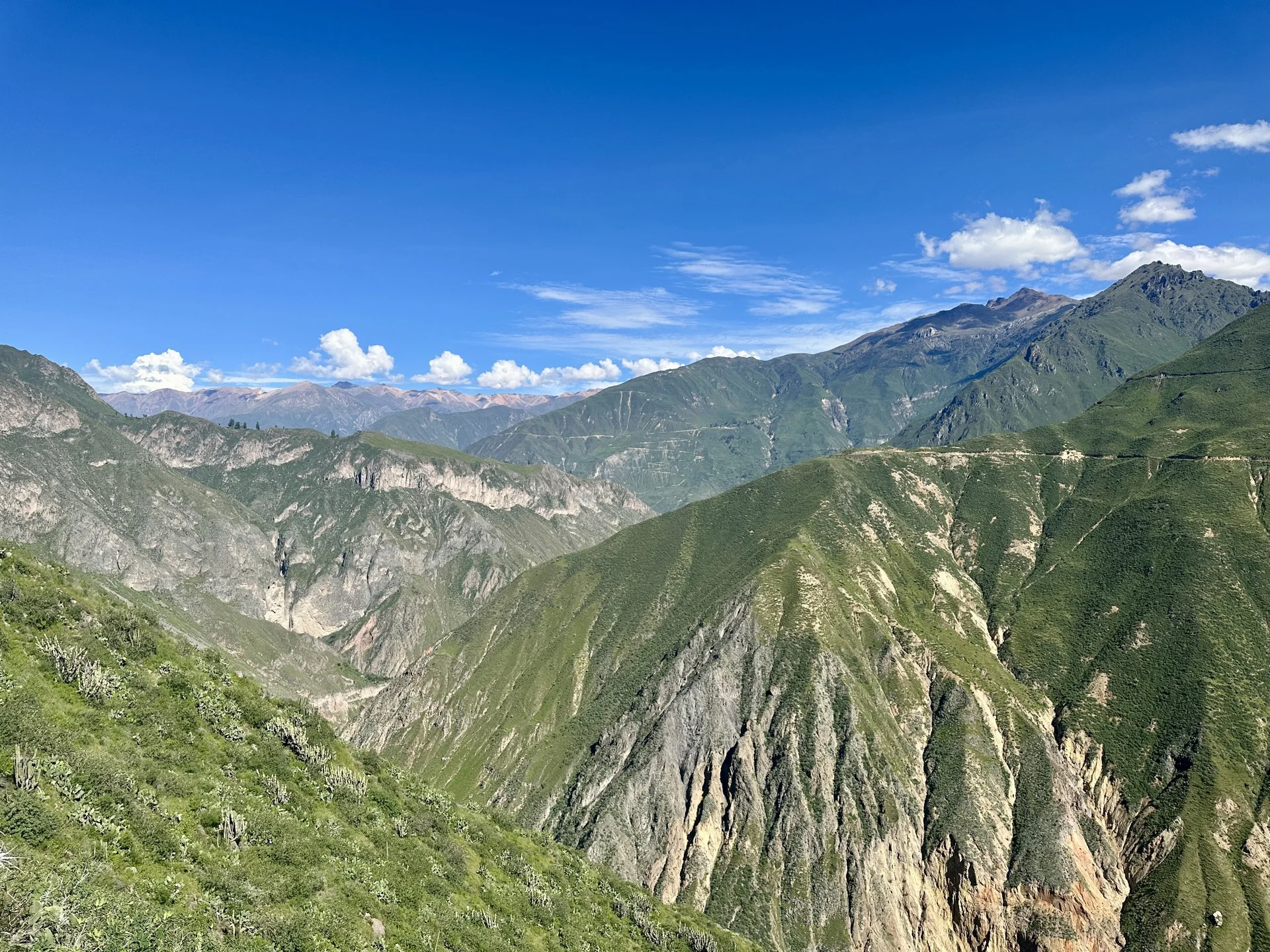
The Colca Canyon trek, tucked away in southern Peru just outside Arequipa, is one of the standout hikes Peru has to offer. Stretching almost 100 km through the Andes, Colca Canyon is the second deepest canyon in the world and, in some sections, nearly twice as deep as the slightly more famous Grand Canyon in the USA. It is also home to some unique and impressive wildlife, including Andean condors, which you will often spot gliding overhead as you descend deeper into the canyon.
Although the Colca Canyon trek may not be the most talked-about overnight hike in Peru, I'm hoping I can give you a good reason to complete it. This guide covers everything you need to hike Colca Canyon without a guide or tent over three days, including a full itinerary, cost breakdown and the key information you need to plan the trek.
Colca Canyon Trek Map
Some links in this guide are affiliate links. I may earn a small commission if you book through them, at no extra cost to you. I only link to places I have personally stayed and would recommend. Affiliate Disclosure.
Plan Your Colca Canyon Trek
Arequipa → Cabanaconde → San Juan de Chuccho
The first village you will sleep at during your three-day hike through Colca Canyon is San Juan de Chuccho, but first you need to get to Cabanaconde, where the trailhead starts. The easiest way to get to Cabanaconde is to book a shared ride with a tour company in Arequipa that runs guided trips into the canyon. Even though you will not be joining the guided hike, many agencies let travellers without a guide hop on their transport if there is space on the bus. Most guided tours leave Arequipa between 3 and 4 am, so be ready for a pre-dawn start.
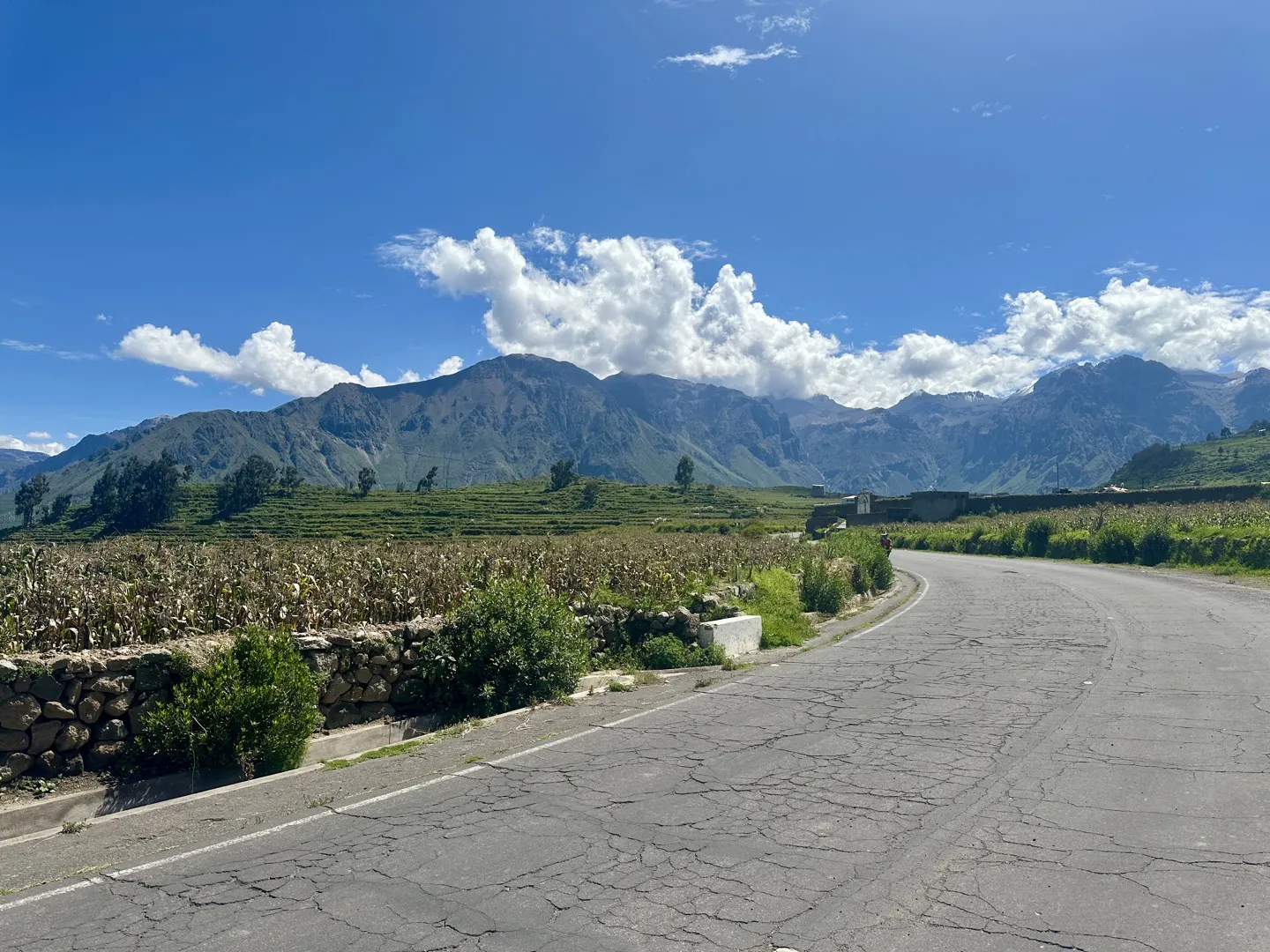
We booked our transport to Cabanaconde through Turismo María Belén and paid 50 PEN per person, which also included a light breakfast. A huge benefit of booking with a tour group rather than making your own way there is the chance to stop along the way and watch Andean condors soaring over the Colca Canyon. This is not something you will get to see if you catch the public bus, as it runs directly to Cabanaconde.
While it is possible to get to Cabanaconde by public bus, I would not recommend it. Public bus tickets generally cost between S/25 and S/35. Given that tour transport is already relatively cheap, you are unlikely to save much once you factor in taxis and the bus fare.
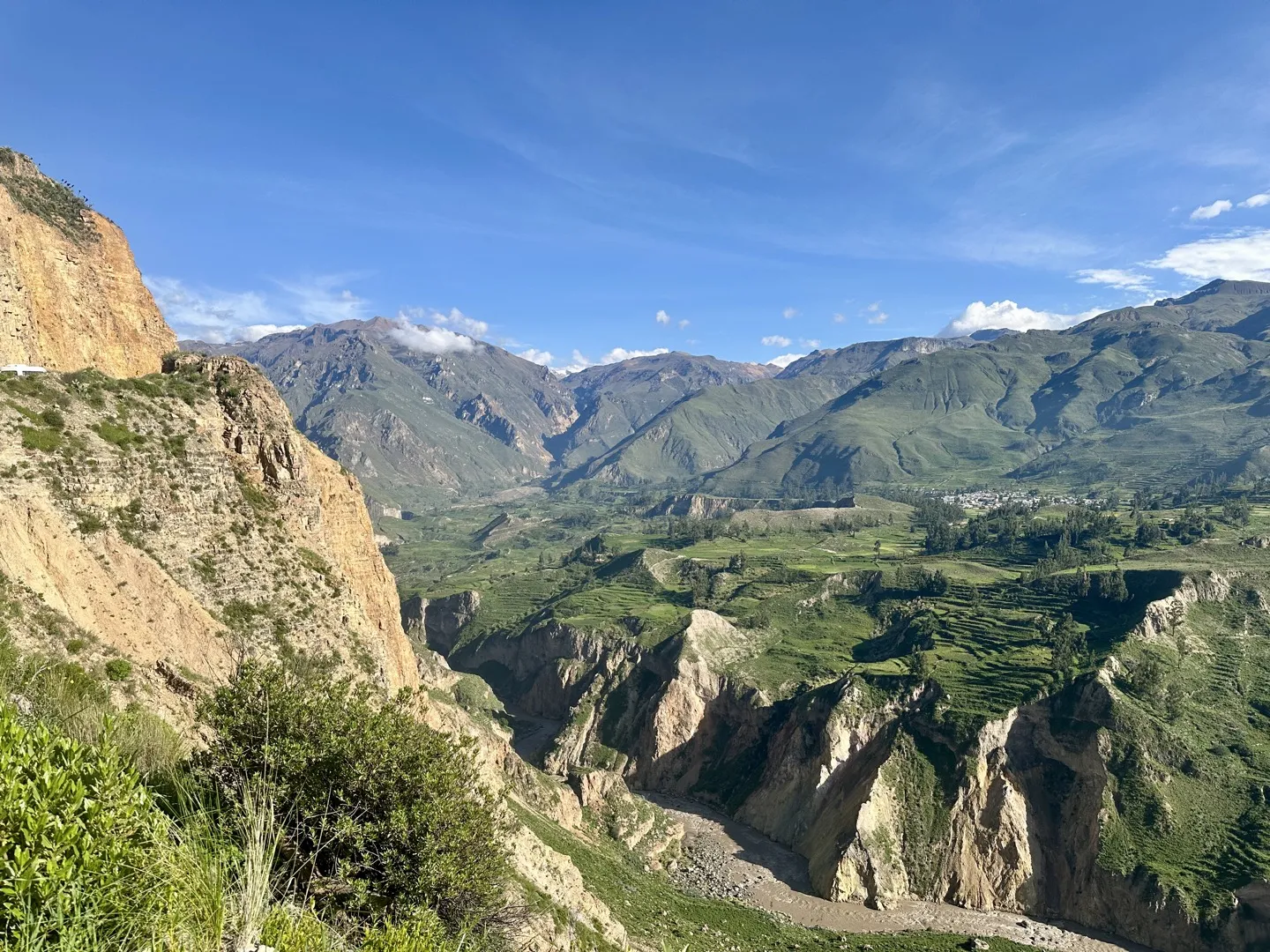
Once you hop off the bus in Cabanaconde and stretch your legs, I would recommend stocking up on a few essentials: water, snacks and something for lunch from the shops around the main square. This will be your last chance to buy anything before reaching San Juan de Chuccho (approximately 3 hours later), as there are no tiendas or roadside stalls along this part of the trail.
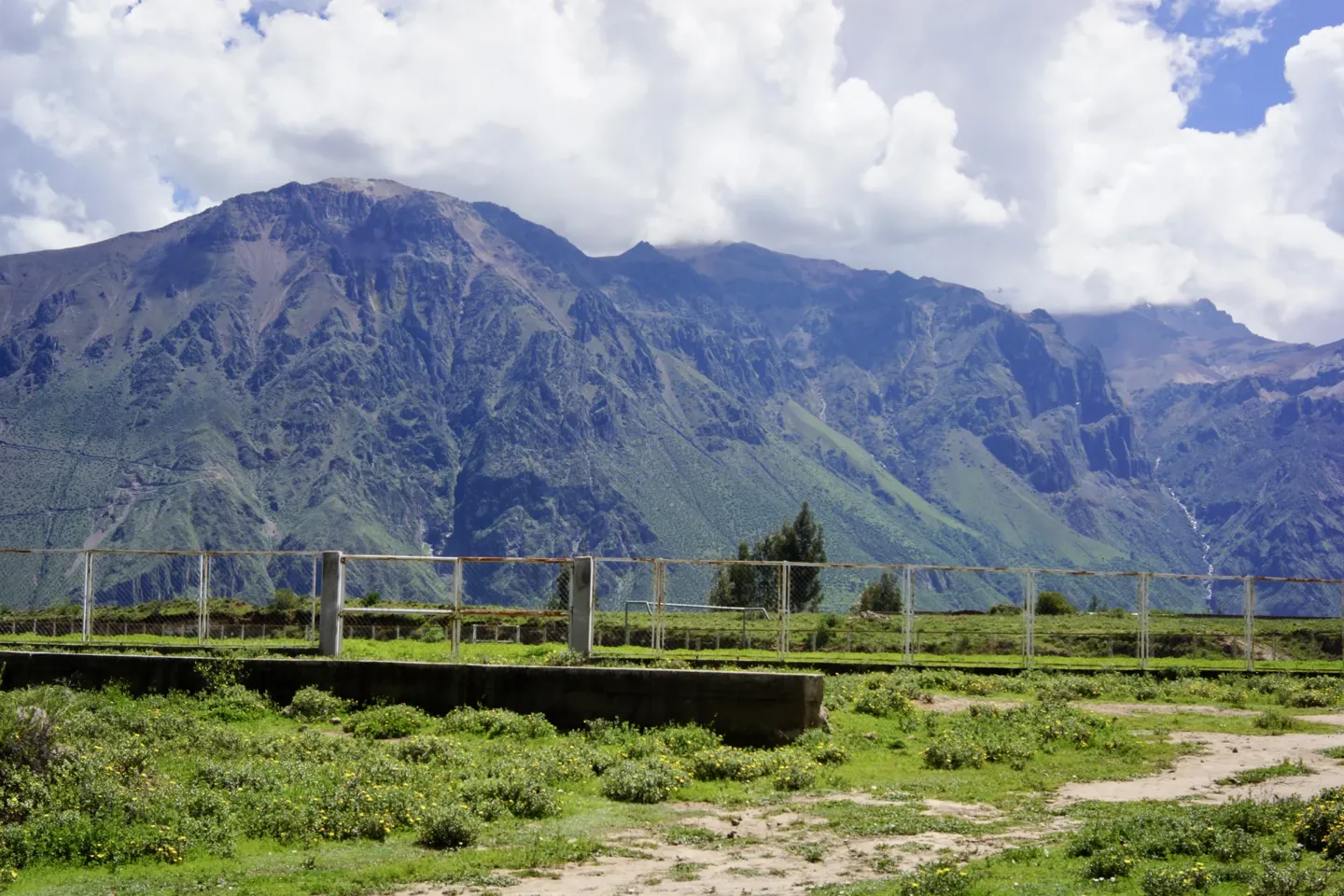
From the centre of Cabanaconde, the walk to the start of the Colca Canyon trailhead takes around 30 minutes. The trailhead begins behind the football field, just past the turn-off to Mirador San Miguel. You will know you are on the right track when you reach the ticket point before the long descent to San Juan de Chuccho. Entrance tickets cost S/70 per person and can be bought in person at the trailhead or online through the official website.
Keep your entrance ticket until you exit the canyon on Day 3. Officials may ask for it at the exit, and if you have thrown it out, you will need to pay again.
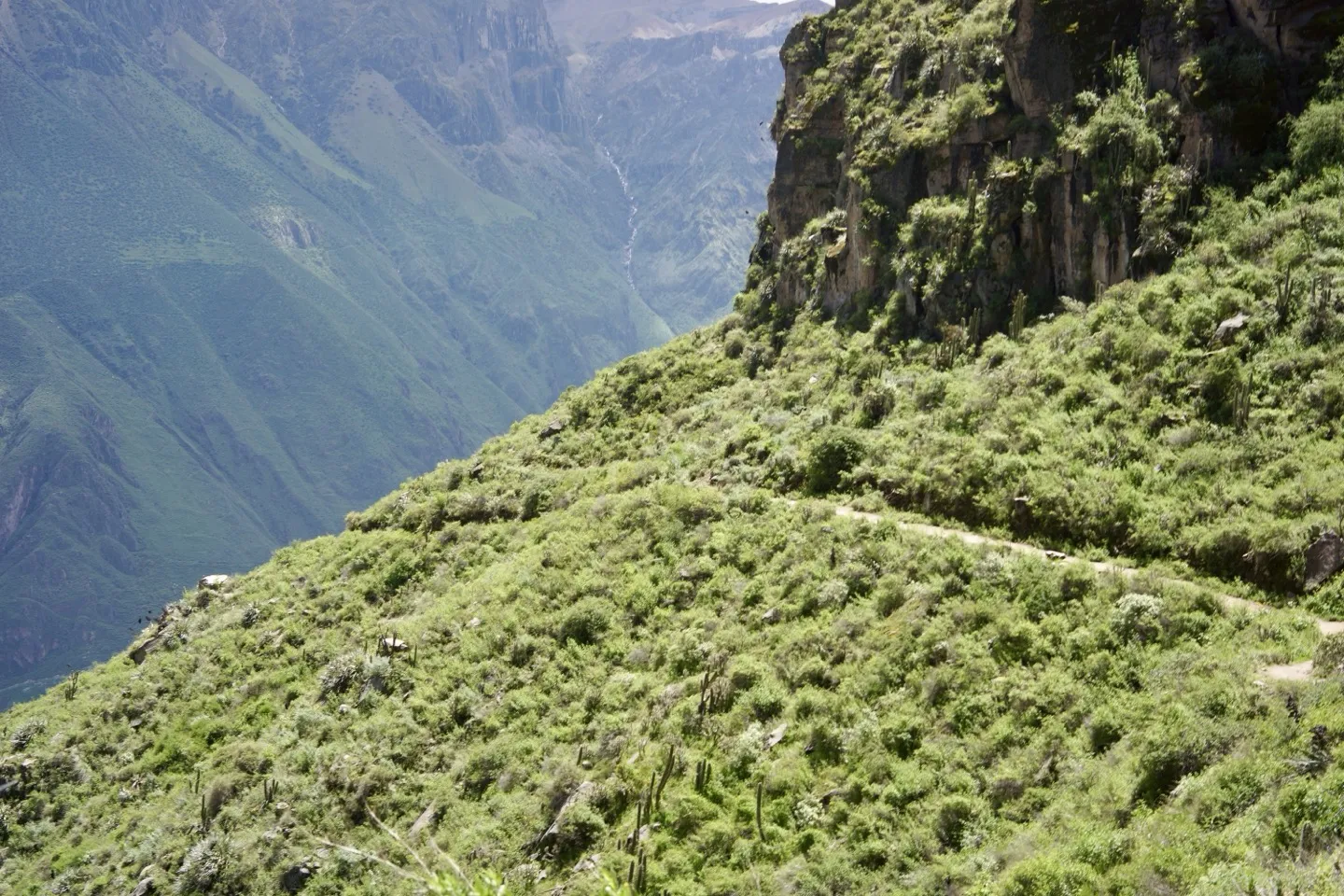
After buying your entrance ticket, the Colca Canyon trek predominantly snakes down the huge canyon wall until you reach a bridge to cross the river below. The downhill section is easy to follow, but getting to San Juan de Chuccho can be a little confusing once overgrown vegetation starts covering parts of the path beyond the bridge. My advice would be to keep walking in the same direction as the river flows, and you will eventually get to San Juan de Chuccho.
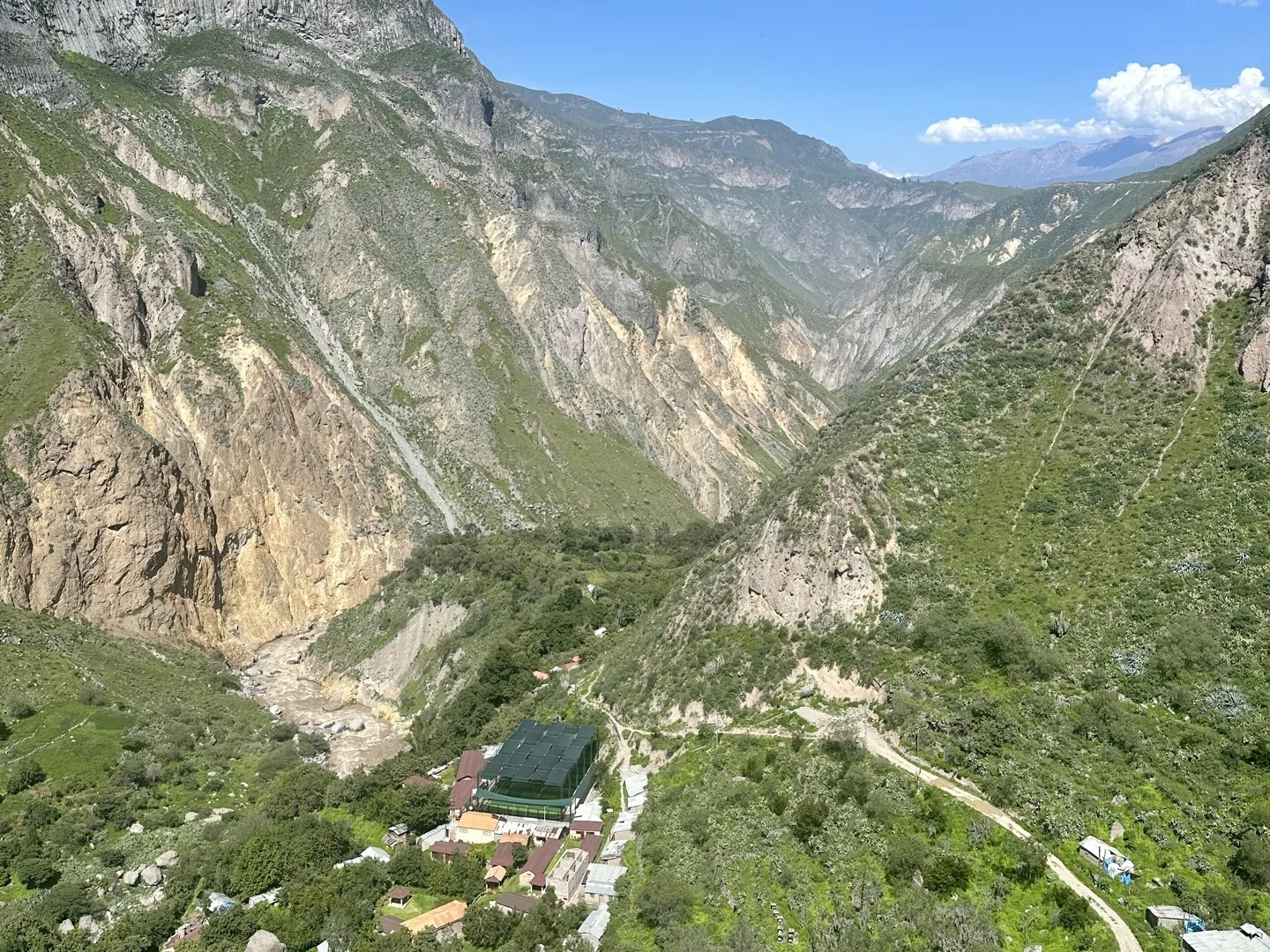
The first day of the Colca Canyon trek is rather easy compared to other hikes you can do in Peru. You will mostly be hiking on flat ground or downhill, so if you are someone who gets sore knees, it is worth looking into hiring hiking poles in Arequipa. The total distance for Day 1 is a relaxed 14km (8.7 miles), with minimal elevation gain.
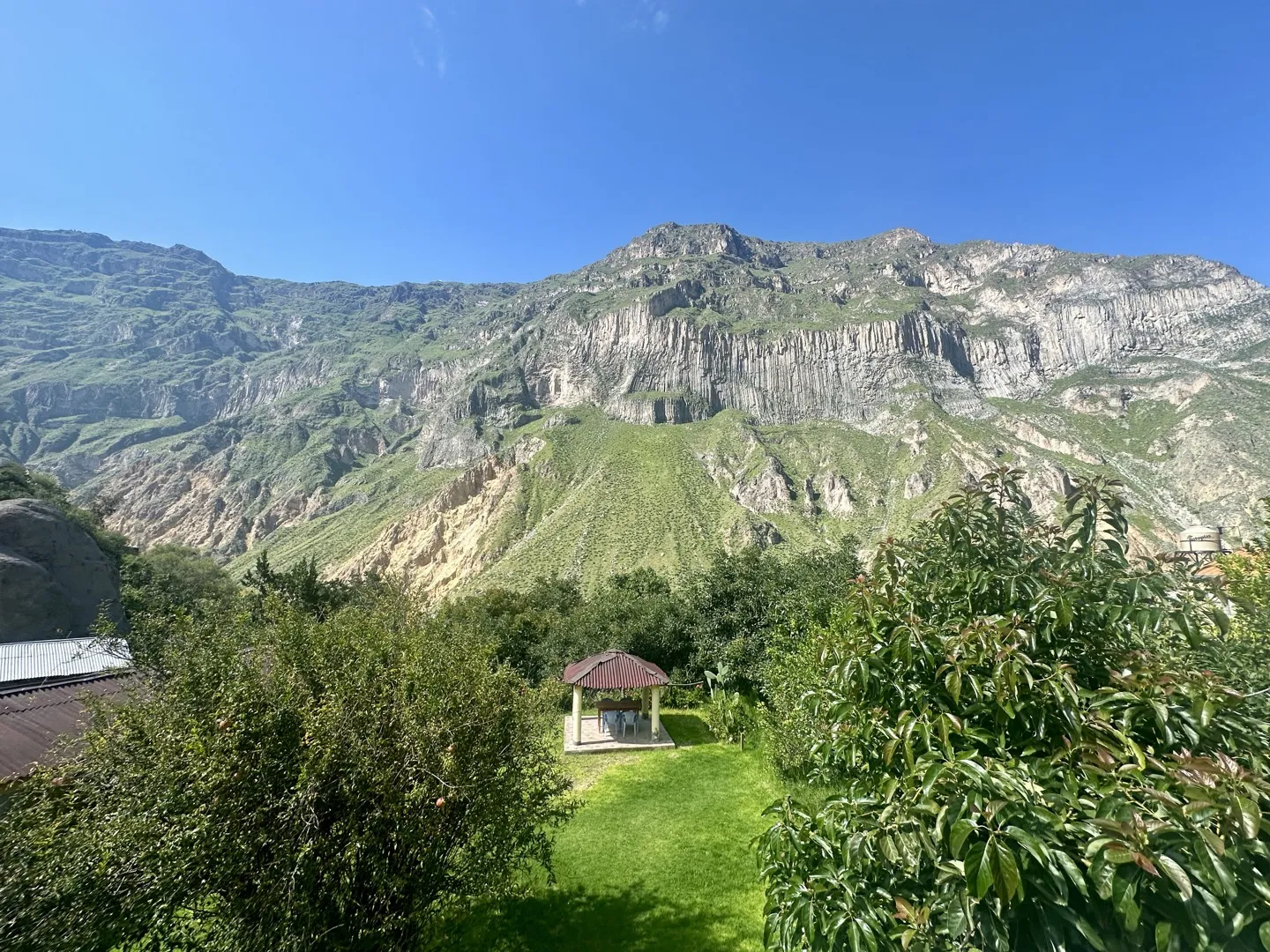
San Juan de Chuccho has several basic guesthouses, all offering similar prices and amenities. We stayed at Posada Gloria and paid 70 PEN per person for a private room, dinner, breakfast and a warm shower. The highlight of my stay was the undercover rotunda, which has views of the surrounding canyon walls. It was the perfect place to unwind, read a book in a hammock and take in the views before setting off on day two.
San Juan de Chuccho → Sangalle Oasis
On the second day of the Colca Canyon trek, you can treat yourself to a bit of a sleep-in, as there is no need to get up before dawn like the day before. Day two starts with a short but steep climb out of San Juan de Chuccho to get back to the main road. The climb should not take longer than 45 minutes, but it can be slightly confusing as the trail through this section is not clearly marked. It does not really matter which route you take up, as long as you make it to the main road above, you are on the right track.
Aim to set off from San Juan de Chuccho by around 8:30am. While the Day 2 hike is not hard, the earlier you set off, the more time you will get to enjoy by the pool in Sangalle.
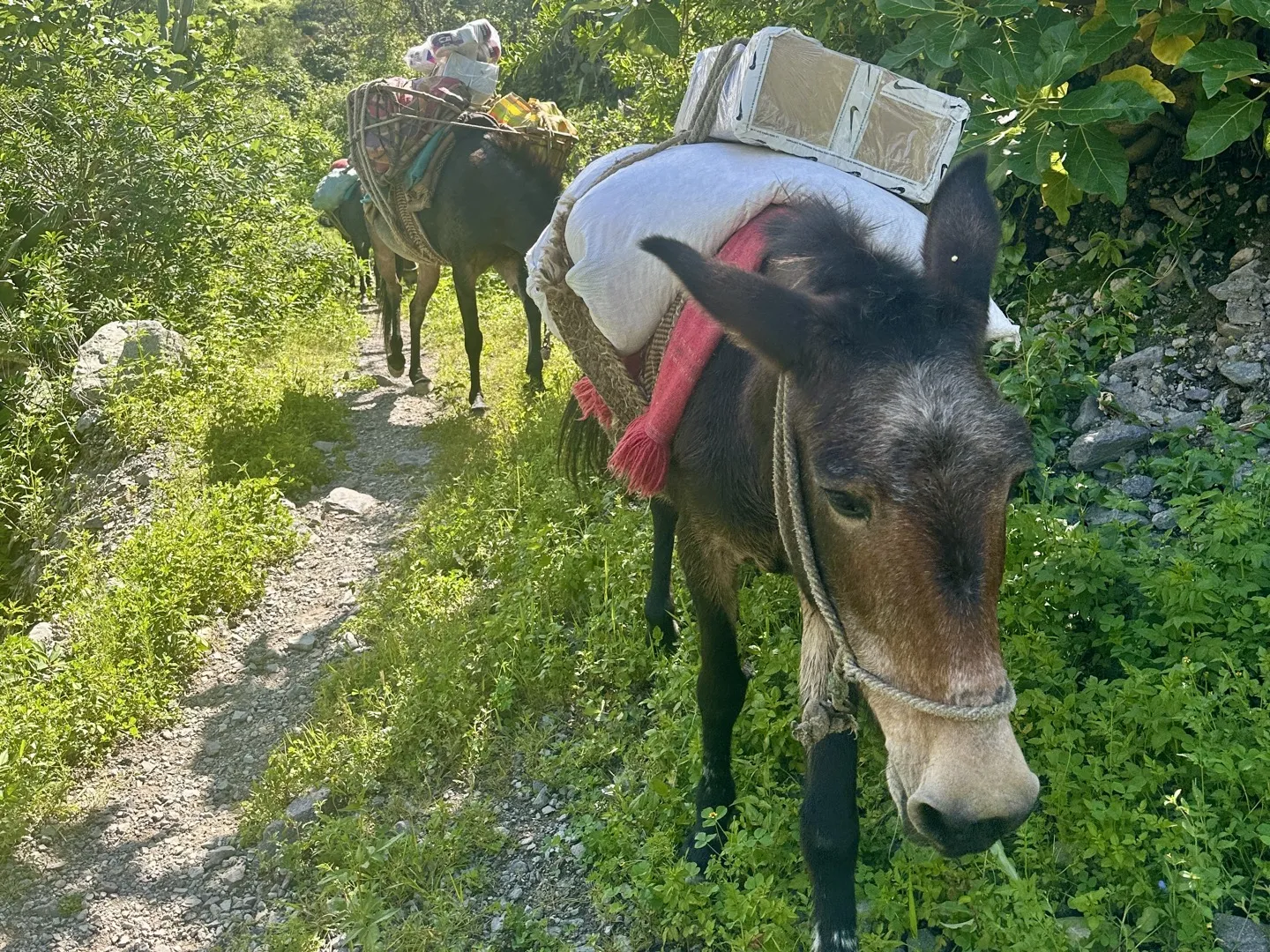
After the short uphill, the hike along the main road to Sangalle is mostly flat and weaves between villages such as Cosñirhua and Malata, two quiet farming villages that most trekkers walk straight through. Although you will see local farmers working in their fields along the way, we struggled to find anywhere open for lunch and had to carry on until we reached Sangalle.
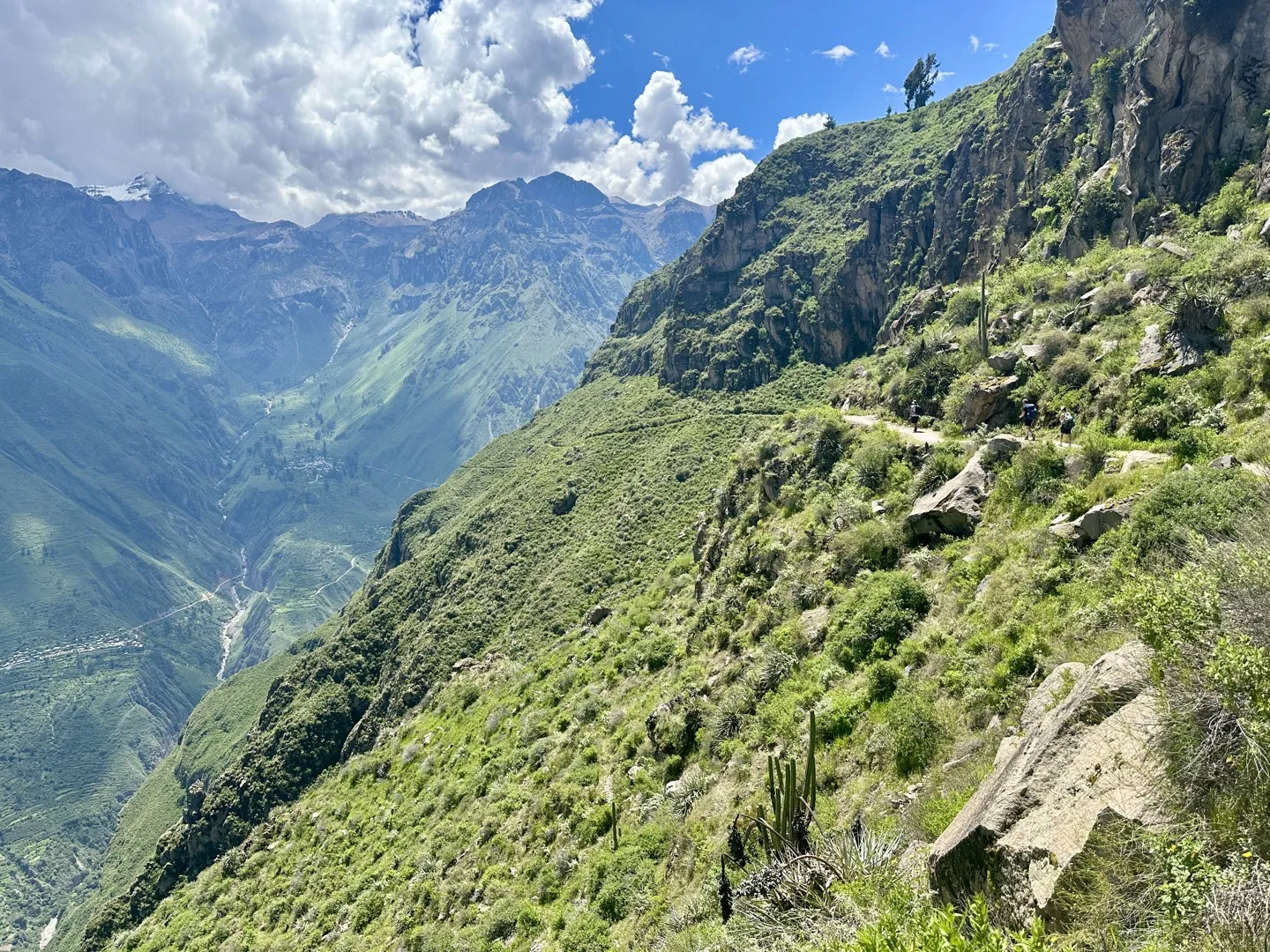
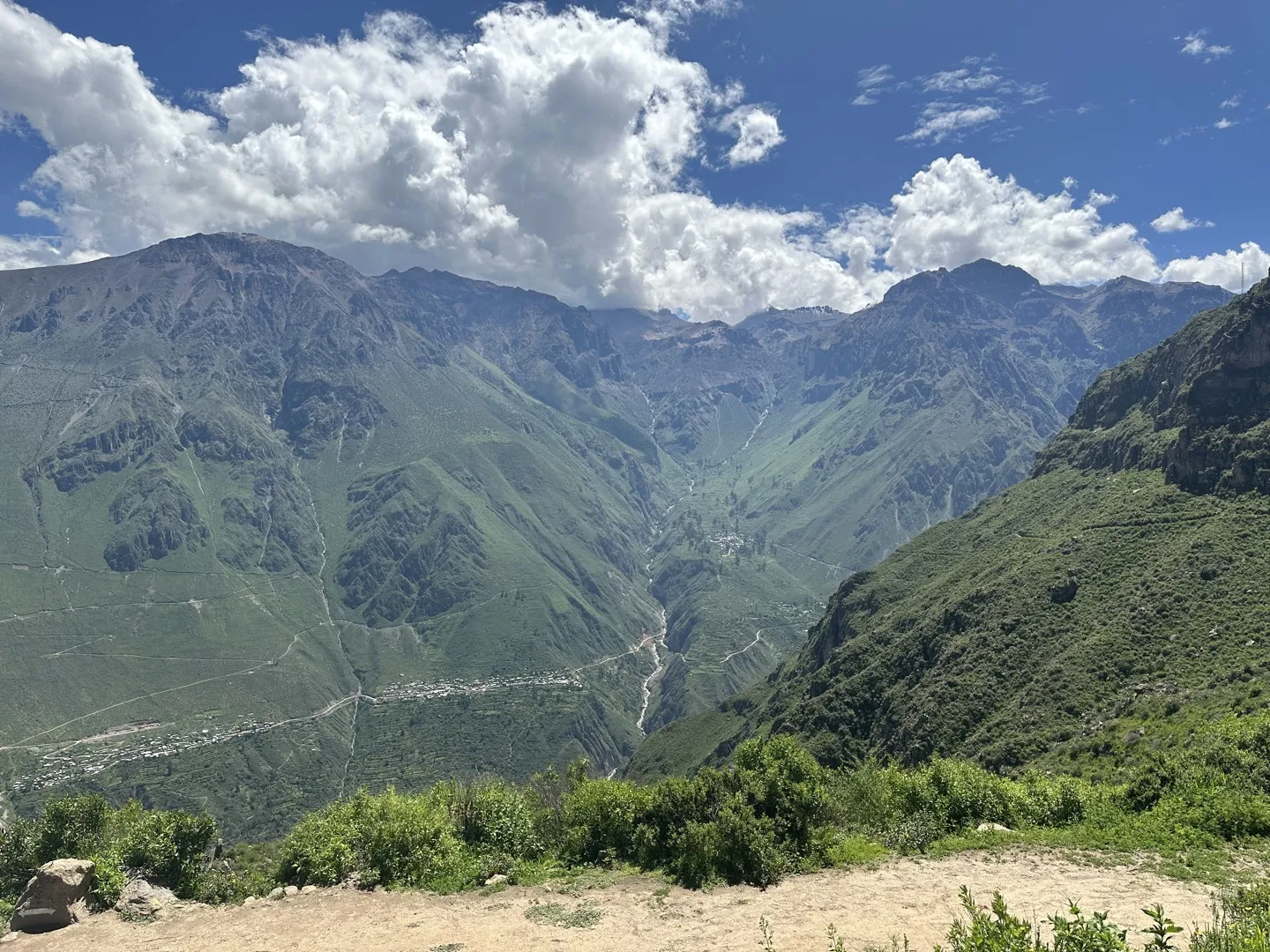
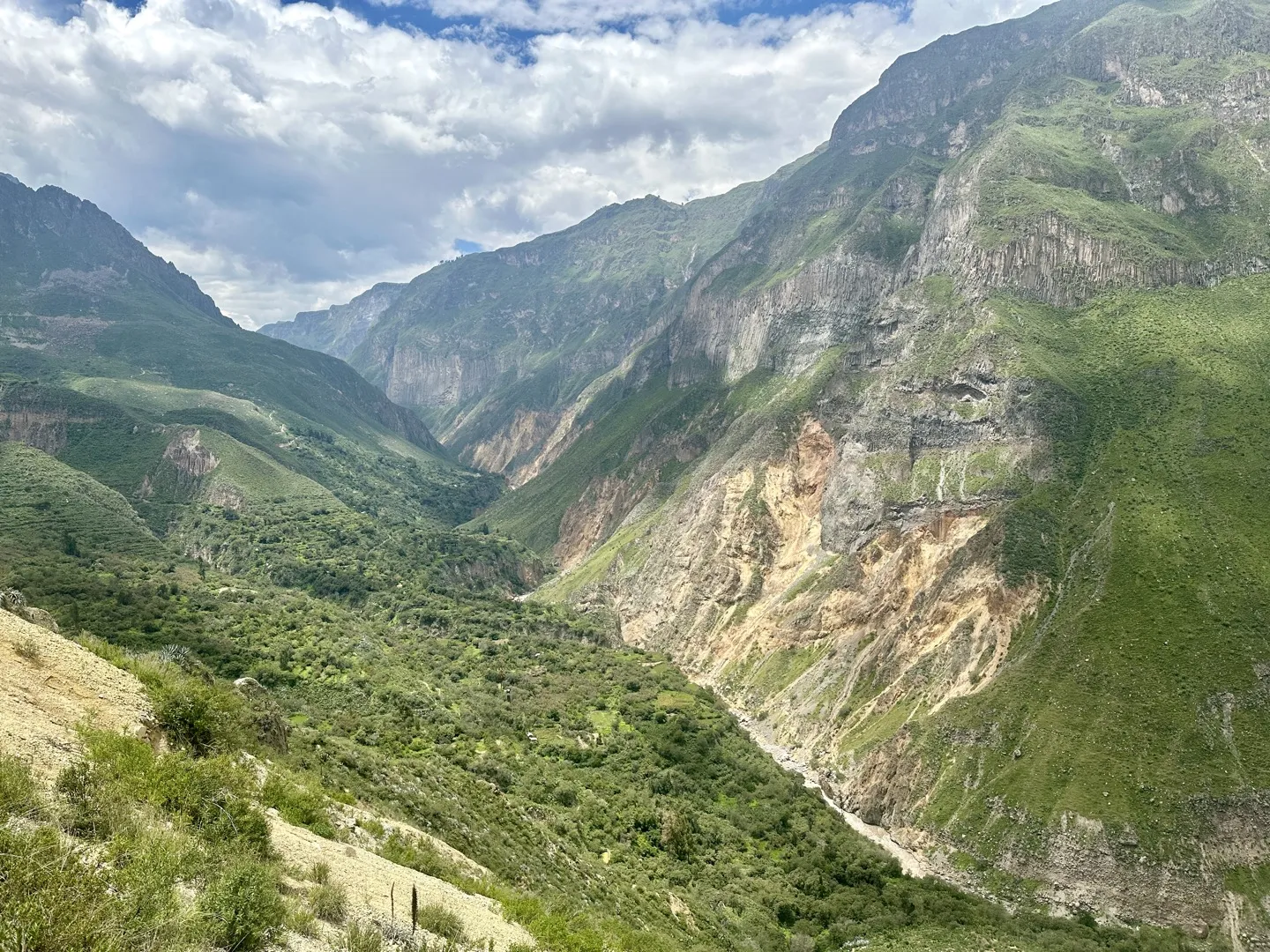
This part of the Colca Canyon trek follows the eastern side of the canyon and gives you some of the best views of the whole trek. The river sits far below, with the sheer canyon walls rising around you, and if you are lucky, you may spot Andean condors gliding overhead as they hunt for prey. It is worth slowing down and taking it all in rather than pushing straight through to Sangalle.
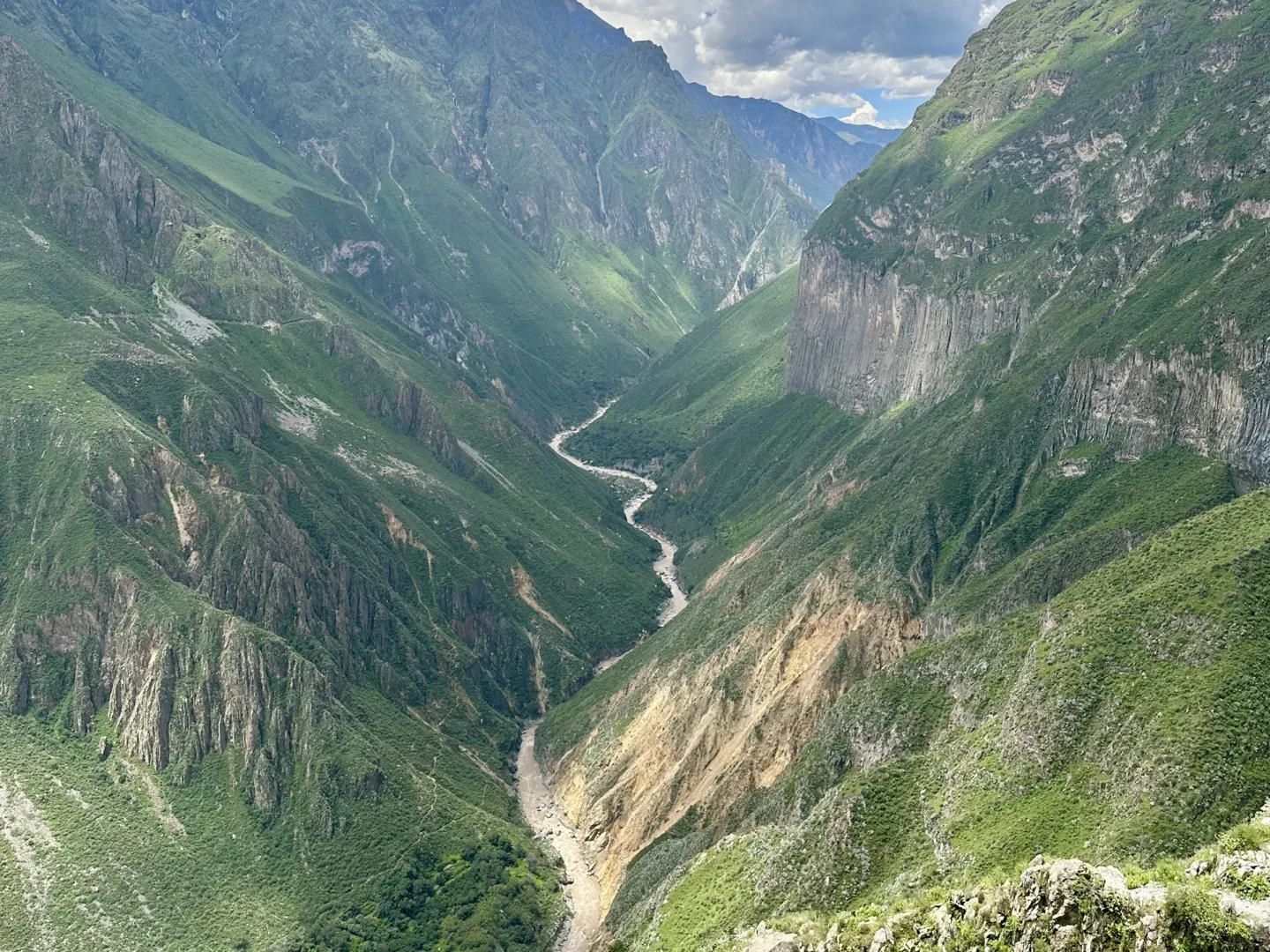
At some point, you will reach a crossroad and see a sign for Sangalle that takes you further down into the canyon. You want to follow this route and, once again, the trail goes steadily downhill all the way to Sangalle, so brace yourself if you suffer from sore knees in long descents.
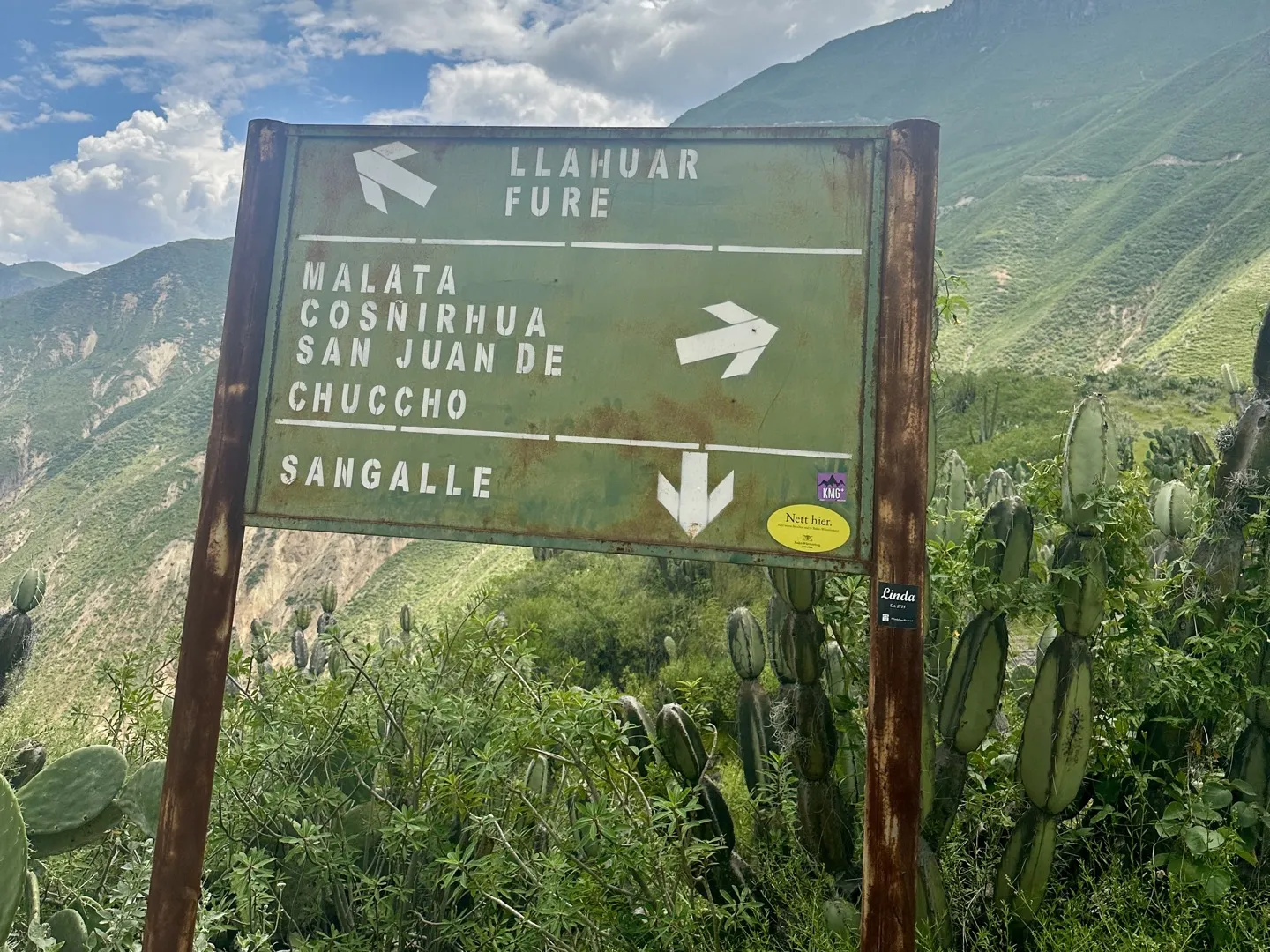
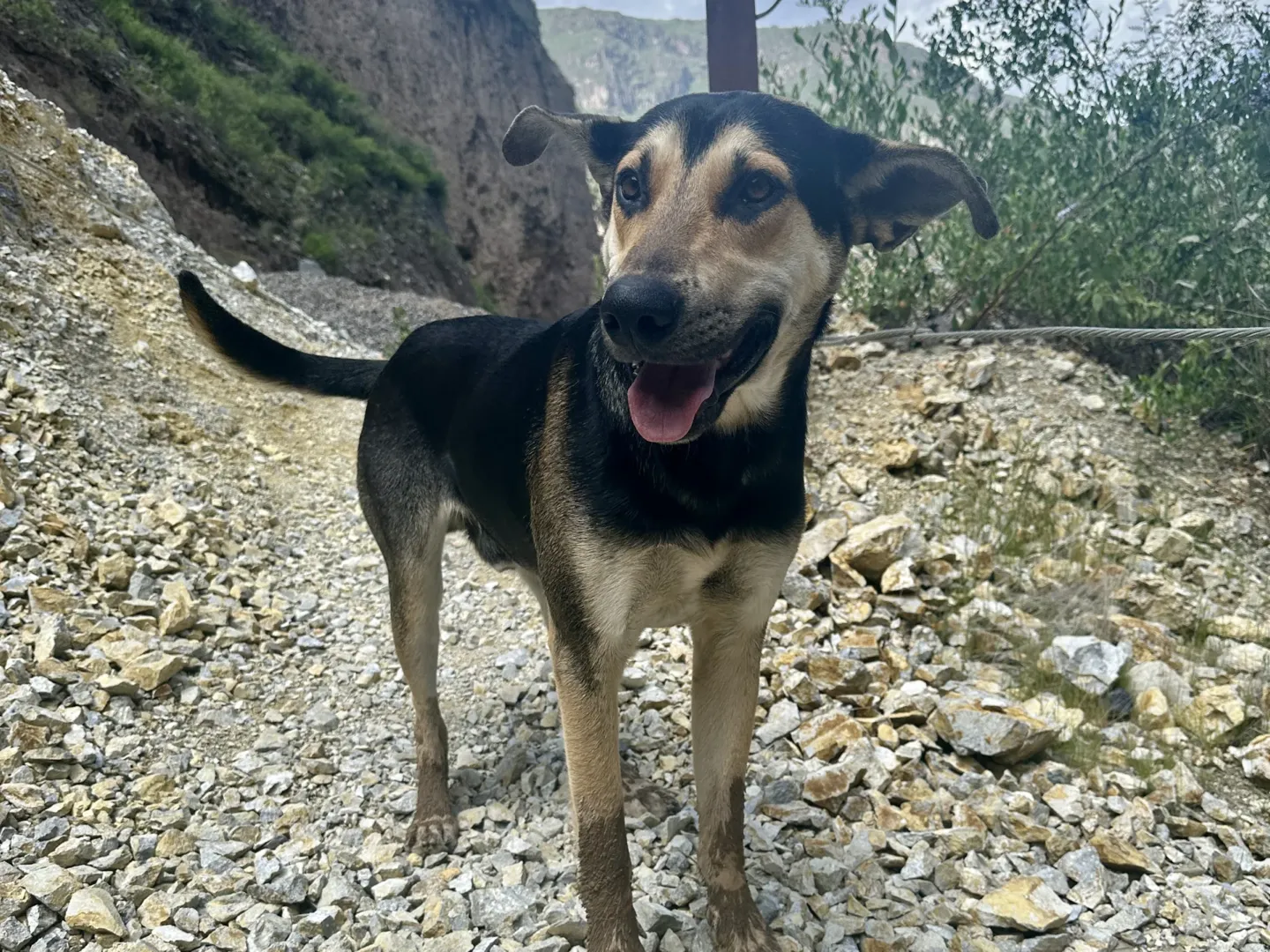
Just before the main descent into the oasis, you will spot an old man beside his shack selling snacks and water. It may not look like much, but this is your last chance to stock up at a reasonable price. I would recommend buying enough water and snacks to last until you are back in Cabanaconde around midday the following day.
Because of Sangalle's isolated location, bottles of water can cost up to 20 PEN (US$6) each. Plan accordingly and make sure you have enough water, as the next time you will be able to buy anything at a regular price is when you leave the oasis.
After a gentle three to four-hour hike, you will finally arrive at Sangalle, a small scenic village at the bottom of the Colca Canyon. Most accommodations in the village have pools, where you can spend the afternoon cooling off under palm trees, surrounded by the impressively tall and intricate rock face of the canyon. This is a truly unique spot, and not one I expected to find myself in when I first set off through Peru. Although I did not book accommodation in advance, I highly recommend doing so in peak season, as the number of tourists often outweighs the number of available beds.
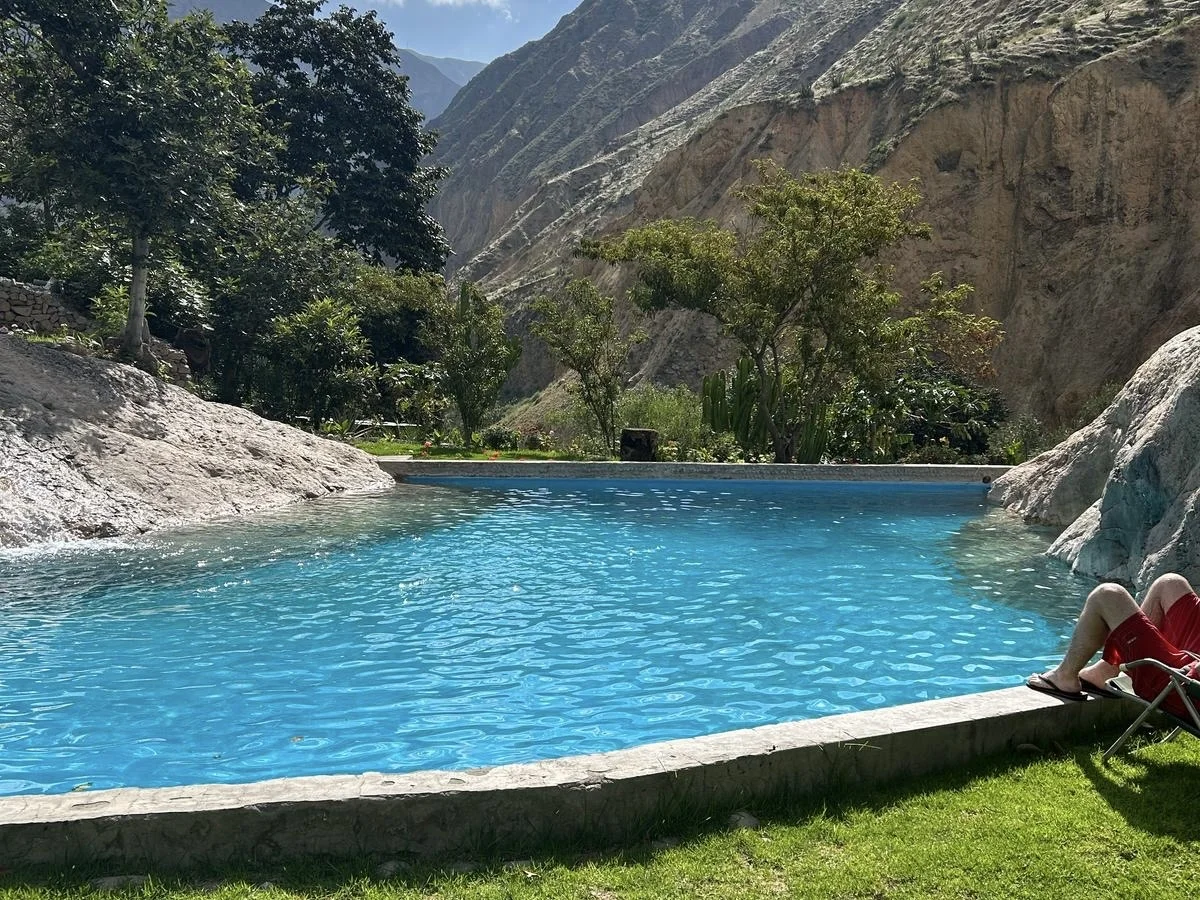
I stayed at Oasis Paraiso Ecolodge for 40 PEN per person, which included a private room and bathroom, plus breakfast in the morning. Lunch and dinner were available for an additional 25 PEN each. The meals were standard Peruvian food, filling and warm, and much appreciated after two days on the trail.
When I completed the Colca Canyon trek, I struggled to find any open shops in the small villages on the way to Sangalle. If this is the case for you as well, push through to Sangalle and buy lunch from your accommodation.
Sangalle Oasis → Cabanaconde
As the classic saying goes, what goes down must eventually come back up, and the Colca Canyon trek is no different. After two days of descending deeper into the world's second-deepest canyon, it is time to climb your way back out to Cabanaconde.
The climb back to Cabanaconde is up a cliff face, so there is limited shade along the way. Make sure to leave Sangalle before the sun comes up to minimise the time you hike in the direct sun.
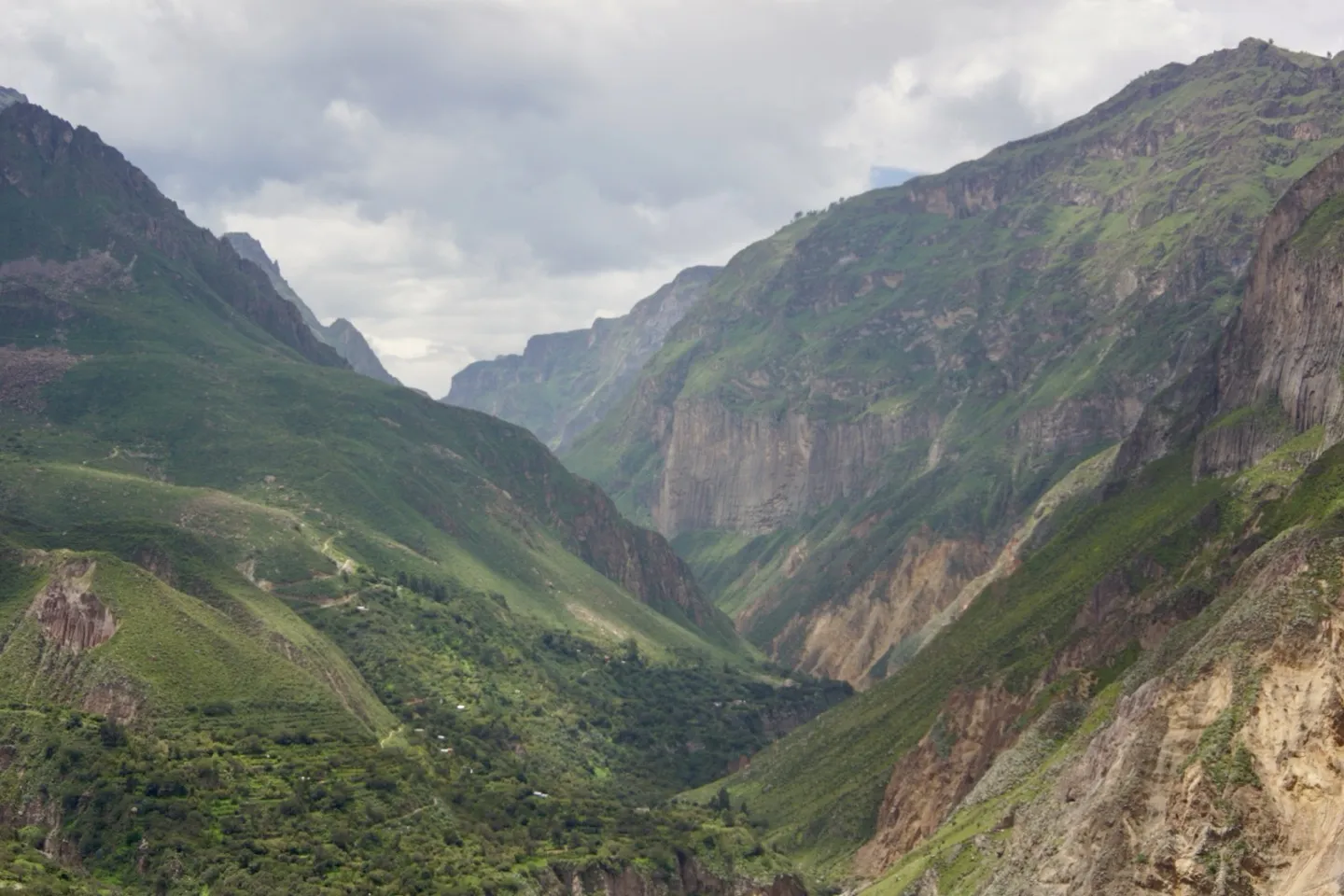
The hike out of the canyon from Sangalle to Cabanaconde covers around 4km (2.5 miles), with close to 1,200 metres (3,940 feet) of elevation gain up a series of exposed switchbacks. While the trail is not technical, the steady ascent combined with the full sun easily makes this section the hardest of the trek. Having spent days thinking about how hard the ascent was going to be before we set off, actually completing it did not feel as bad as we thought it would, and it only took us around three hours. Once you get to the top of the canyon, Cabanaconde is a further 2km (1.2 miles) along flatter terrain.
Cabanaconde → Arequipa
Once you reach Cabanaconde, the easiest way to get back to Arequipa is by public bus. I would recommend buying your return ticket as soon as you get back to Cabanaconde, before doing anything else, to make sure you have a spot on the bus. Multiple companies run public buses from the village's main square, with several departures throughout the day, so you do not need to book anything in advance. Tickets cost approximately 50 PEN per person, and the bus will drop you at the main bus terminal in Arequipa.
The last daytime bus leaves Cabanaconde at 2pm. If you miss it, your next options are to wait for the night bus at around 9–10pm, take a private taxi back to Arequipa or stay overnight in Cabanaconde.
The bus journey back to Arequipa takes about six to seven hours and, as it is a public bus, it generally does not stop for food, water or bathroom breaks along the way. Before boarding, take the time to have lunch and stock up on snacks and water in Cabanaconde. There are numerous small shops around the main square selling sandwiches and small meals at a very reasonable price. If you only have time for one thing, make sure to use the bathroom before leaving Cabanaconde.
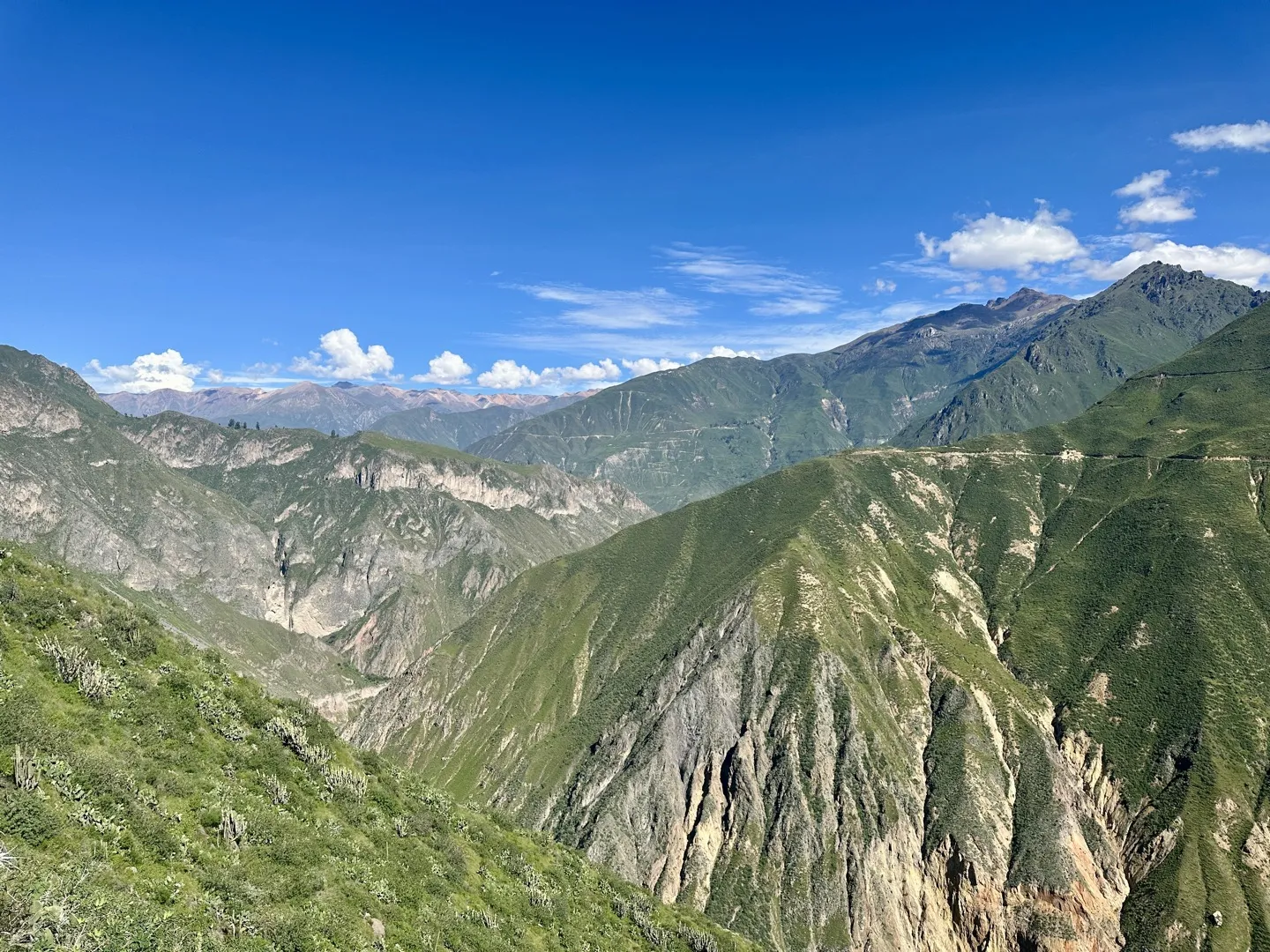
Of all the treks in Peru, the Colca Canyon stands apart from the others and is one I would definitely recommend, especially if you are already in the south of Peru. Instead of climbing up into snow-capped mountains, you descend into one of the deepest canyons in the world, ending at an oasis of palm trees and pools at the bottom. Best of all, doing the Colca Canyon trek without a guide and taking three days to do it, lets you enjoy the canyon views and the pool in Sangalle rather than rushing through it.
Back in Arequipa? Sleep Here.



Hiking the Colca Canyon Trek over three days is one of the easier multi-day treks you can do in Peru. Most of the trail is either flat or downhill, with the exception of the final day. On day 3, the section from Sangalle to Cabanaconde climbs nearly 1,200 metres (3,940 feet) over 4 km (2.5 miles), and the altitude can catch you off guard, especially if you are not acclimatised.
A 3-day guided Colca Canyon tour costs around US$120 per person, but you can save money by doing it without a guide. Here's exactly where my money went.
-
S/ 50 $13Shuttle from Arequipa to CabanacondeIncludes breakfast
-
S/ 70 $19Canyon entrance ticketBoleto Turístico
-
S/ 70 $19Accommodation Night 1Posada Gloria, including dinner & breakfast
-
S/ 25 $7Lunch in Sangalle
-
S/ 65 $18Accommodation Night 2Oasis Paraiso, including dinner & breakfast
-
S/ 50 $13Return bus to Arequipa
Conversions are approximate and update daily. Check the live rate before you travel.
Arequipa is well connected by domestic flights and long-distance buses, making it straightforward to reach from elsewhere in Peru. Flying is usually the quickest option, while overnight buses are a good way to save money and avoid losing a full day to travel. The options below cover the main routes you are most likely to use.

The time of year you hike the Colca Canyon can make a big difference to what you experience on the trail. Weather, visibility, temperatures and how busy the canyon feels all change throughout the year, so it is worth choosing your dates around what matters most to you. Use the season cards below to help plan your trek.
April, May, September & October
Shoulder season- The best balance of dry conditions and fewer hikers on the trail than during the peak months
- The chance of cloud cover is still low, giving you a good chance of seeing the full scale of the canyon walls
- April and May come just after the wet season, so the canyon is usually greener while the chance of rainfall drops significantly
- September remains very dry, while the chance of rain gradually starts to increase through October
- Accommodation in Sangalle can still fill up quickly, so I recommend booking in advance
- The trail is usually dry, in good condition and free of mud
June to August
Dry season, most popular months- The most reliable weather conditions for dry trails, clear skies and low rainfall
- Expect excellent visibility across the canyon, with June to August having some of the lowest cloud cover of the year
- June to August is peak trekking season in Peru, so expect more hikers on the Colca Canyon trek and book your accommodation in Sangalle well in advance
- Clear, dry weather also means colder mornings and nights, so make sure to pack warm clothes
November to March
Wet season- Rain becomes more frequent from November, with the wettest conditions usually occurring between January and March
- Increased cloud cover can obscure the canyon walls and reduce visibility, particularly during the middle of the wet season
- Rain can leave sections of the trail muddy and slippery, which is more noticeable on the steep descents and climbs
- The canyon is at its greenest during these months as the vegetation recovers from the long dry season
- There are generally fewer hikers on the trail, meaning accommodation in Sangalle is usually easier to find
The trailhead for the Colca Canyon trek, Cabanaconde, sits at 3,287 metres (10,784 feet), so if you are not acclimatised, the altitude can catch you off guard. Altitude sickness can affect you regardless of how fit you are, making acclimatisation far more important than trying to push through it. Use the tips below to reduce your risk of suffering from altitude sickness.
Acclimatise in Arequipa first
Arequipa sits at 2,335 metres (7,661 feet), making it the perfect place to acclimatise before taking on the Colca Canyon trek. If you are coming straight from Lima or somewhere else near sea level, make sure to give yourself at least one full day in Arequipa before heading to the trailhead.
Pick up coca leaves and understand your medication
Coca leaves are cheap, easy to find and commonly used throughout Peru by locals and travellers to relieve altitude symptoms. If you carry altitude medication, make sure you know how it works. Acetazolamide is generally taken before ascending to help prevent symptoms, while dexamethasone is usually taken after symptoms develop.
Take the uphill from Sangalle slowly
Even if you feel acclimatised by Day 3, take the climb from Sangalle back to Cabanaconde slowly. Your body may be used to sleeping at altitude by then, but you may struggle more than you think when climbing uphill at 3,287 metres (10,784 feet).
Hiking the Colca Canyon trek without a guide is safe and straightforward if you are prepared. If you are thinking of completing a hike without a guide, this is the perfect one to start with. You still get the experience of completing a multi-day trek independently, but over a shorter distance than many of Peru’s other treks.
Well marked trail
The Colca Canyon trek loop from Cabanaconde is well used and generally easy to follow. You do not need a guide for navigation, but it still helps to know the name of the main stops before you start.
Never completely isolated
Even if you are hiking independently, you will rarely feel completely alone. The trail is popular with guided groups, other self-guided hikers and locals using different sections of the route.
Download the trail offline
Phone signal is patchy, and homestay Wi-Fi can be unreliable. Download the route on AllTrails or Maps.me before leaving Arequipa so you can still navigate if you lose reception.
Altitude and heat risks
The biggest risks come on day three, when you climb steeply back to Cabanaconde while gaining altitude in the exposed sun. Start as early as possible, ideally before dawn, and carry plenty of water.
Your Colca Canyon trek packing list is probably shorter than you expect. Because you will be sleeping in guesthouses each night, you do not need to carry a tent, sleeping bag or sleeping mat. A 30-35L daypack is plenty for clothes, water, snacks and a few essentials. Keep it light and your knees will thank you on the numerous downhills.