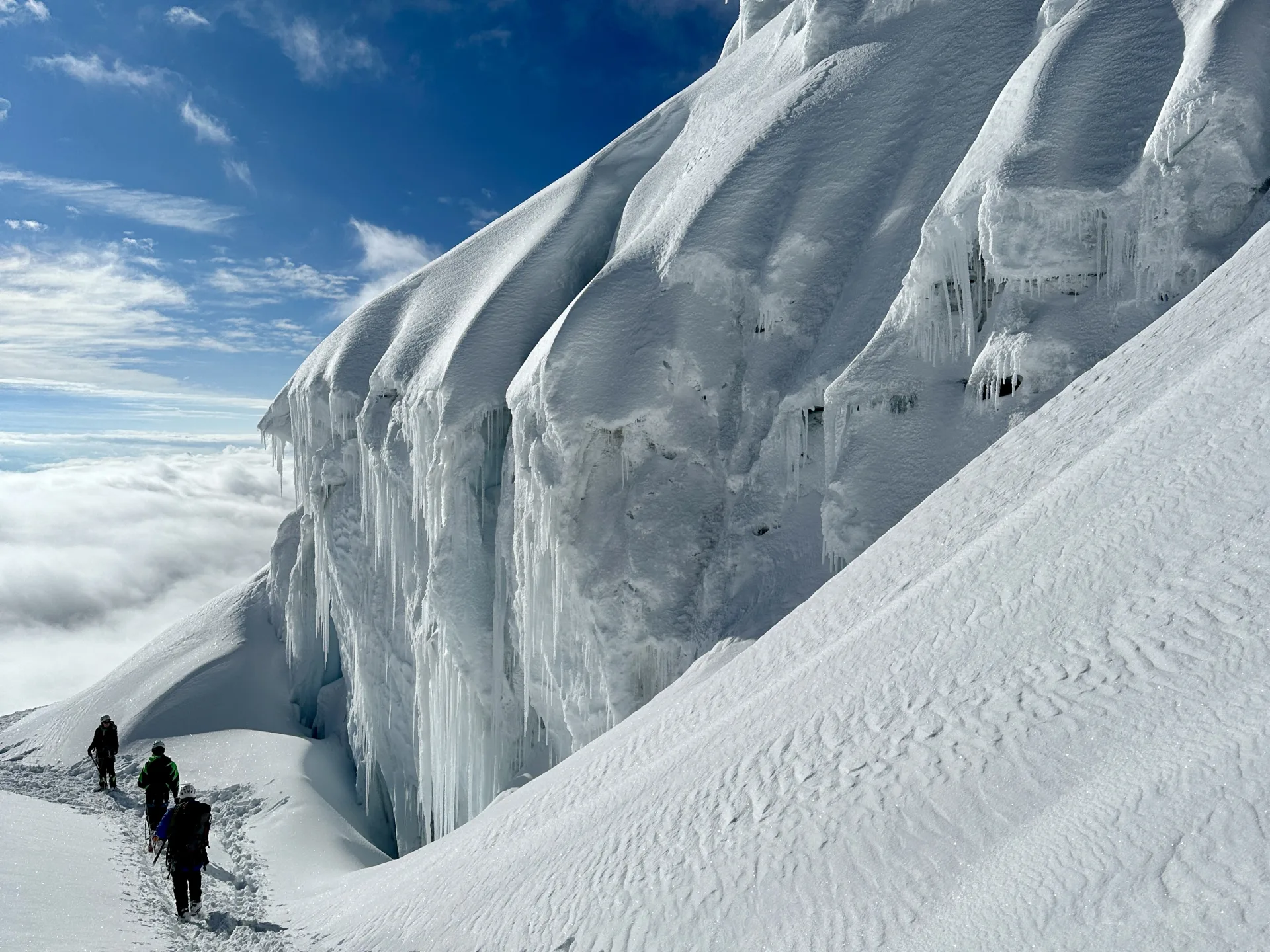
If you’re dreaming of summiting your first 6,000m peak, Huayna Potosi might just be the perfect place to start. Sitting just outside La Paz, this snow-capped giant rises to 6,088m (19,974 feet) and is often described as one of the “easiest 6,000m” climbs in the world, while also remaining one of the cheapest mountains of this size to summit.
Climbing Huayna Potosi without a guide is really only an option if you already have advanced mountaineering and crevasse rescue skills, but the good news is that there are plenty of agencies in La Paz offering guided summit tours. The guide below covers the 3-day, 2-night itinerary I followed, where to book a tour, how hard I found the climb, what it cost me, how to prepare for the altitude and what to pack.
Huayna Potosi Climbing Map
Some links are affiliate links. I may earn a small commission at no extra cost to you. Affiliate Disclosure.
Plan Your Huayna Potosi Climb
Unless you are already an experienced high-altitude mountaineer with glacier experience, I would strongly recommend booking a guide for Huayna Potosi. I booked my 3-day, 2-night climb with New Experience Bolivia for 950 BOB.
- Mountaineering gear
- Waterproof jacket and pants
- Helmet
- Ice axe
- Boots and gaiters
- Crampons
- Sleeping bag
- Qualified guide and glacier training
- All meals from lunch on Day 1 to breakfast on Day 3, including water from Day 2
- Transport to and from low camp
- Accommodation for both nights
- Mountaineering backpack
- Additional warm clothes
- Headtorch
If you would rather have your climb organised before arriving in La Paz, you can book one of the tours below in advance.
La Paz → Low Camp + Ice Climbing Practice
On the first day of your Huayna Potosi climb, your guide will pick you up from your accommodation in La Paz anywhere between 7:30am and 8:30am, with the first stop at the agency’s gear shop. Here you’ll collect the technical equipment included with your tour and rent any additional gear you might need for the climb.
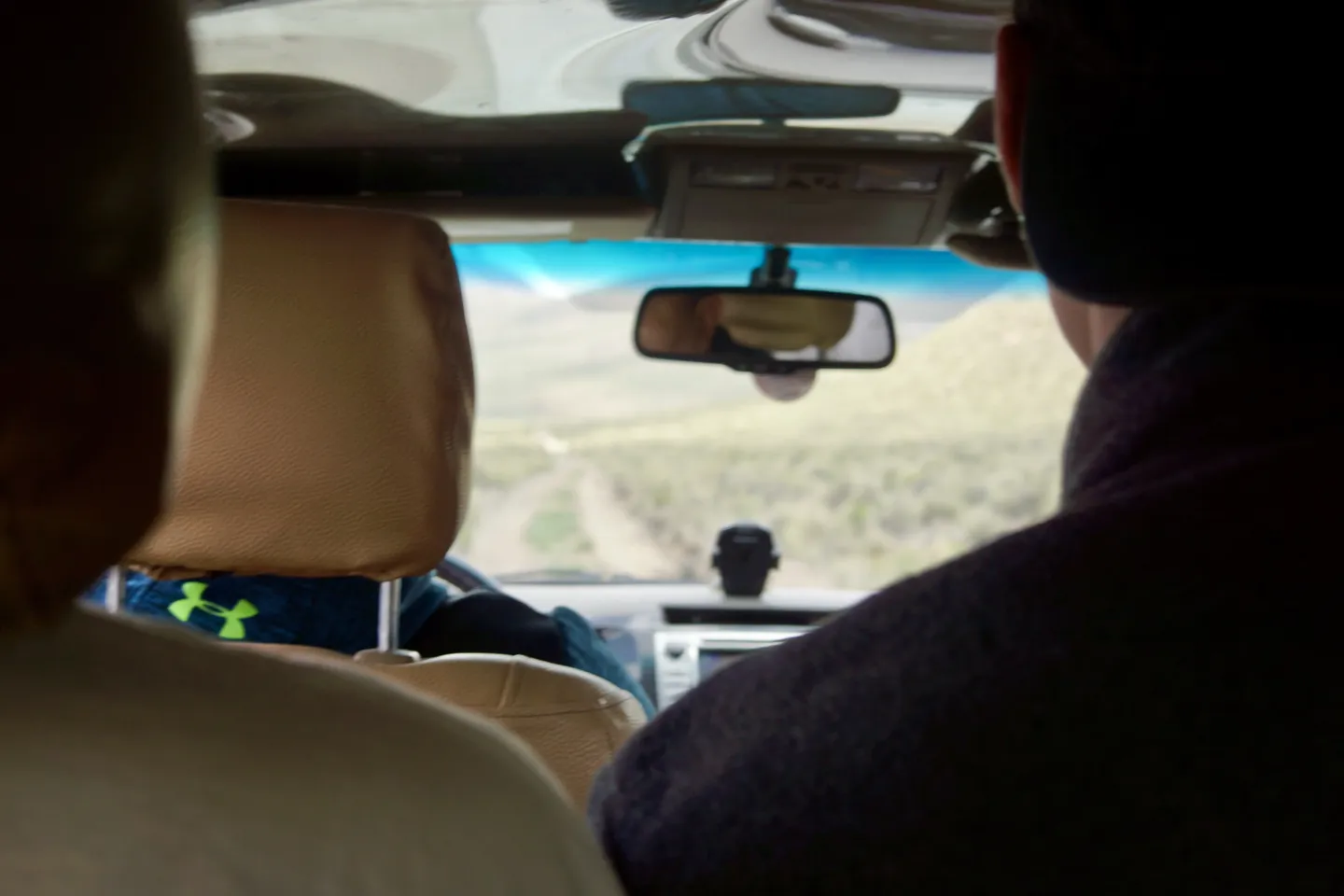
You will then continue driving out of La Paz, leaving the congested city behind and trading it for snow-covered mountains. If you haven’t eaten breakfast, I’d recommend asking your driver to stop somewhere along the way, but don’t expect a full sit-down meal. In my case, this meant grabbing a takeaway salteña and instant coffee before continuing towards Huayna Potosi.
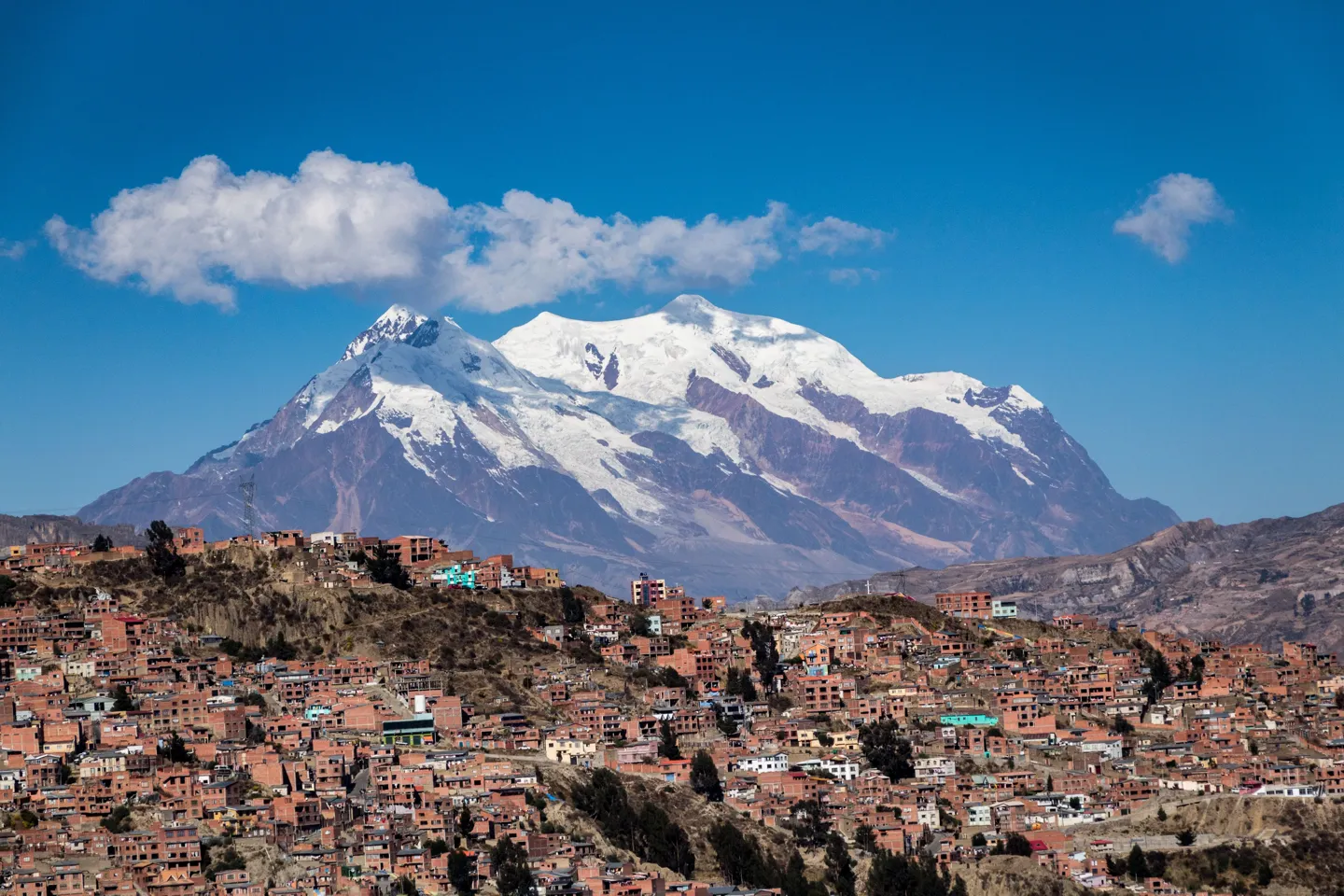
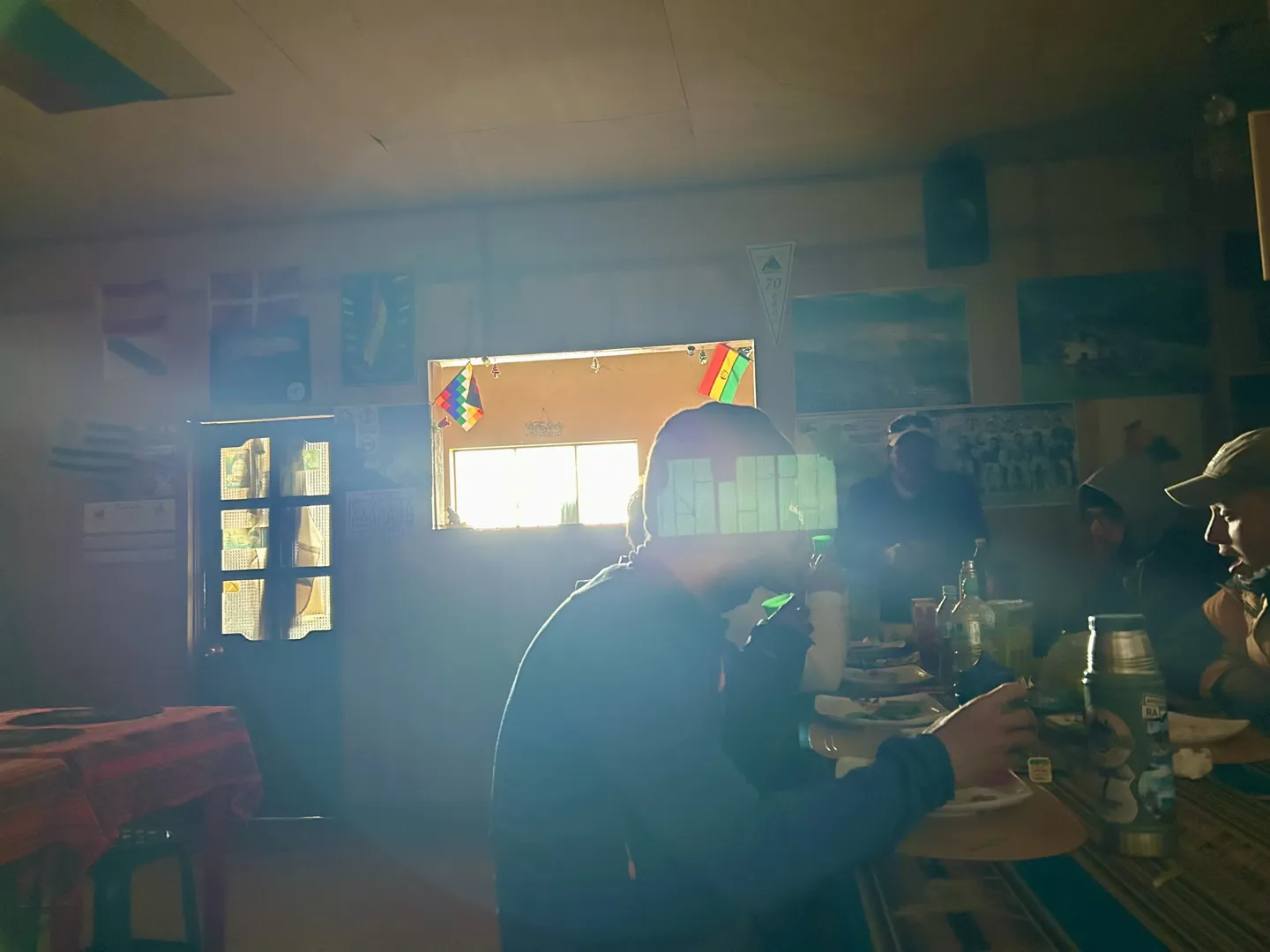
After about another hour of driving, you will be dropped off at the low camp refuge, where you will spend the first night at 4,700 metres (15,420 feet). The refuge I stayed in had the eating area downstairs and a large shared sleeping area upstairs with roughly 20–30 mattresses, which is great if you’re social and maybe a little daunting if you like your privacy.
Low camp already sits at 4,700m (15,420ft), so you may experience altitude sickness symptoms, particularly overnight. Pay attention to how you’re feeling and tell your guide if your symptoms worsen, as altitude sickness at this elevation can become serious.
After lunch, you’ll walk to a nearby glacier for your first technical training session. Your guide will show you how to use crampons and an ice axe, move safely across the glacier and practise some basic ice-climbing techniques. These are all skills you will need during the summit attempt, but it is also a genuinely fun part of the first day and your chance to get a feel for how the mountaineering equipment works.
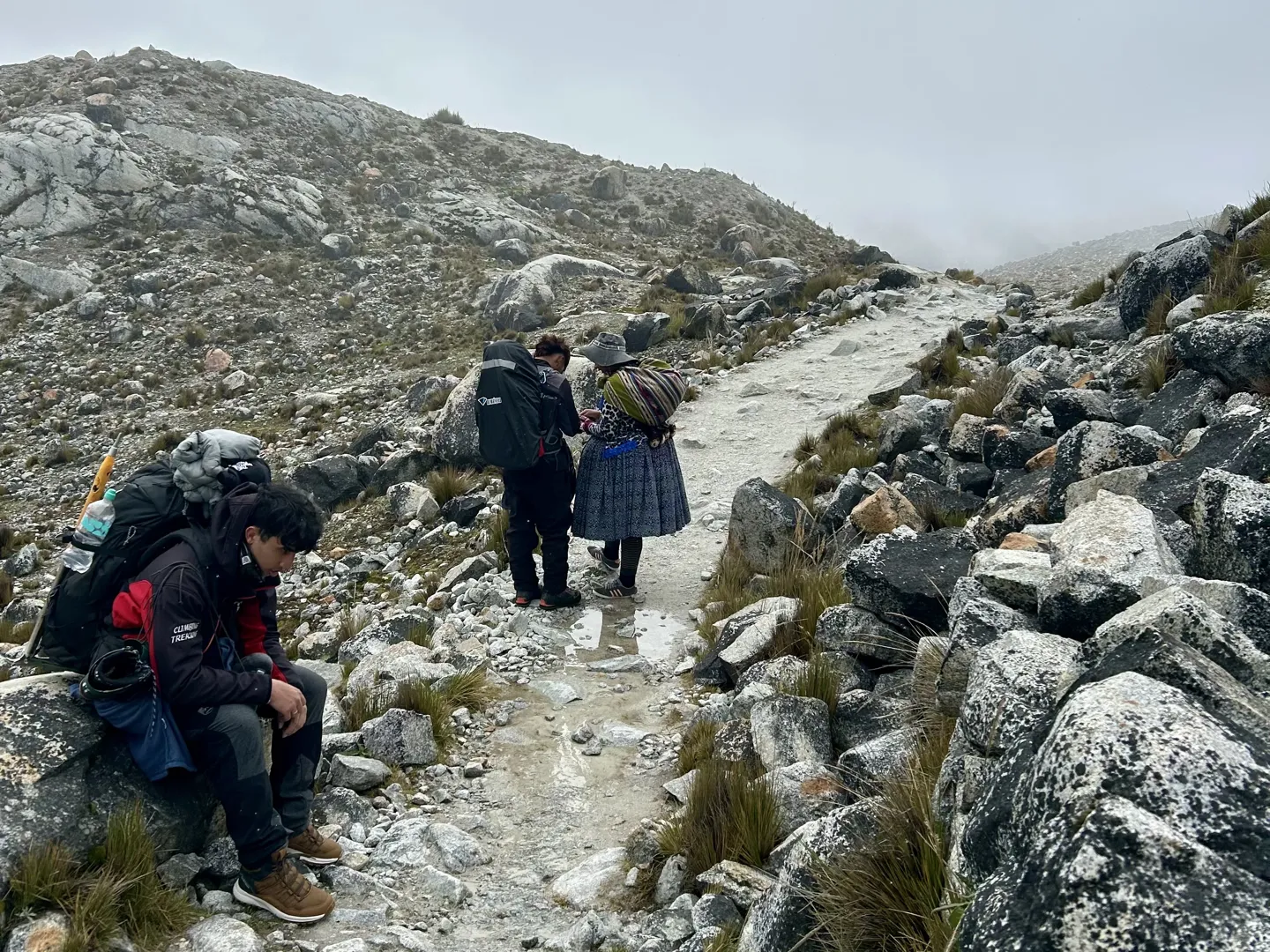
After the glacier session, you’ll return to the refuge for dinner and hot drinks. There isn’t much else to do for the evening, so it’s a good chance to get to know the others in your group over a warm cup of tea before trying to get an early night ahead of the climb to high camp.
Sleeping at altitude can be difficult at the best of times, even if you are reasonably well acclimatised. Between the rapid elevation change and the large shared sleeping area, don’t expect your best night’s sleep at low camp.
Low Camp → High Camp
Day 2 starts a little later, with breakfast served between 8:00–8:30am. Afterwards, you’ll pack only the clothing and equipment you need for the summit attempt, while everything else can stay safely at low camp.
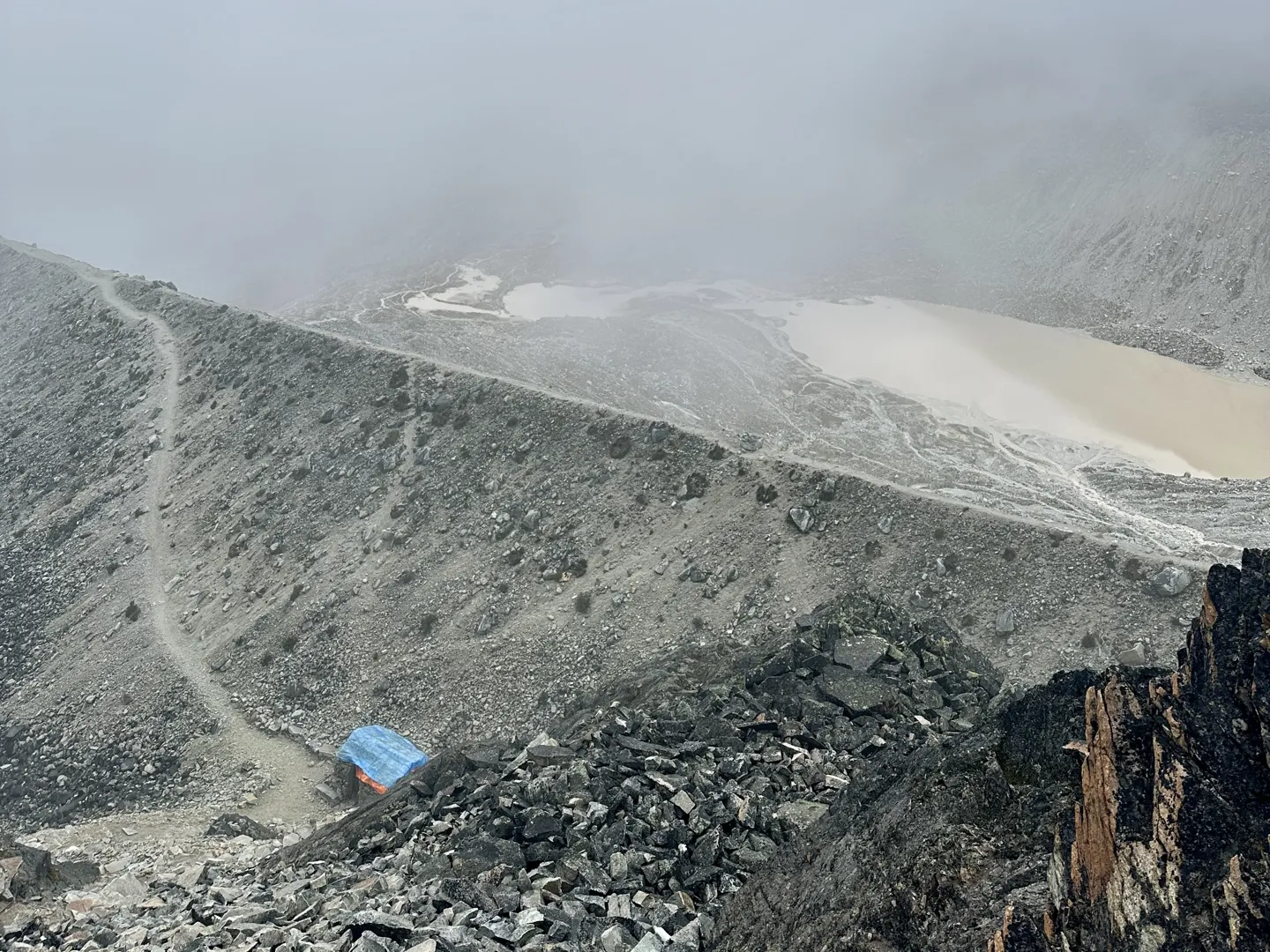
The only hiking objective for Day 2 is reaching high camp at approximately 5,300 metres (17,388 feet). The climb takes around 2–3 hours and is almost entirely uphill, following a dirt path that becomes rockier closer to camp. With no real time pressure, the hike felt relaxed and I was able to stop regularly for breaks as the altitude became more noticeable.
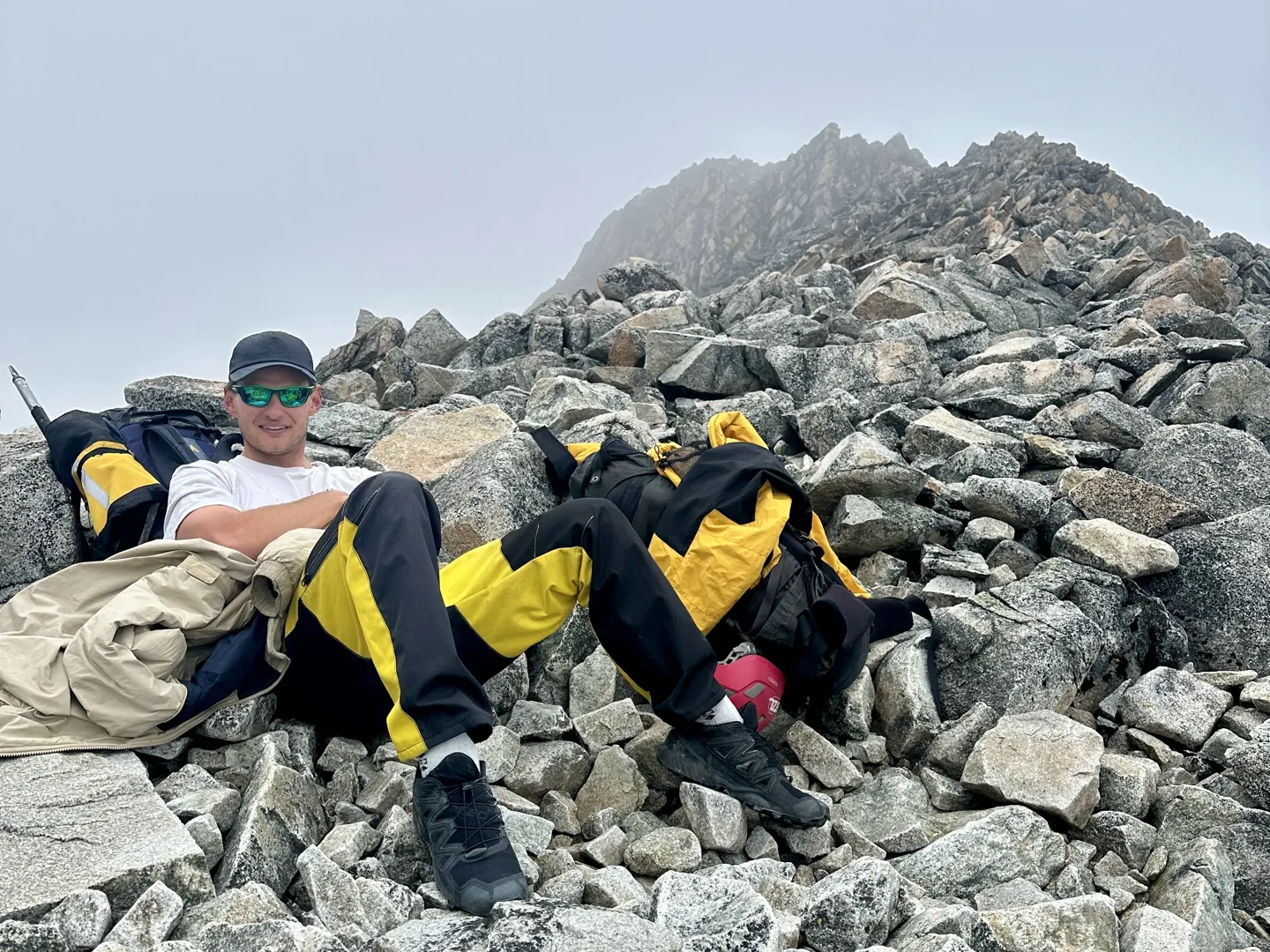
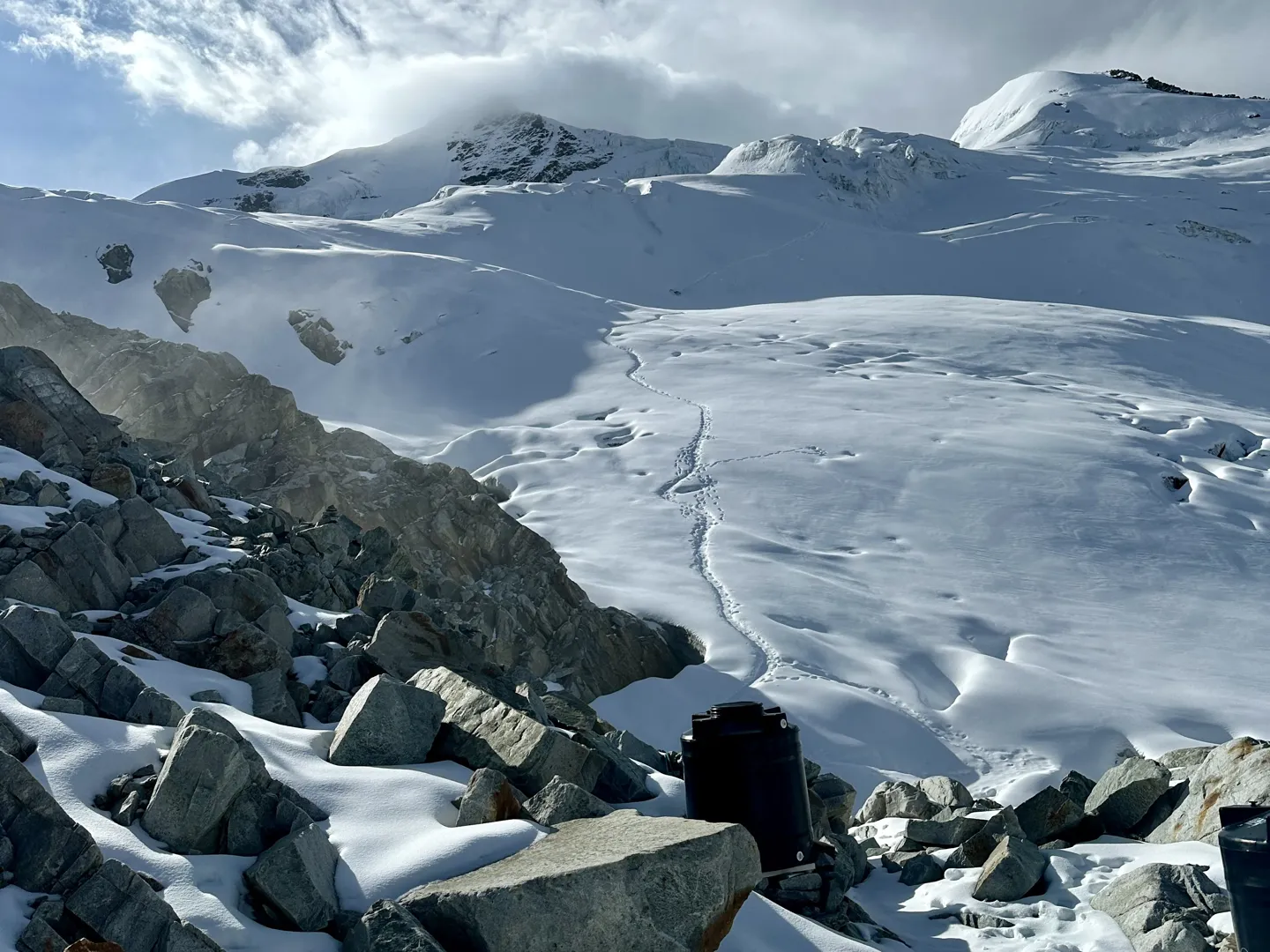
High camp feels much more basic than the refuge below, with a kitchen at the front and tightly packed bunk beds. Outside, the surroundings were covered in snow and almost completely silent apart from the wind. There was also a snowman next to the refuge, built by a previous group, which was still standing with a smile on its face.
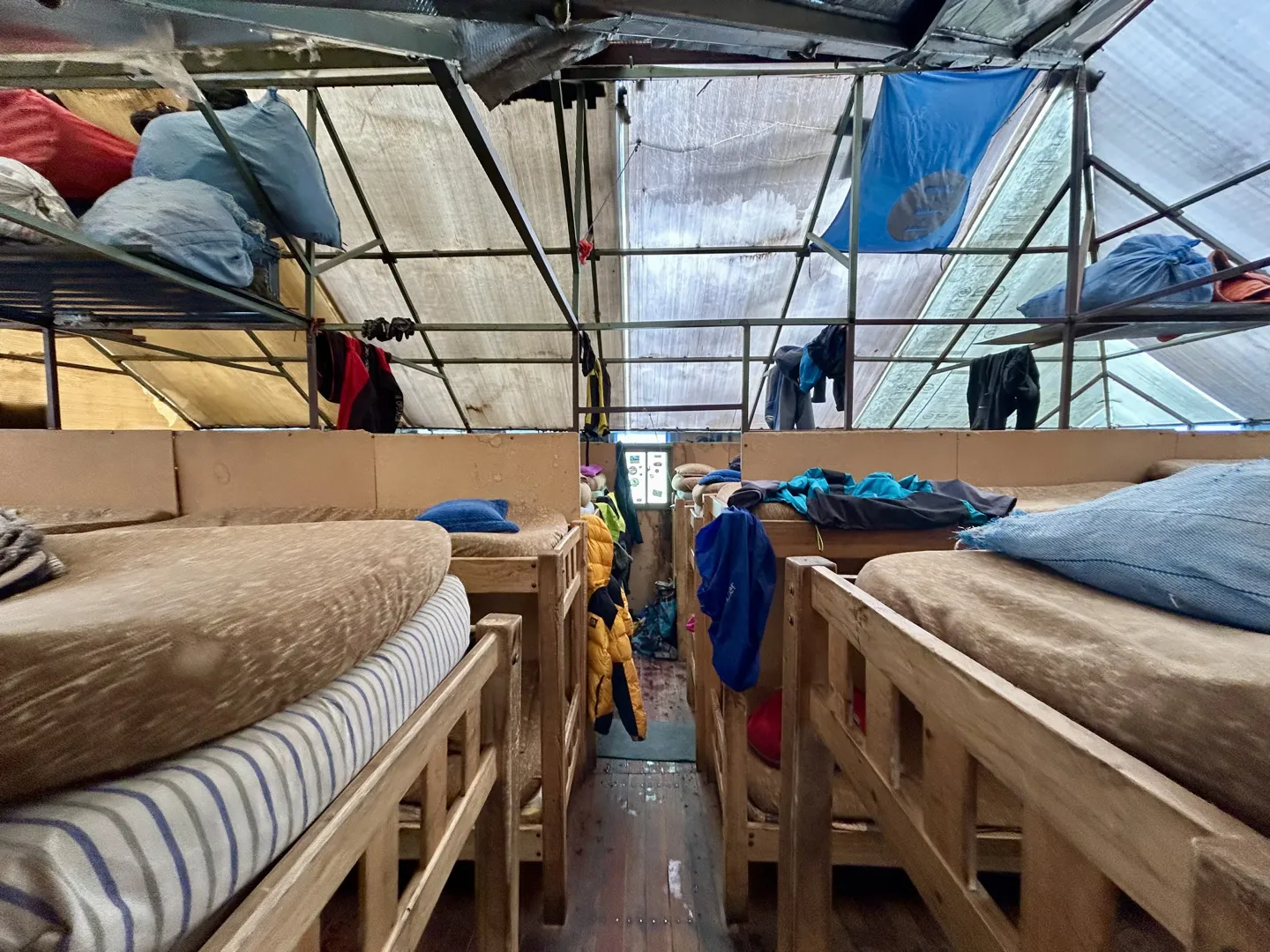
Lunch is served at around 2pm, and your guides will also brief you on the summit climb ahead. You’ll then be told to get to bed by 4pm, probably the earliest bedtime you’ve ever had, before waking at midnight for a gruelling 1am departure. If you thought sleeping was hard at low camp, good luck with high camp.
If someone needs to turn back due to altitude sickness, a second guide can accompany them while the rest of the group continues. However, if people turn back at different points, the entire group may eventually need to turn around, as the guides can’t simply hand you over to another group.
High Camp → Huayna Potosi Summit
When the clock strikes midnight, your guides will wake you after whatever sleep you managed to get. Breakfast will already be waiting: a thick slice of Bolivian cake and seemingly endless coca leaf tea. I had woken up with a pounding headache and was ready to try just about anything, so I remember double-bagging my coca tea while chewing on the leaves before we left.
Coca leaves and coca tea are commonly used across the Andes for altitude symptoms, but there is no strong evidence that they prevent or treat altitude sickness. For a summit climb like this, I was happy to use anything that might help, even if it was only a placebo.
After breakfast, you will leave high camp at around 1am and, depending on the time of year, may need to put your crampons on shortly afterwards to start climbing on the glacier. I wouldn’t recommend wearing your warmest upper-body layer when leaving camp, as you’ll heat up quickly while climbing and the coldest sections are still ahead. Keep your warmest layers accessible for when the temperature drops or you stop moving.
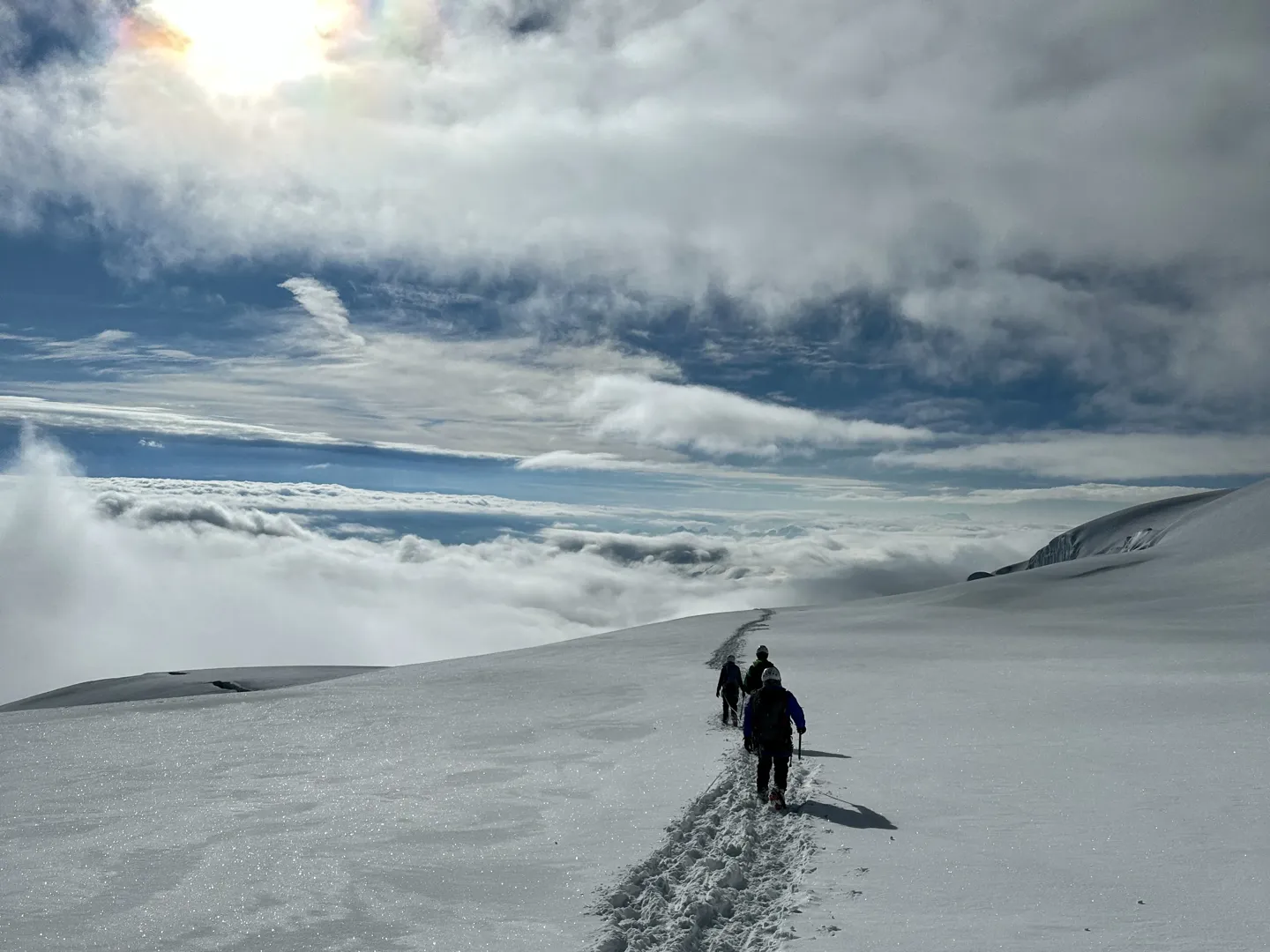
The first few hours were probably when I felt the most delirious. Severely sleep deprived, I was mainly focused on putting one foot in front of the other while trying to work out whether my headache was from altitude, dehydration or lack of sleep. The terrain was mostly gradual uphill, winding between crevasses you only properly notice on the descent. One of my favourite views was looking back at the long snake of headtorches winding through the snow behind me.
Around halfway through the climb, you will reach a steep ice wall, which you have probably already heard about from others who have completed the Huayna Potosi climb. This is where the practice from Day 1 becomes reality, as you use those techniques to work your way up a steep face of solid ice rising above you. The section isn’t as daunting as it looks, as you are secured to a fall protection system through your harness the entire way up.
The exact route and height of the ice wall can change with snowfall and glacier conditions, but the wall I climbed was roughly 15m (49ft) high.
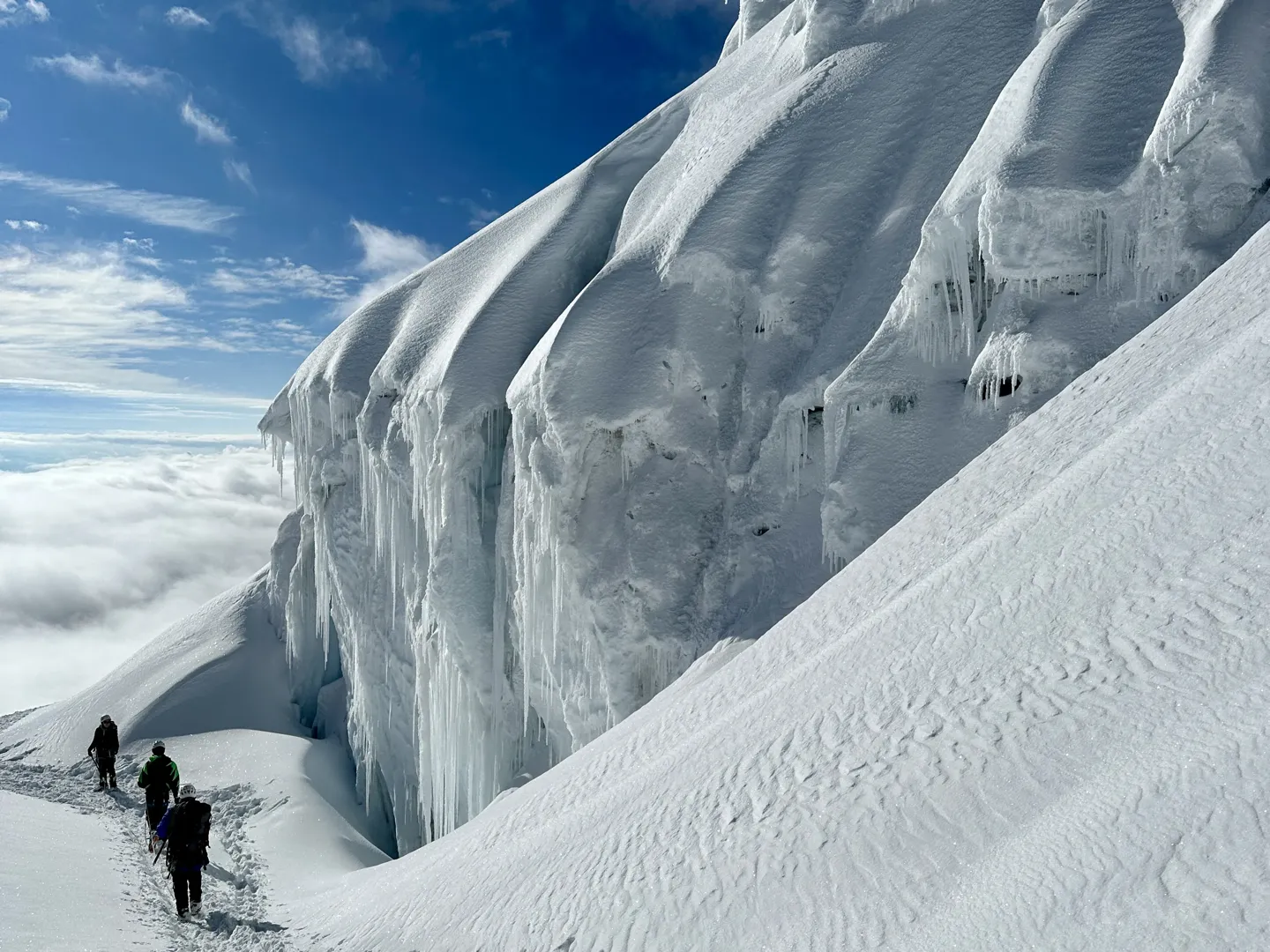
After the ice wall, the climb started to feel much more serious as we moved onto exposed ridgelines. In my case, temperatures had dropped to around -10°C (14°F), with strong winds blowing snow across the mountain. The number of climbers also became noticeably sparse as more people turned around because of the conditions or altitude sickness.
From a quick Google search, around 30–50% of people who attempt Huayna Potosí successfully reach the summit. This can vary from season to season and depending on the conditions and route the guides have to take.
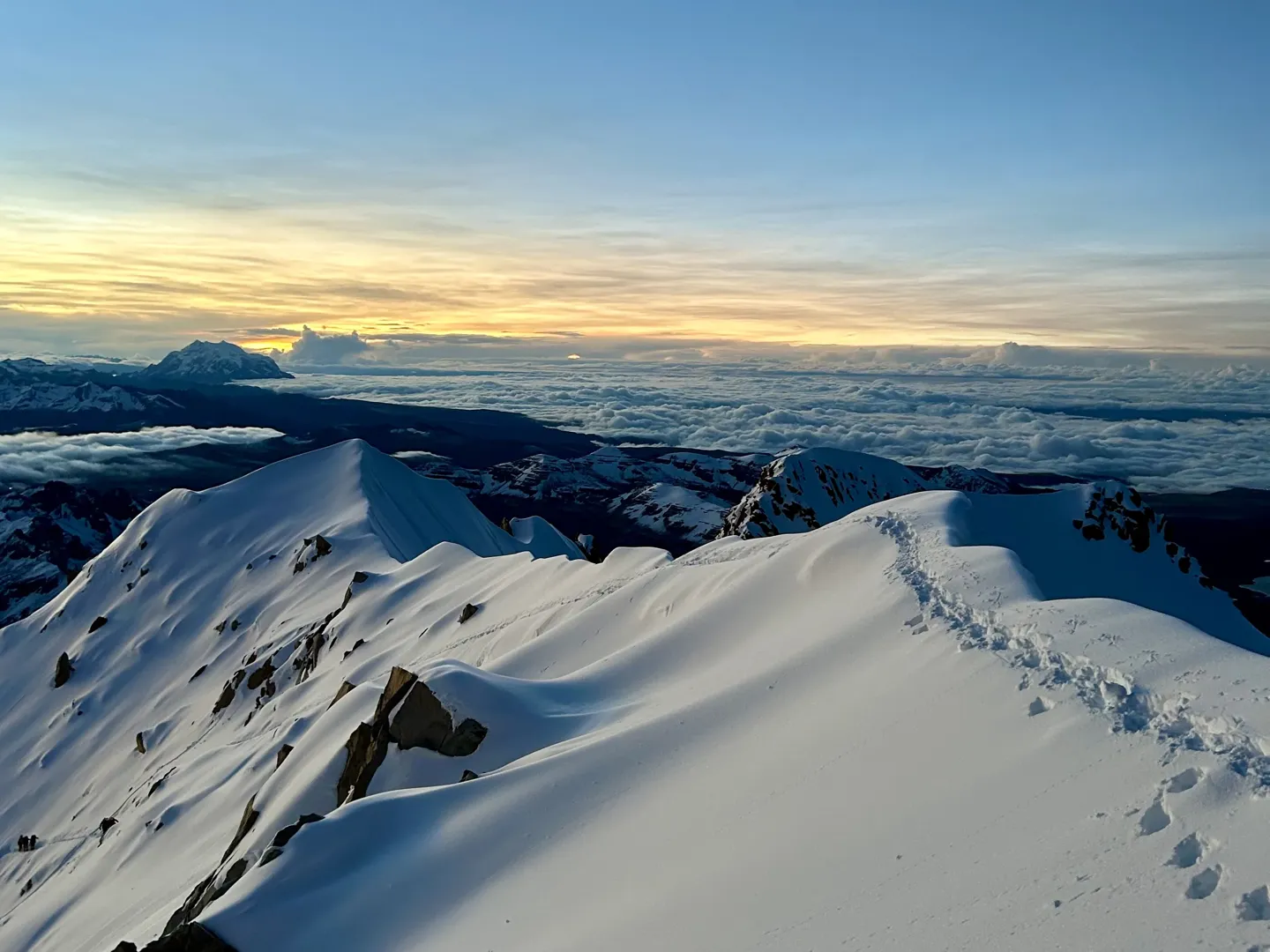
Eventually, as you reach the base of the final climb, the first purple light of dawn should start appearing and you can finally make out the silhouette of the summit and the contours of the mountain around you. You’ll have the opportunity to take a longer break before taking a deep breath and starting the final uphill. I recommend putting on your warmest layer here, as the entire face of the mountain was exposed to glacial winds during my ascent.
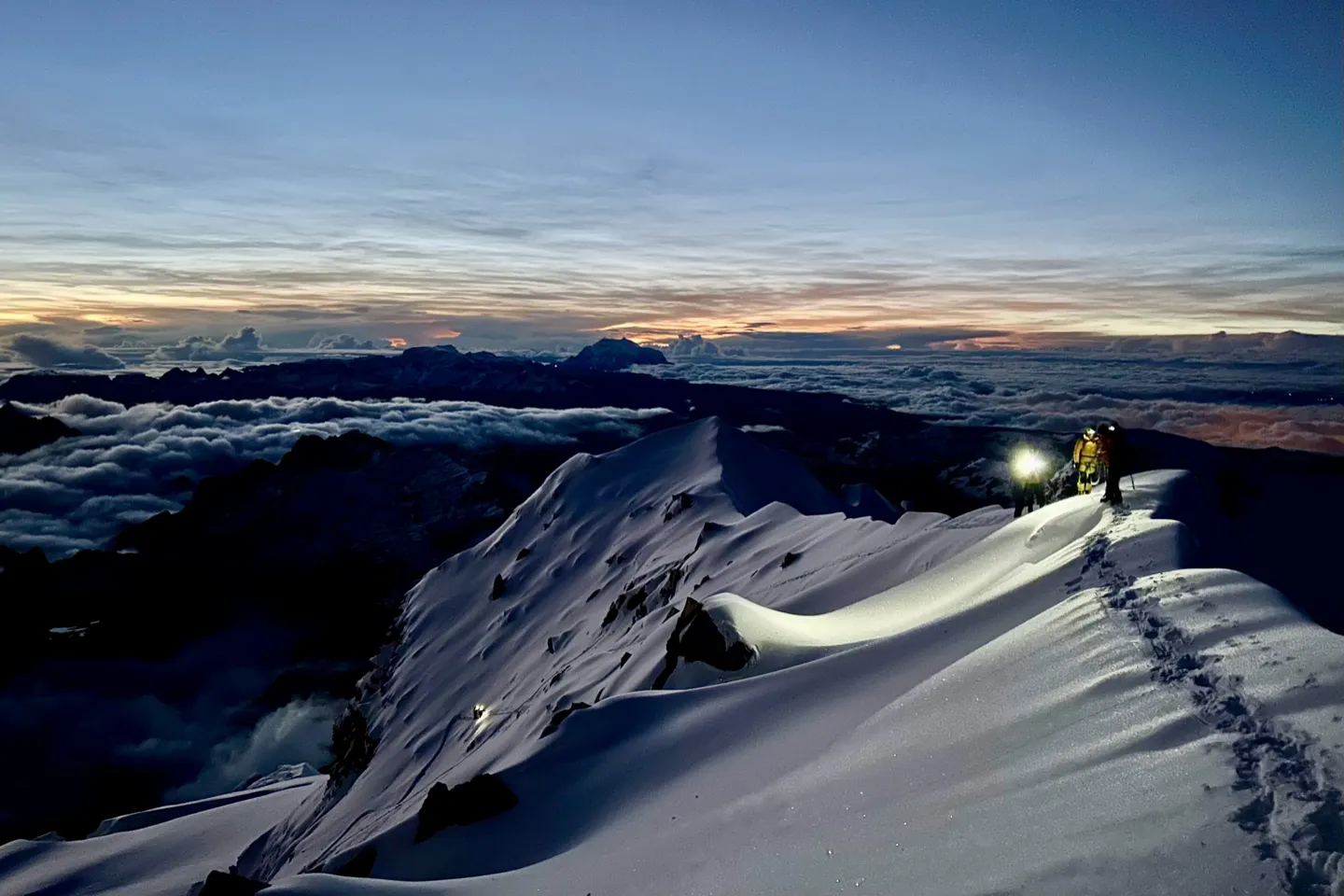
The final summit section took around 1 to 1.5 hours and was the hardest part for me, both physically and mentally. It felt like the summit was never going to come, and heavy snowfall had completely covered the existing route, forcing our guides to create a new path through the fresh snow. For this final section, you climb a series of long switchbacks with the summit on one side and a substantial drop on the other, so it is definitely not for the faint-hearted.
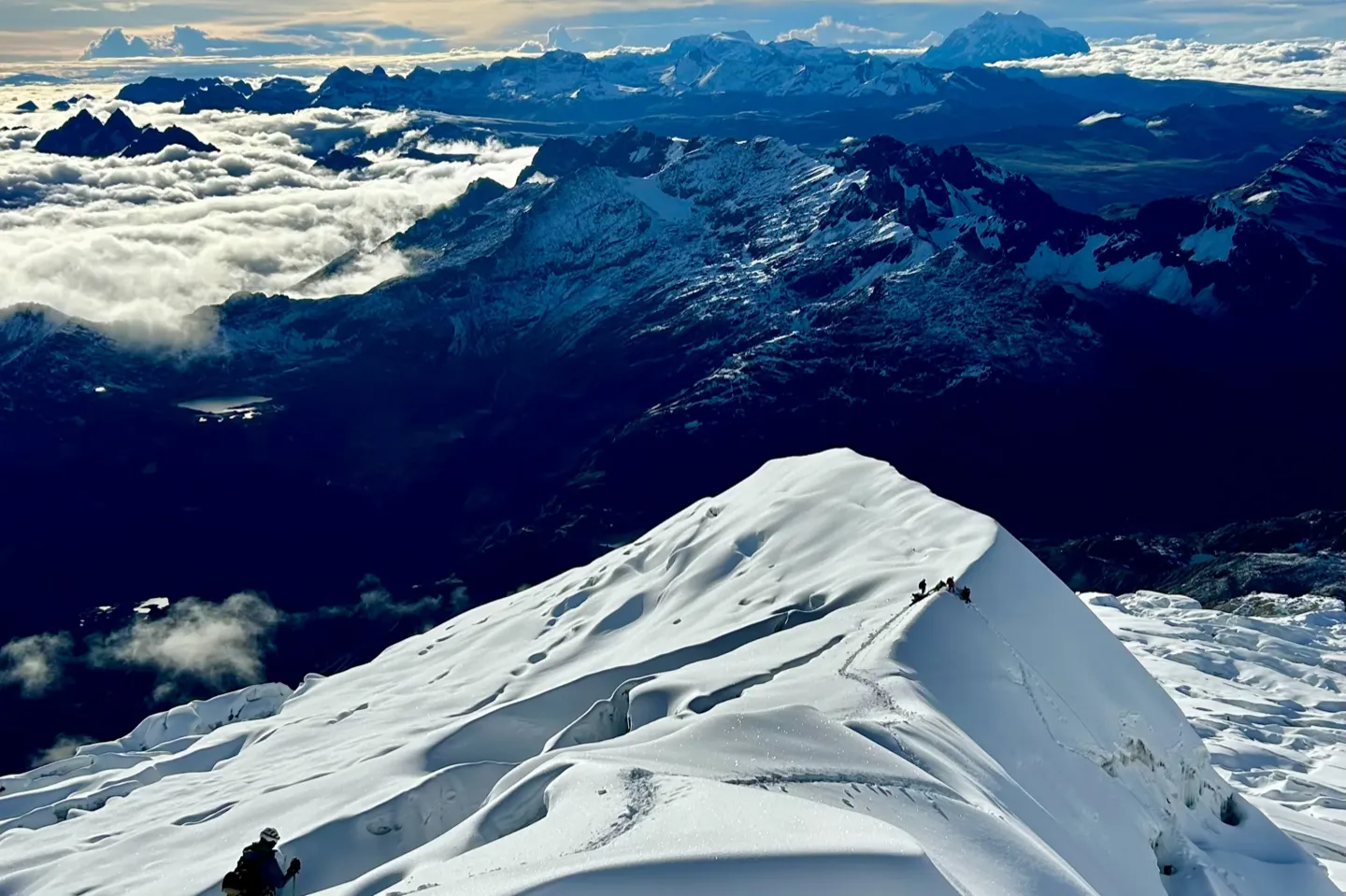
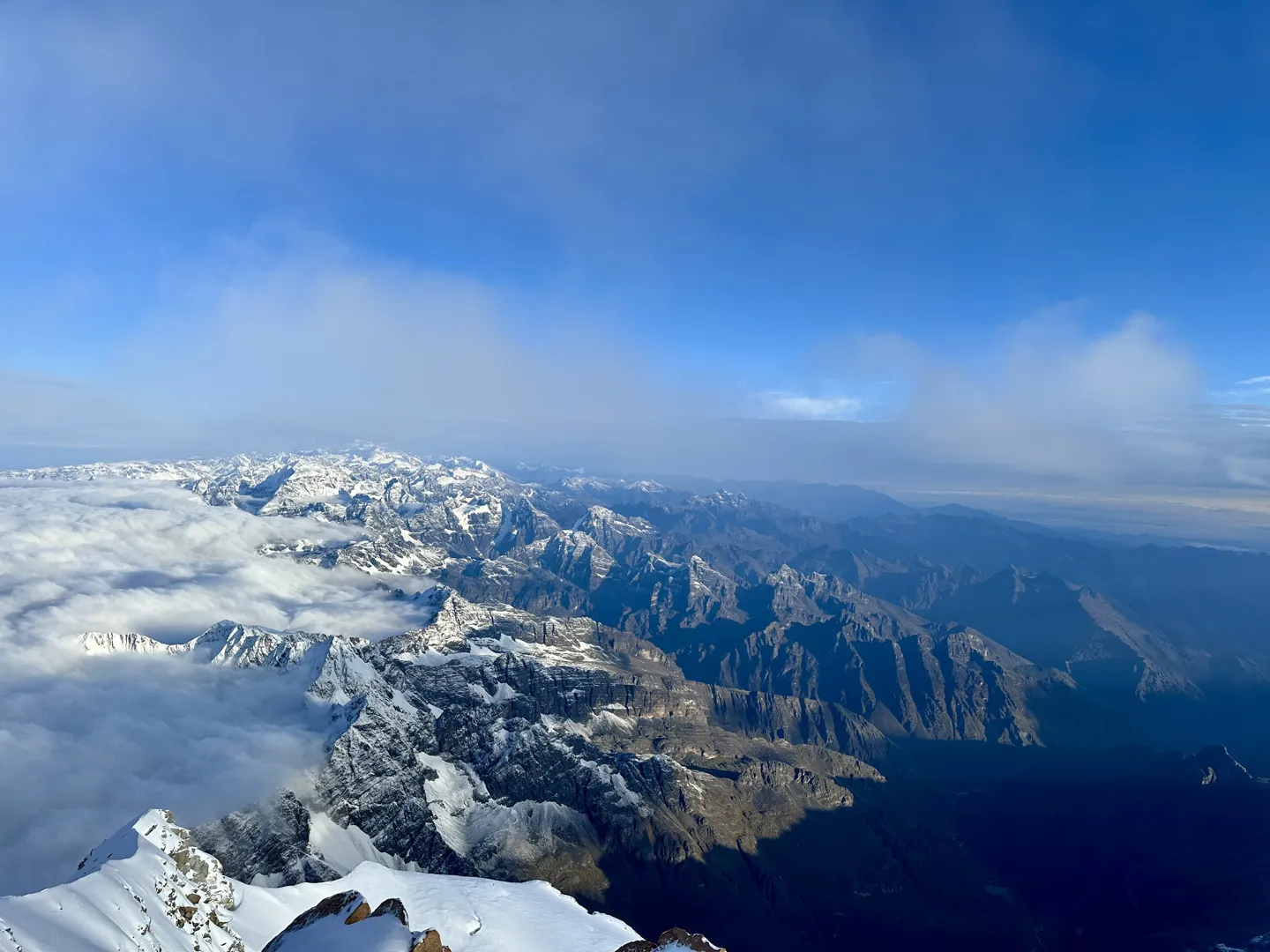
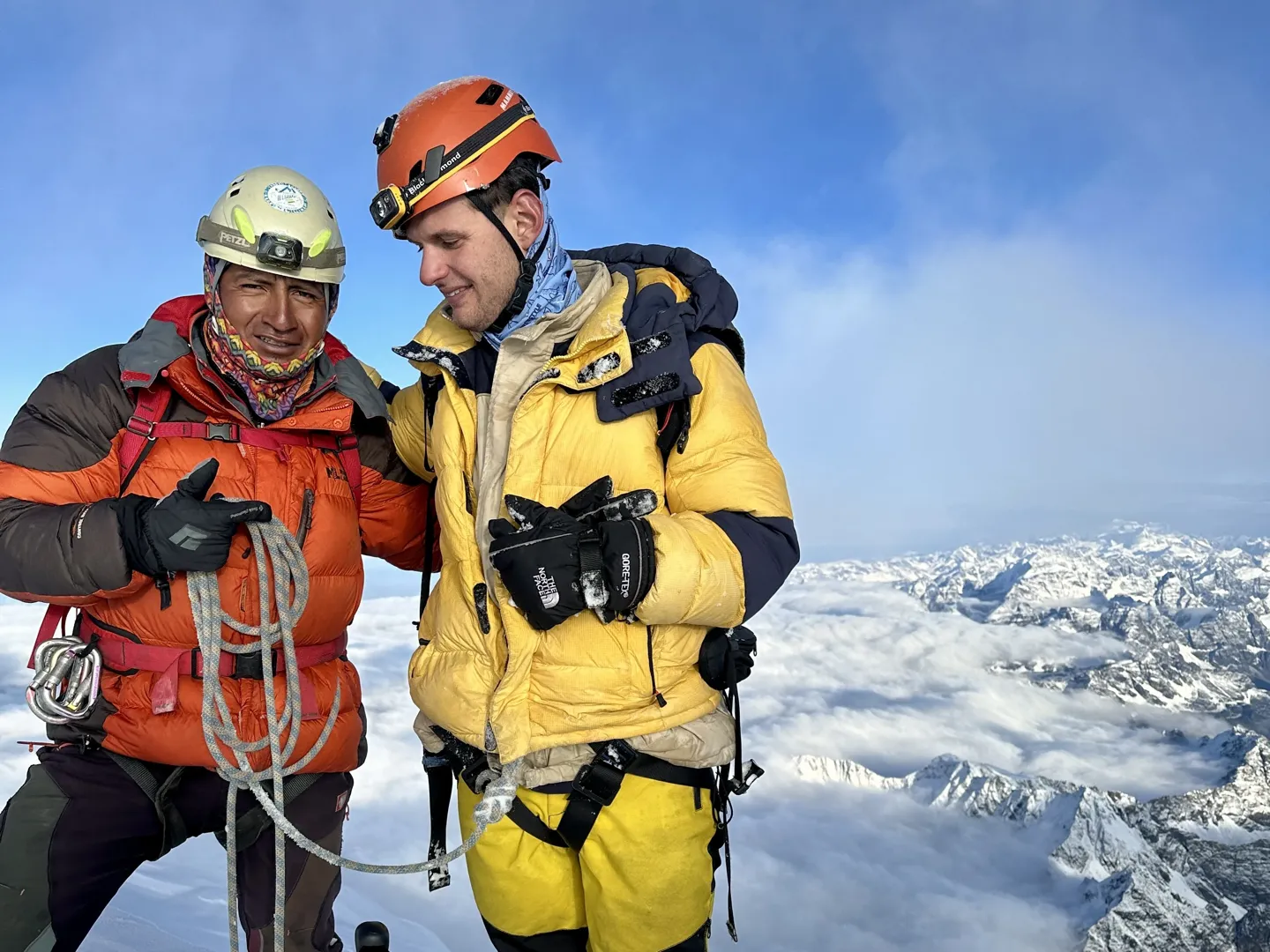
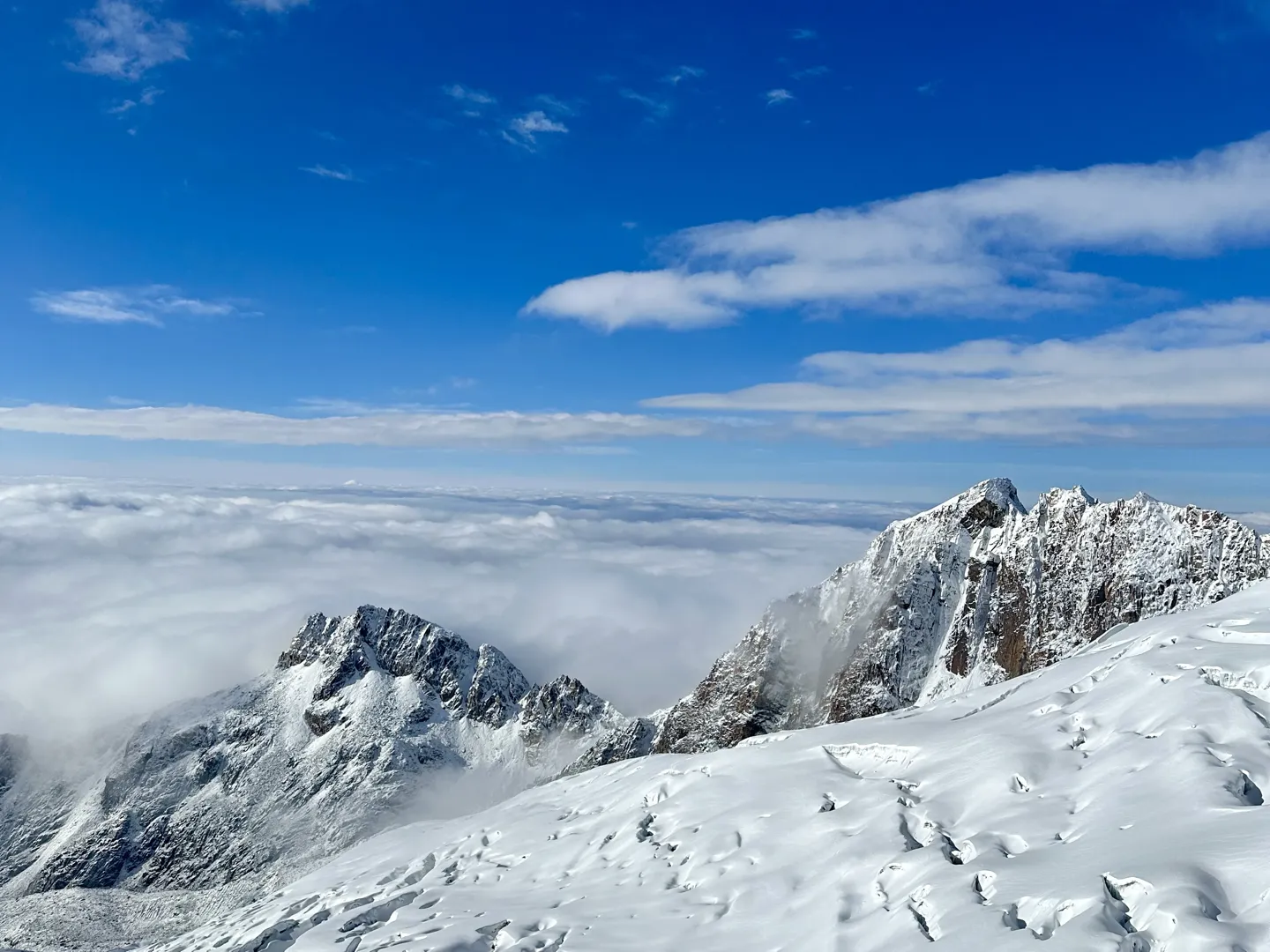
After roughly five hours of climbing through snow, wind and darkness, the conditions completely changed as the summit approached and I could see mountaintops in every direction. The sun came out in full and, for the first time that morning, I could properly take in the vastness of the mountains surrounding me. Reaching 6,000m (19,685 feet) after such a difficult climb was a euphoric feeling, and standing on the summit looking across seemingly endless mountains made every moment I had thought about turning back worth pushing through.
Huayna Potosi Summit → La Paz
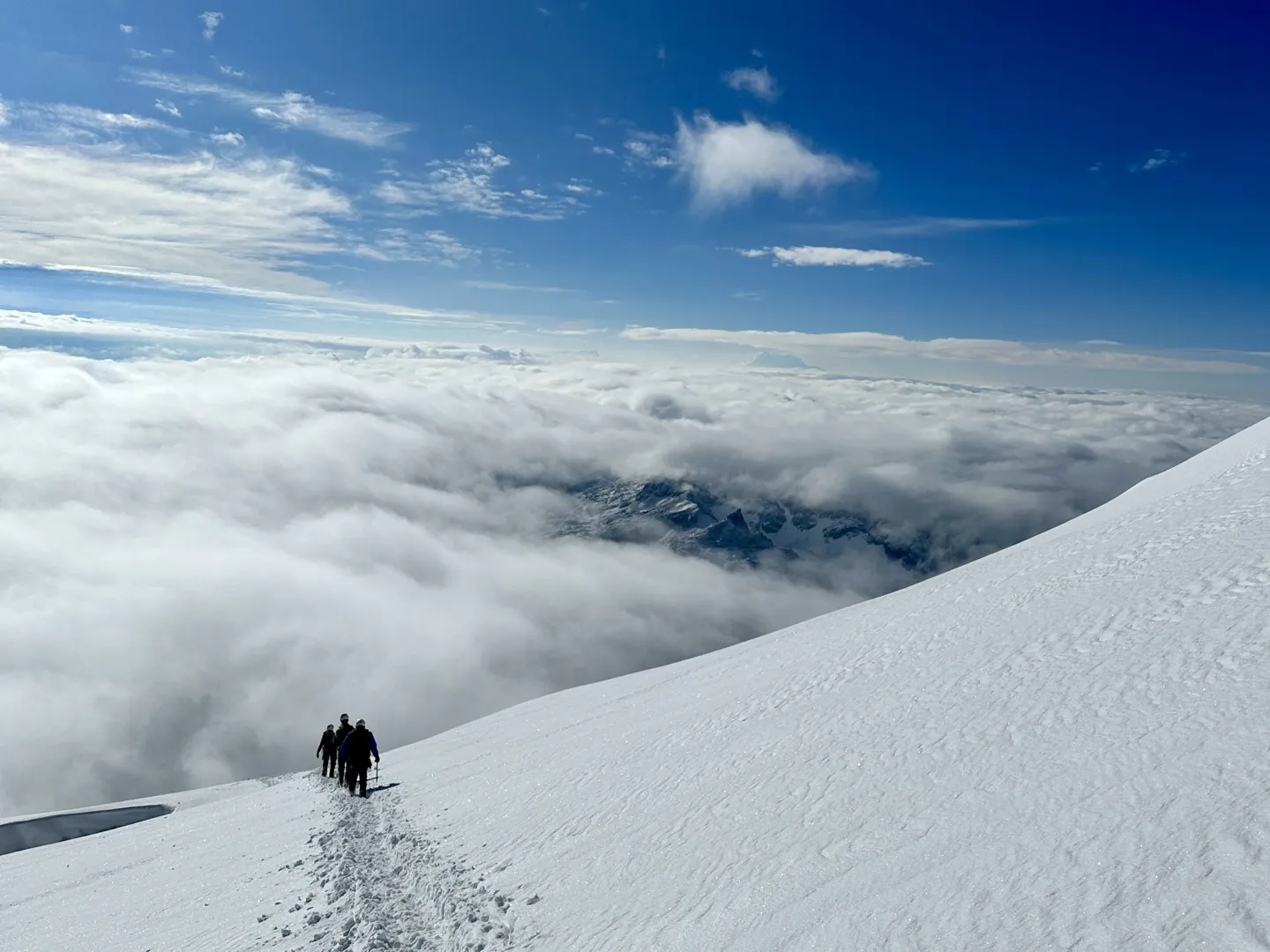
After what will feel like a short time at the summit compared to what you went through to get there, your guide will tell you it’s time to do it all again in reverse. Thankfully, the descent is considerably easier on the body than the climb up. Although it was still cold, the sun was shining and I warmed up quickly enough to complete a large part of the descent in a T-shirt. To this day, I’m still unsure whether that was real warmth or just a second wind of euphoria.
The combination of high altitude and sunlight reflecting off the snow can burn you very quickly. Make sure to apply sunscreen and wear sunglasses, even if the air feels cold.
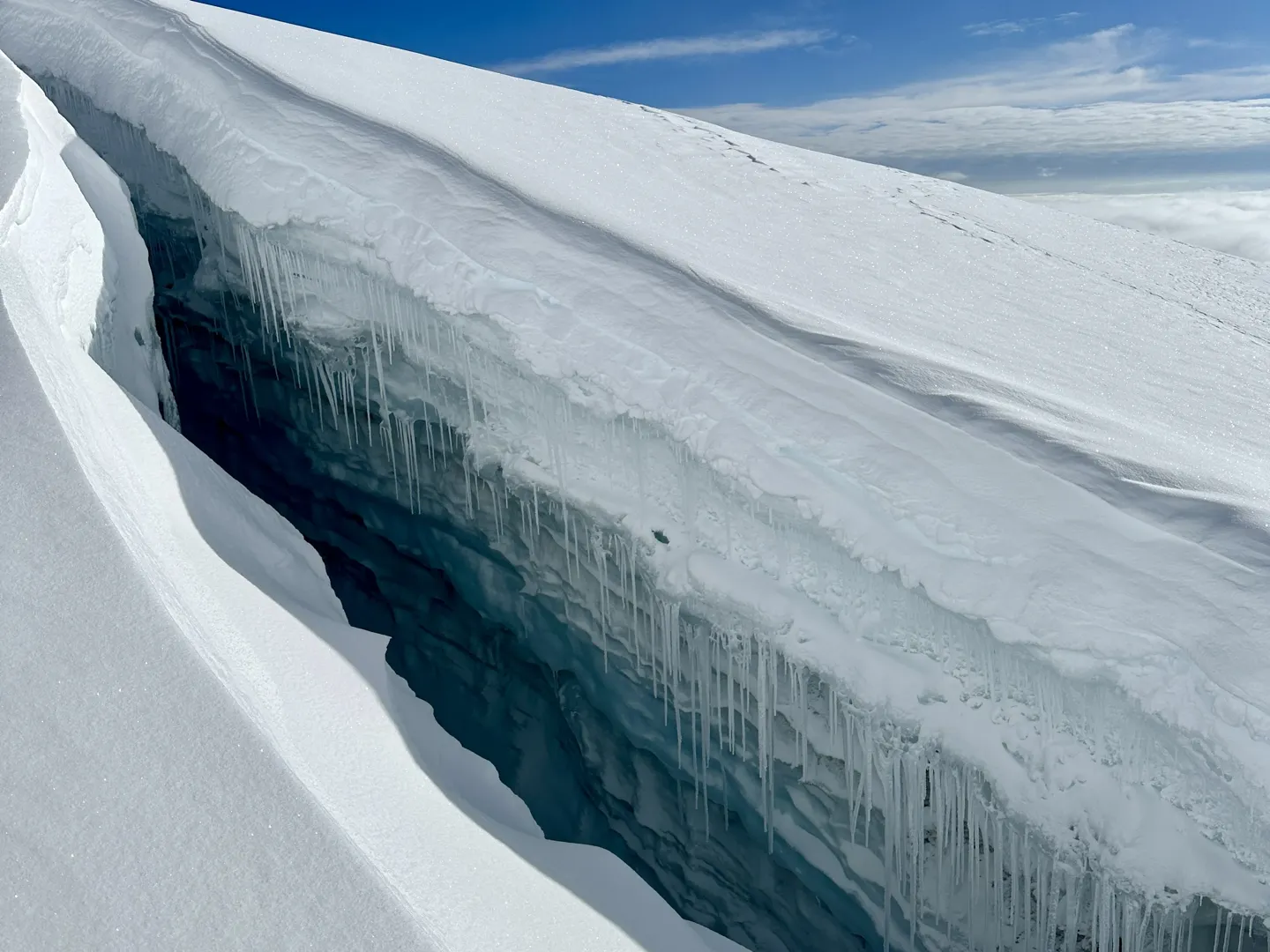
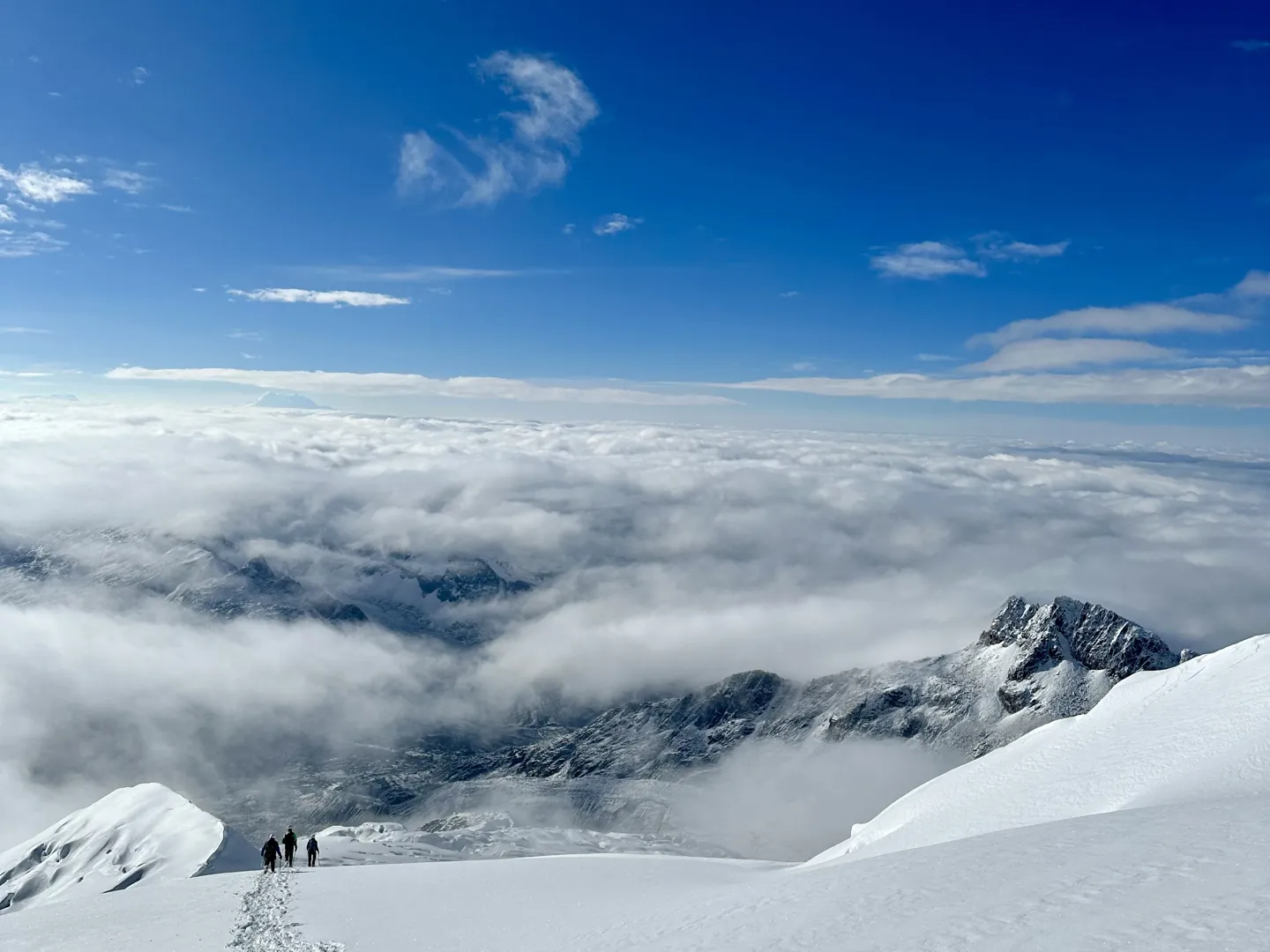
Daylight completely changes the descent because you can finally see the terrain you spent hours climbing through in darkness. The snow-covered ridges and surrounding mountains seemed to stretch in every direction, and it was the first time I could properly take in where I actually was and what I had achieved. You also get to see the deep crevasses you never realised you had walked past and how narrowly the footprints in the snow avoided them.
Once you reach high camp, don’t expect much time to recover. In my case, I was told to pack my belongings immediately, remove the technical gear I no longer needed and get ready to continue back down to low camp. There was no time for a coffee and definitely no time to rest.
The walk from high camp back to low camp is the exact same route as Day 2, except this time you will be eager to do it as quickly as possible. When I arrived at low camp, there was tea and coffee waiting until my transport turned up with a few traditional Bolivian pastries for breakfast. Your driver will then drop you back at your accommodation, with the final obstacle being peak La Paz traffic. Good luck.
By the time you get back to La Paz, you will be completely spent and probably tell yourself this is the last 6,000m (19,685 feet) mountain you will ever climb. If you are anything like me, that feeling will soon pass and you’ll start looking at what other mountains there are to climb. If you take anything away from this guide, it should be that climbing Huayna Potosi is a must-do while in La Paz and something you should seriously consider adding to your South American bucket list.
Done Summiting Huayna Potosi? Sleep Here.
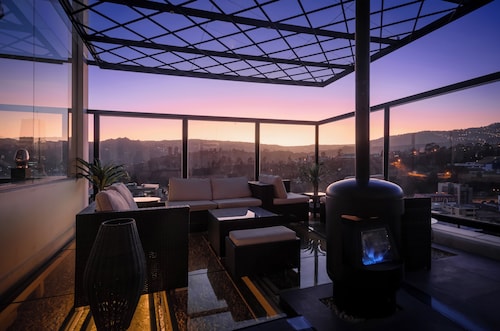
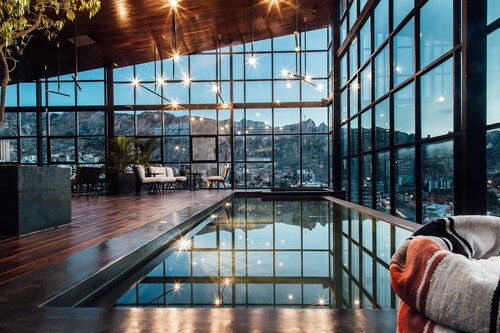

You often hear Huayna Potosi described as the “easiest 6,000m” mountain to climb, but that doesn’t change the fact that it was by far the hardest climb I’ve completed due to the combination of altitude, fatigue and weather conditions. Your best chance of reaching the summit is to properly acclimatise in La Paz beforehand and come prepared for a gruelling climb.
Huayna Potosi is one of the cheapest 6,000m (19,685 feet) mountains you can climb around the world. The breakdown below shows exactly how much I paid to reach the summit, excluding the tip I gave the guides at the end.
-
Bs 950 $803-day climbing tourIncluding accommodation, meals, guide and mountaineering gear
-
Bs 50 $4Huayna Potosi entrance fee
-
Bs 50 $4Extra gear rentalMountaineering backpack, additional warm layers and headlamp
Conversions are approximate and update daily. Check the live rate before you travel.
La Paz can be more difficult to reach internationally, with most flights requiring at least one stopover. Domestically, however, the city is well connected by both flights and overnight buses. Use the cards below to help plan the easiest way to reach La Paz.

Weather and snow can have a major impact on both the difficulty of climbing Huayna Potosi and your chances of reaching the summit. Throughout the year, changes in visibility, wind and snowfall can also affect the route your guides are able to take. Use the cards below to compare each season and decide when to climb Huayna Potosi.
April, May, September & October
Shoulder season- Generally stable weather and clear summit visibility, while avoiding the busiest part of the climbing season
- Fewer climbers can mean quieter refuges and less waiting behind other groups on the summit route
- May sits just after the wet season, while September is towards the end of the dry season, so conditions can differ between the two months
- You should still prepare for freezing temperatures, strong winds and sudden weather changes above 5,000m (16,404ft)
June, July & August
Dry season, most popular months- The most consistently dry and stable months for attempting Huayna Potosi
- Clearer skies generally give you the best chance of good visibility during the summit climb
- Expect some of the coldest temperatures of the year, particularly during the overnight climb above high camp
- This is the busiest period, so refuges can be fuller and you are more likely to encounter other groups on the route
November to March
Wet season- Rain, snowfall and storms make summit conditions substantially less predictable
- Heavy cloud and snowfall can reduce visibility to the point where you see very little of the surrounding mountains during the climb
- Fresh snow can cover the established route, requiring guides to find or create a safe way through
- Poor weather can force your guide to turn the group around or prevent a summit attempt altogether
Altitude sickness is the main factor on whether people are able to climb Huayna Potosi or not. Altitude sickness is also a serious risk, especially at such high elevations, so give yourself enough time to be properly acclimatised before trying to climb Huayna Potosi.
Acclimatise in La Paz before you climb
La Paz sits at around 3,640m (11,940ft), making it a good base for acclimatisation before Huayna Potosi. Try to spend at least 3 days in the city before attempting Huayna Potosi, especially if you have arrived directly from low altitude.
Pick up coca leaves and understand your medication
Coca leaves are cheap, easy to find and commonly used throughout Bolivia by locals and travellers to relieve altitude symptoms. If you carry altitude medication, make sure you know how it works. Acetazolamide is generally taken before ascending to help prevent symptoms, while dexamethasone is usually taken after symptoms develop.
Spend more time at altitude around Bolivia
Visiting the Uyuni Salt Flats before Huayna Potosi can give you useful altitude exposure, with sections reaching up to 5,000 metres (16,404 feet) along the way.
Be honest with your guide about your symptoms
Tell your guide immediately if altitude symptoms are worsening once you are on the mountain. Worsening symptoms should not be ignored, especially as you continue climbing above 5,000m (16,404ft).
The packing list for Huayna Potosi is not extensive, but it is important to pack properly and make sure you have everything you need. The list below covers everything I recommend bringing for the climb.
Provided or rented from your tour company